
Roofing for Cities, Counties and Public Agencies in Daly City, CA
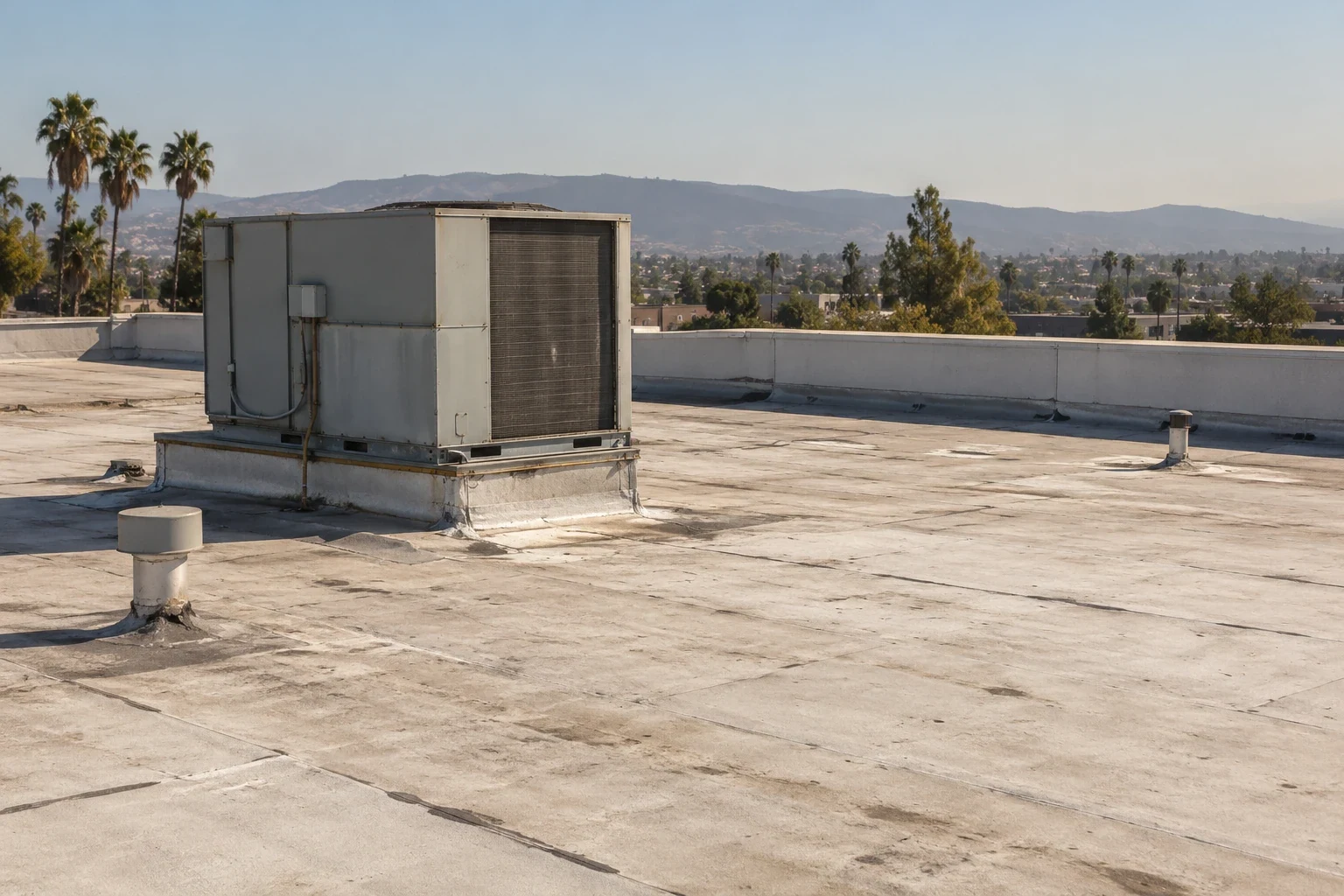
Cities, Counties and Public Agencies in Daly City
Roof assessment, specifications and replacement work for cities, counties and public agencies in Daly City, written to fit public bid and review steps.
Public roof work moves on documents: a scope that can be bid, a schedule that fits a budget year, and a closeout file that an auditor can read. For cities, counties and public agencies with buildings in Daly City, CA, we begin by walking each roof and writing an assessment that separates observed condition from recommendation. Daly City's economic-development mission is to support inclusive, sustainable growth for new and existing residents and businesses, and the General Plan's planning areas take in Westlake and Serramonte, Mission Street and Bayshore, and the area around the Colma-Daly City BART Station. Together, those areas tell an agency where public and private projects are likely to meet, and they affect access, street closures and staging for a crane day. They do not tell us what a given roof contains, so the assessment starts on the roof.
The output is a document set a facilities manager can hand to a purchasing office, with every roof area labeled the same way in the drawings, the photographs and the price schedule.
Scope boundary: Write a scope that can be bid and compared
A bid scope has to be clear enough that three contractors price the same work. We define the roof area, the removal depth, the insulation and cover board, drains, edge metal, curbs, penetrations and the interface with adjacent trades. Items that cannot be known until the roof is opened, such as wet insulation or damaged deck, are listed as unit-priced allowances with a stated unit, so the agency is protected from a surprise and the contractor from an open-ended risk. We also describe what is excluded. The purchasing office can then compare bids on the same base and see where one bidder has left an item out.
Alternates give the agency room to adjust. A base bid might cover the worst two roofs, with an alternate for a third if the price allows. We write alternates as complete, stand-alone scopes with their own quantities, so choosing one does not change the base. Pre-bid walks matter too: we recommend that the agency invite bidders onto the roof, since a bidder who has stood on the membrane prices the details more accurately than one working from drawings.
Field condition: Assess every roof the same way
An agency's building list may include offices, maintenance yards, community rooms and storage. Each has its own roof, and the roofs can differ in age and type. We apply one inspection format to all of them so condition ratings mean the same thing from building to building. The format records membrane type, seam condition, flashing condition, drain and overflow function, penetrations, ponding and visible moisture. An written roof condition report then ranks the buildings by urgency and gives the agency a defensible order for spending. Photographs are labeled by building and roof area so a reviewer can check any entry.
Where an agency has a building near the Mission Street and Geneva Avenue corridors, which Daly City is developing commercial mixed-use zoning for, the roof report also notes any rooftop equipment or edge conditions that could matter to a future change of use. We state what the roof can accommodate today, such as added equipment loads or new penetrations, and what would require a structural review.
Code and permit: Fit the project to the Building Division process
Since January 1, 2026, Daly City has applied the 2025 California Building Standards Code with local amendments, and Title 24 plan review and inspection for construction and renovation sit with the Building Division. A permit application deemed complete earlier keeps the codes in force on its deemed-complete date. For an agency project, the facilities office and the project manager need to know which category applies, and whether the agency's own review replaces or adds to the city process. We write the scope and submittals to match, and we keep a log of every document sent to the reviewer.
Sequence: Keep public buildings in service
Public buildings tend to serve visitors on a published schedule, so the work plan begins with the hours and entrances the public uses. We agree on temporary signage, protected walkways and the location of the hoist and dumpster, then sequence the work so that no section of roof is open when staff or visitors enter. Where a counter, a records room or a server closet sits below the roof, we cover or relocate the equipment before any opening. Station normals at San Francisco International Airport assign 16.76 of 19.64 annual inches to the November to March stretch and 0.18 inches to June through August, so the large work is planned for the dry months and the winter is used for repairs and drain work.
Public work also has paperwork on the ground. We keep daily logs of crew, weather and work completed, and we photograph the roof at the end of each shift. If an inspector visits, the log and photographs are on hand. When a change is needed, the agency receives a written request with the condition found, the proposed fix and the effect on schedule before work proceeds.
Cost driver: Plan the budget in layers
Public budgets are often set in layers: an operating line for repairs, a capital line for replacement and a reserve for emergencies. We write the cost drivers so each layer can be funded. Operating funds cover repairs of seams and flashings and drain clearing. Capital funds cover tear-off, insulation and membrane replacement. The reserve covers temporary dry-in when a storm opens a section between budget cycles. A repair and a replacement are priced side by side, with a recommendation tied to remaining life and the cost of delay.
Questions About Cities, Counties and Public Agencies
Closeout record: Documents for the file and the auditor
At completion, the agency receives photographs of finished details, a marked roof plan, the material list, permit documents and a maintenance calendar. The file supports the agency's long-range capital plan and gives the next facilities lead a clear start. Agencies that coordinate with school districts on shared buildings or with general contractors on renovations can pass the same file along. Neighboring cities such as San Bruno and South San Francisco have their own planning documents, and an agency that holds buildings across them can keep one format. A multi-site roof program lets the agency schedule inspections and repairs across all its buildings under one calendar, and the reports can be rolled up into the capital plan without reformatting.
Commercial Roofing Questions
How should we handle unknown conditions in a public bid?
List them as unit-priced allowances, such as a price per square foot for wet insulation removal, and state the quantity used for comparison. That lets bidders price the same base and keeps change orders tied to measured quantities.
Can you work from an agency specification?
Yes. We price from the agency's drawings and specifications, flag conflicts between the document and the existing roof, and propose clarifications in writing before bid day.
Who documents emergency repairs between budget cycles?
We place the temporary dry-in at any hour and photograph the opening, the work and the weather. A written summary follows so the agency has a dated record of what was done and why.
What belongs in a roof maintenance plan for a public building?
A schedule of inspections, a drain clearing routine, a list of roof areas, and a log for every repair. The plan fits the agency's work order system and keeps the warranty file current.
Do you coordinate with other trades on a renovation?
We agree on the limit of removal, the receiving membrane at each tie-in and who owns the temporary dry-in. Those points go into the roof scope before the first opening.
More Commercial Roofing in Daly City
Send us the facility list
Share the facility list, roof plans, bid schedule and review requirements. We will assess the roofs and return a bid-ready scope.