
Commercial Roof Inspection in Daly City, CA
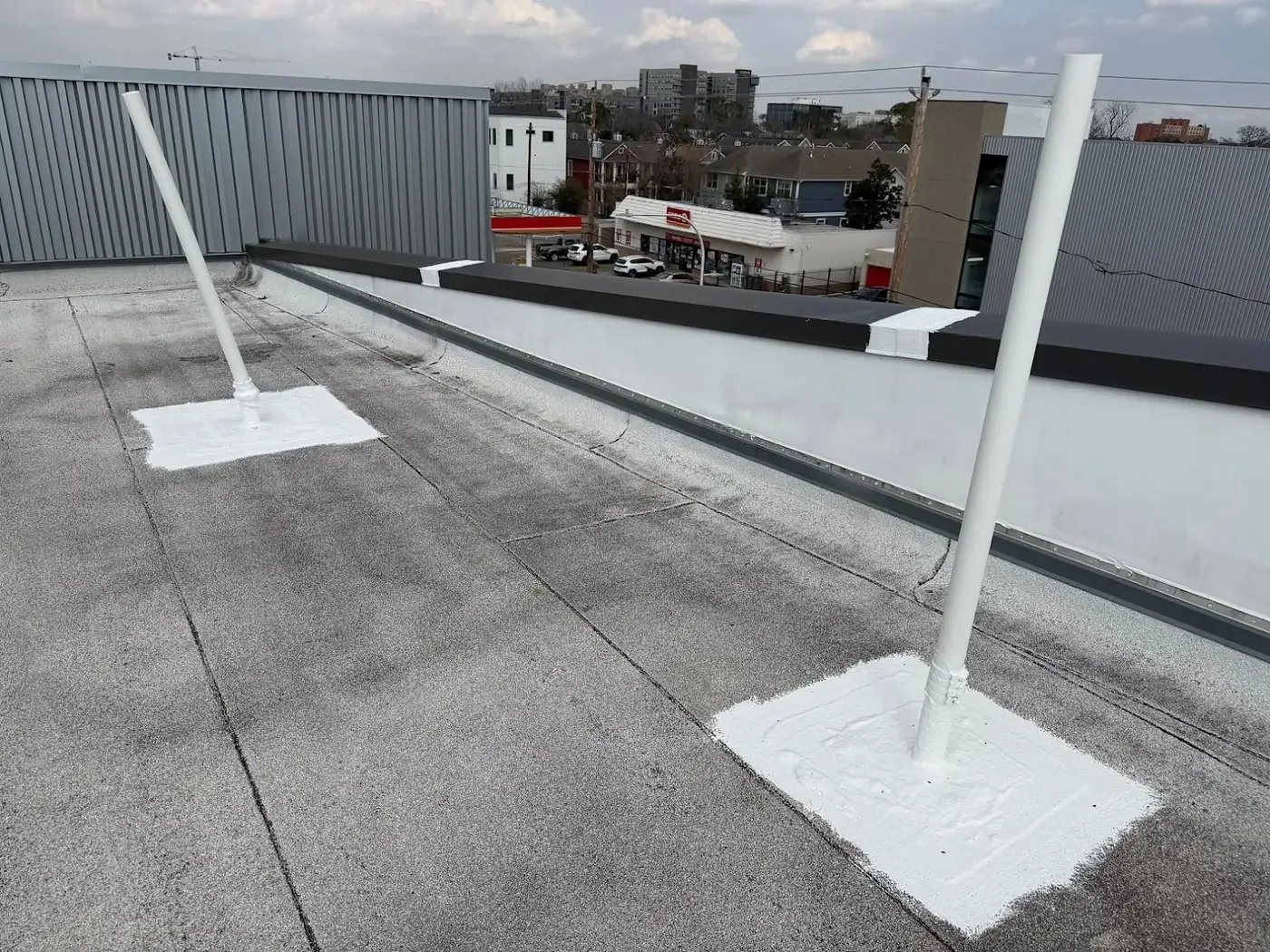
Commercial Roof Inspection in Daly City
Get a hands-on commercial roof inspection in Daly City with marked findings, repair priorities, and a record the project team can use.
A useful roof inspection gives the project team a map of conditions, not a stack of disconnected photos. We walk the accessible roof area, note the assembly and visible details, and mark findings against a roof plan or location reference. The general contractor can then separate urgent repair, maintenance, testing, and capital questions. We do not infer the condition of concealed layers from surface appearance. If the scope needs a test opening, we identify where and why before the roof is disturbed.
Daly City planning materials identify Westlake, Serramonte, Mission Street, and Bayshore among its planning or commercial areas. A place name does not tell us what is on a roof, so the inspection stays specific to the building in front of us. We can describe the membrane and details observed without assuming a nearby property's use, age, or assembly. A written condition report can keep current findings distinct from earlier maintenance records. We use the same walk-and-mark method on each roof in the Daly City inspection area.
The roof walk: safe access, then a marked plan
We begin with safe access, roof boundaries, and the intended inspection depth. The walk covers membrane condition, seams, flashings, penetrations, rooftop equipment, edges, drains, scuppers, and accessible transitions. We note water pathways and maintenance conditions such as debris or displaced supports. A roof plan helps tie each photo to a location instead of leaving the reader to guess which elevation or detail is shown. If part of the roof is blocked or unsafe, the report identifies that limit.
Inspection findings should separate active defects from wear that can be monitored. A puncture, open seam, loose counterflashing, and standing water are different conditions and require different next steps. We label what needs a repair, what needs cleaning, and what needs further testing. The report can include a recommended sequence without implying that a visual walk proves hidden moisture or deck capacity. If a repair is authorized, a defined roof repair scope should use the conditions recorded during the walk.
Assembly and details: read the roof as a system
We identify the visible roof system and inspect its details as a connected assembly. A membrane field may appear intact while a curb, edge, or drain transition requires attention. We check termination points, flashing height, seams, patches, fasteners where visible, and the route water can take to an outlet. On a metal roof, movement and panel joints matter. On a low-slope membrane, the seam and penetration details can be more important than the broad field area.
Where a specific system is visible, the report names only what the inspection supports. For a single-ply EPDM roof, we look at seam and flashing compatibility rather than treating all black membranes alike. If the assembly cannot be identified from accessible conditions, we say so and recommend records or a test opening. The report does not infer the roof's installation date, warranty, or past work from its appearance. That boundary keeps the GC's next submittal and budget conversation grounded in what was actually observed.
Moisture questions: what the surface cannot show
Interior symptoms and roof-surface observations can point in different directions. We compare reported locations with seams, drains, penetrations, and the roof's drainage path, then document the relationship without claiming cause beyond the evidence. A thermal survey may help target testing under suitable conditions, but the image is not a direct moisture measurement. Test cuts or other approved methods can confirm assembly layers and conditions beneath the surface. We state which method was used and what it showed.
The airport station provides a useful warm-season comparison for scheduling maintenance: its June-through-August precipitation normal is 0.18 inch. That is a station-level record. It can help a property team choose a dry period for detailed surface work, but a field inspection still records current moisture, drainage, and membrane condition rather than assuming a roof is dry because of the calendar. We note the inspection conditions and recommend a return visit only when it answers a defined question.
Permit and project use: what the report supports
An inspection may precede a repair, recover, replacement, tenant improvement, or equipment project. The report should identify the decision it is meant to support and the roof areas included. We can provide marked photos and a short list of repairs that should happen before another trade penetrates the membrane. If a roof replacement is being priced, the GC may need a test cut or a separate assembly review. An inspection is a snapshot of accessible conditions, not a substitute for structural design or code interpretation.
For the team's permit coordination, the applicable code date is a project-file item. Daly City put its amended 2025 California Building Standards Code into effect on January 1, 2026, while applications already deemed complete before that date may follow their earlier basis. The Building Division reviews plans and conducts field inspections. The GC should confirm which timing applies before setting the roof submittal sequence. The inspection report records roof conditions; it does not make the code determination.
Inspection record: findings grouped by area
The deliverable groups observations by roof area, urgency, and next action. We identify a maintenance item that can be completed now, a repair that needs authorization, and a question that requires testing or design review. Each photo needs a location reference and a caption describing the visible condition. The report should also state the roof areas not accessed, the date and conditions of inspection, and whether any temporary protection was placed. That makes later comparison possible without overstating the inspection.
We can organize findings for a multi-building capital list or a single project handoff, with one record per building so each scope stays clear. We invite the general contractor to share the intended decision and roof plan so the inspection record answers the right construction question.
Before we leave, we confirm the inspection record matches the roof plan and the work decision the GC needs to make. If an outlet needs cleaning, the note should identify that maintenance item separately from a membrane defect. If another trade plans to cross the roof, the team can use the marked access route and photo record to protect completed details. A scheduled maintenance visit can then track the same drains, edges, and penetrations over time. The inspection remains bounded by areas we could safely access and the methods used that day.
The property file should keep the report next to prior roof plans, repair records, and later work orders. During a follow-up, we compare the same marked locations and note what changed. The next decision can then use both the original condition and the current field observation.
Drainage deserves its own Diligence Notes when a roof walk finds debris, a blocked outlet, or a changed water path. The crew can document the condition and scope drain and scupper service separately from membrane repair. If the property schedules a maintenance visit, the inspection record gives the next crew specific details to revisit rather than a generic roof-wide checklist. We identify the accessible drain, the surrounding surface, and any area that needs a separate test.
A GC managing submittals across Peninsula cities, whether along Highway 1 in Pacifica or in San Mateo's downtown, should keep each property's permit file tied to its own review basis. We keep the inspection map and field findings attached to the Daly City project record.
Questions About Commercial Roof Inspection
Commercial Roofing Questions
Does an inspection prove the insulation is dry?
No. A visual walk identifies surface conditions. Test cuts or another suitable method are needed to verify concealed layers.
Can the report prioritize repairs?
Yes. We can separate immediate repairs, maintenance items, and questions that need testing or design review.
Will you identify the membrane type?
We identify the system when visible evidence supports it. If the assembly cannot be confirmed, the report states that limit.
Can the inspection support a replacement bid?
It can document accessible conditions and scope boundaries. A test opening or design review may still be needed before final pricing.
More Commercial Roofing in Daly City
Plan the inspection scope
Share the roof plan and the decision the report needs to support. We can walk accessible areas and return marked findings for the project file.