
Modified Bitumen Roofing in Daly City, CA
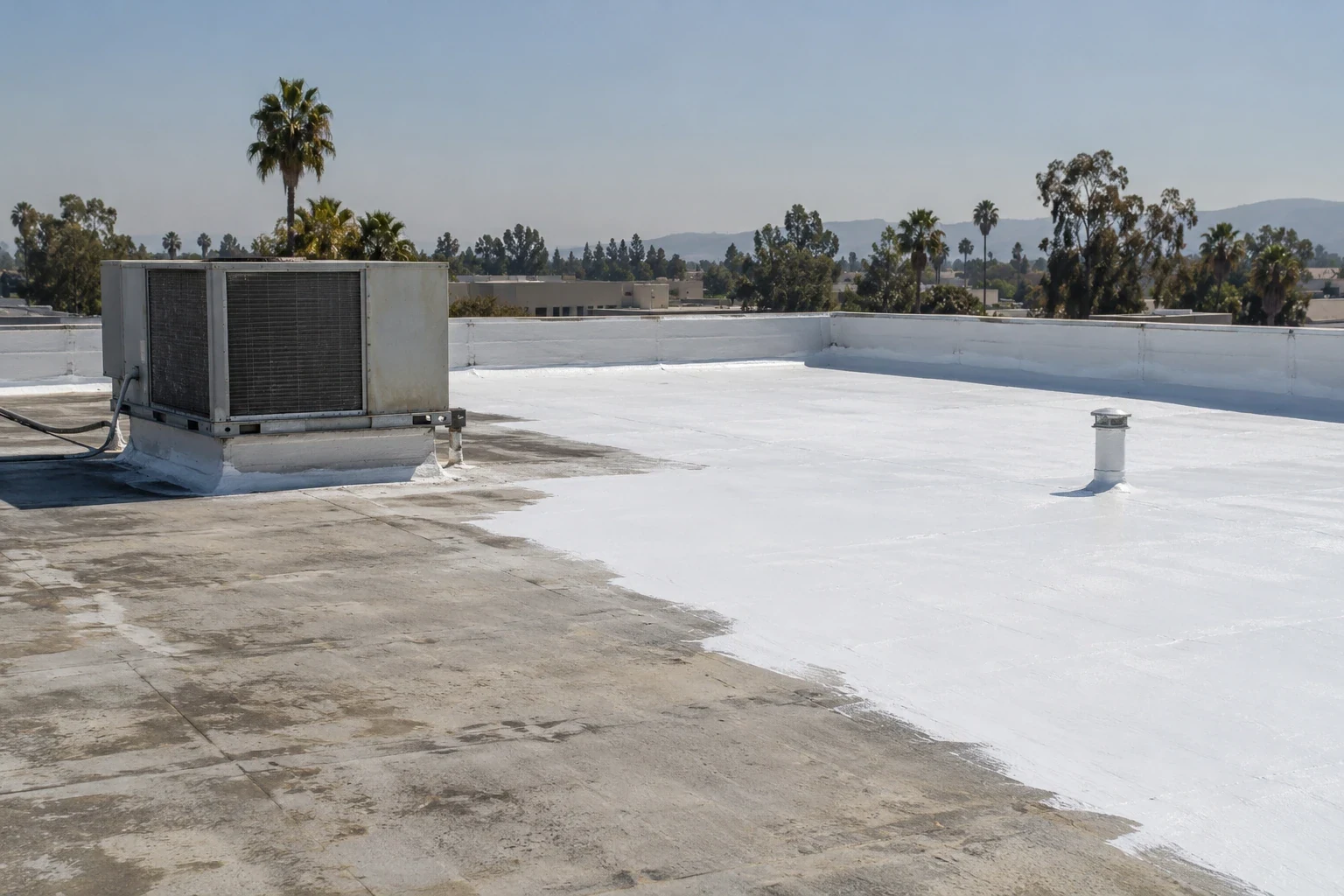
Modified Bitumen Roofing in Daly City
SBS and APP modified bitumen roofing in Daly City, CA: torch, cold-applied, and self-adhered options, cap sheet details, and fire-watch coordination.
Before any open flame comes near a roof deck, the fire watch, the hot-work permit, and the line of combustible material behind the parapet have to be settled. That is why a modified bitumen proposal in Daly City, CA starts as a safety and sequence document before it is a material list. The roofing membrane is layered asphalt with a polymer added for flexibility, and the way it is attached decides who needs to be on the roof, for how long, and what the tenants below will notice.
Modified bitumen comes in two main polymer families. SBS is rubberized and flexible at low temperatures, and APP is plastic-modified and holds up under heat. Both are sold as rolls with a granulated or coated top surface, and both can be installed in two plies or more. We install, repair, and maintain these systems as part of the same group of options that includes built-up roofing and welded single-ply sheets such as PVC. Owners of older buildings often ask whether a recover over the existing roof is possible, and the answer starts with the layers already in place.
Attachment: Torch, adhesive, or self-adhered
Torch-applied sheets are heated at the underside until the asphalt flows and bonds to the substrate. The method makes strong laps, though it requires trained crew, a fire extinguisher at hand, and a watch period after the last heat is applied. Cold-applied systems use adhesive and avoid the flame. Self-adhered sheets peel from a release film and press down, which suits buildings where hot work is restricted or insurance carriers object to it.
The choice changes the schedule and the ownership of risk. A flame near a wood nailer or a combustible wall assembly can stop a job, so we examine the parapet and the penetrations before recommending torch work. When the existing building will not allow hot work, a cold or self-adhered base ply can be combined with a cap sheet and the plan states how each lap is made.
Layers: Define the base, the ply, and the cap
A typical assembly has a base sheet attached to the deck or cover board, one or more ply sheets, and a cap sheet that faces the sun and weather. The granules on the cap protect the asphalt from ultraviolet light and give the roof its color. When granules wear away, the asphalt underneath ages faster, and bald spots near drains and walkways are common places to look first.
Roof drawings should name each layer and how it is fastened. Insulation, a cover board, and a vapor retarder may sit below, and their condition affects how the new sheet performs. In a recover, we confirm whether the existing system is dry before adding layers. The proposal separates the new plies from the retained assembly so the owner knows what the roof will be made of when the work is done.
Weather window: Use the dry months for open flame and adhesive
The nearby San Francisco International Airport NOAA station records 0.18 inch of precipitation for June through August in its normals, against 16.76 inches from November through March. They come from a nearby station, so they guide planning rather than describe any one roof, and they point to summer for large torch and adhesive areas. Asphalt needs a dry substrate, and adhesive laps do not cure well in damp air.
In the wet months, we reduce the open area, install a temporary tie-in at every edge, and close each section the same day. The plan also names the person who inspects the temporary closures before the crew leaves. A general contractor can hold interior finish work and tenant move-ins to the dry-in boundary on that plan, and the permit record shows which sections were completed in what order. Cool, damp mornings also slow adhesive tack, so the first hours of a shift may go to detail work and the field laps wait until the surface warms and dries.
Flashing: Terminate the sheet at every wall and curb
Modified bitumen flashing is built from base and cap sheets that are turned up walls and curbs and terminated high enough to shed water. Unlike single-ply sheet, there are no preformed corners, so each inside and outside corner is cut and formed by the installer. Corners are a common first leak, and we reinforce them with extra membrane and a secondary seal.
Where the building meets a neighbor or a rooftop unit, termination height, counterflashing, and sealant joints belong in the drawings. The mechanical trade should be told which curbs received flashing and which are still to come, so that a later unit change does not cut through finished work. Failed corners show up in a flashing failure repair list, and the best fix is to rebuild the detail rather than smear sealant over it.
Cost driver: Count safety time and crew separately
A modified bitumen job carries labor and safety costs that a single-ply job may not. Torch work requires fire watch time after the work stops. Multiple plies mean more passes across the roof. Adhesive systems need cure time between layers. We show each as an item in the proposal, and we list access, hoisting, and disposal separately. If the owner is comparing against a TPO or EPDM replacement, the numbers should be set on the same roof boundary.
For modified-bitumen work, establish which permit cycle applies: the city’s local updates to California’s 2025 standards started January 1, 2026, with plan review and field inspections handled by the Building Division. The Bayshore and Mission Street areas are named in city materials for mixed-use, commercial, and redevelopment activity, and a project near new construction may share lifts, crane time, or staging with other contractors. We coordinate those items before the proposal is final.
Questions About Modified Bitumen Roofing
Closeout: Walk the laps and the fire watch log
The final walk checks cap sheet laps, granule coverage, flashing terminations, and drains. The record includes the fire watch log, photographs of the corners, and a marked plan of the layers. Materials reach the site by Interstate 280 and nearby routes, and the delivery log helps the next crew match a repair to the product used. If a leak shows up later, a technician can find the layer and make a leak repair that matches the system. For work in Daly City, the closeout set also records which roof areas were left in place, so a future owner knows where the new plies end. Photographs of each cap lap, drain bowl, and wall termination sit next to the plan, and the same set is a ready starting point for a yearly maintenance walk.
Commercial Roofing Questions
Is torch-applied modified bitumen still used on commercial roofs?
Yes, where the building and the carrier allow it. The decision follows the parapet construction, the fire watch plan, and the wall materials behind the roof edge.
What separates SBS from APP?
SBS is rubberized and stays flexible in cold weather. APP is plastic-modified and performs well under high heat. In the mild Daly City climate, the attachment method often matters more than the polymer.
Can modified bitumen be installed over an old built-up roof?
Sometimes, if the old roof is dry and well attached. We cut samples, review the deck, and decide whether a recover is practical.
How do we handle a hot-work permit?
The permit, the fire watch, and the extinguisher plan belong to the roofing scope. We list them in the work plan and confirm the carrier requirements with the owner.
How long before the granules wear off?
Wear depends on foot traffic, drainage, and exposure. We inspect the cap for bald spots at drains and walk paths and recommend a coating or a repair if the asphalt is showing.
More Commercial Roofing in Daly City
Send plans and carrier requirements
Share the roof drawings, any hot-work restrictions, and tenant limits. We will define a modified bitumen scope and a workable sequence.