
Built-Up Roofing in Daly City, CA
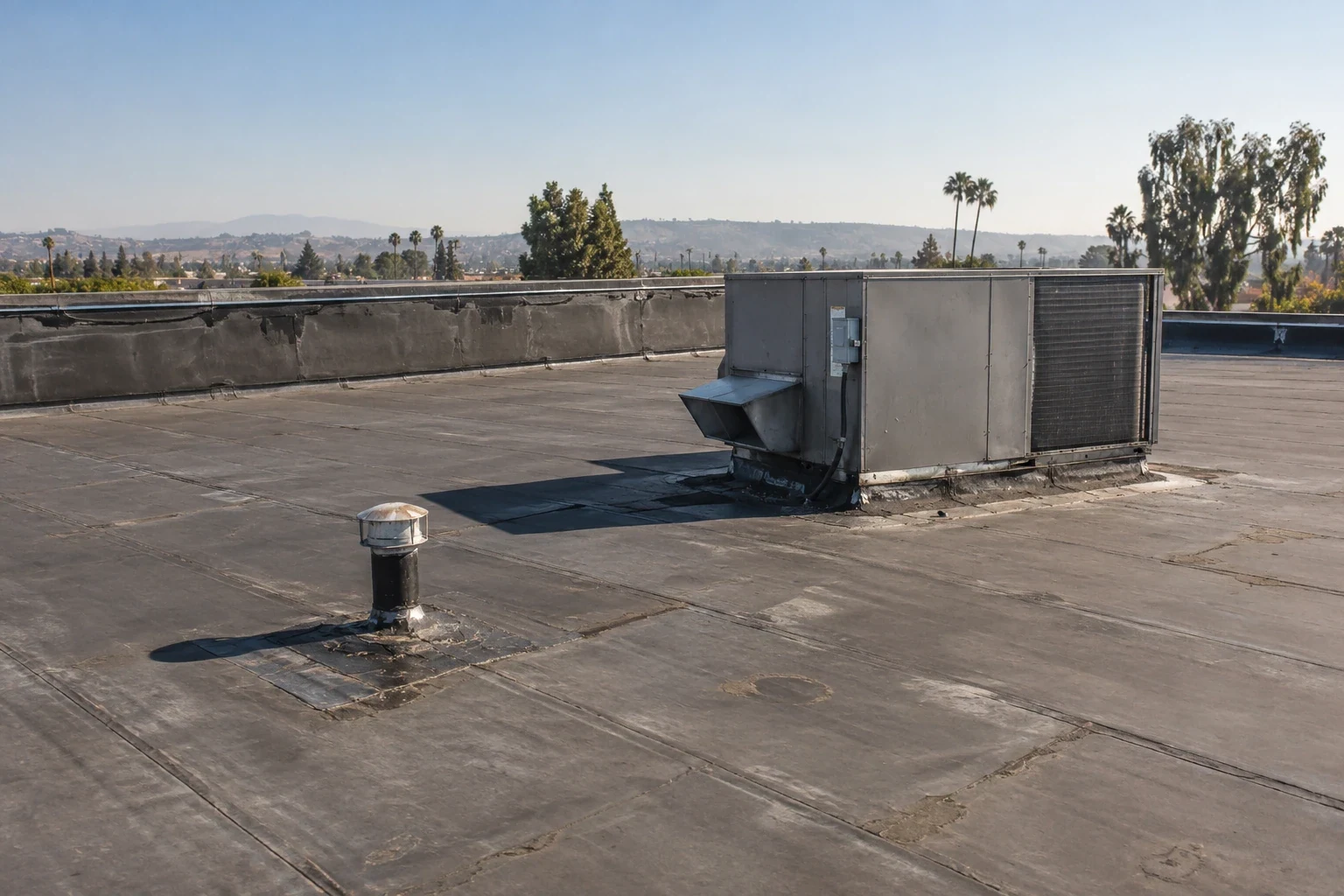
Built-Up Roofing in Daly City
Built-up (BUR) roofing in Daly City, CA: multi-ply asphalt systems, gravel surfaces, blister and alligatoring repairs, and recover or tear-off scope decisions.
Gravel on a built-up roof hides the surface that matters most, so the first decision on an older BUR is how much of that stone has to move before anyone can see the plies. Pushing it aside in a test area exposes the felts, the bitumen, and any blisters or splits beneath. On a Daly City, CA building with a layered asphalt roof, we do that before talking about scope, because the condition under the stone decides whether the owner is looking at a repair, a coating, a recover, or a full tear-off.
Built-up roofing is made by alternating layers of reinforcing felt or fabric with bitumen, then finishing with a gravel surfacing or a cap sheet. It has a long record on low-slope commercial buildings, and we repair, restore, and replace it. Where a new multi-ply assembly is wanted, modified bitumen is the closest modern relative.
Field condition: Check blisters, splits, and bare spots
A walk on a BUR roof looks for blisters, which are trapped moisture or air between plies, along with ridging at laps, splits above deck joints, and bare patches where gravel has blown or washed away. Alligatoring, a crazed pattern in exposed asphalt, signals that the surface is aging and that ultraviolet light has reached the bitumen. Each condition has a different repair, and they should be marked separately.
Penetrations and perimeter details deserve their own look. Pitch pans, base flashing, and cant strips age faster than the field, and old roof tar patches tend to stack on top of one another. We photograph the patch history, then check the layers below for moisture before recommending any work. A single large blister may need nothing but a cut and a patch; a roof with many may be telling the owner something about trapped moisture across the assembly.
Moisture: Find what the surface cannot show
Wet insulation under a gravel roof can sit unnoticed for years. An infrared scan, run under the right conditions, shows temperature patterns that point to damp areas, and nuclear or capacitance meters can add readings. We use those results to pick test cut locations, and the cuts confirm what the layers actually contain. A survey like our infrared moisture survey gives the project team a map of wet and dry areas to bring into the scope.
That map decides whether a recover is reasonable. Dry insulation below sound plies can sometimes accept a new system; wet areas must be removed. The report marks each boundary so a general contractor can price the tear-off portion without disputing the line later. The NOAA normals at San Francisco International Airport put most of the year's rain between November and March, so a roof carrying moisture into the fall can show it soon after.
Options: Repair, restore, recover, or remove
A sound BUR with isolated failures can be repaired and maintained. A roof with a sound base but a worn surface may take a coating, and the preparation is substantial, because gravel must be removed or embedded and the asphalt cleaned. A recover can add a new membrane over an insulation board if the existing system is dry and the deck can carry the load. Full tear-off is the choice when moisture is widespread or the deck needs repair.
Weight is a factor with gravel. A fully ballasted BUR carries stone that adds to the structural load, and removing it changes how the deck behaves. We note the weight and the disposal route in the scope, since tear-off of a gravel roof produces a large volume of debris that has to leave the site by truck, often over Interstate 280 or the city's other approaches.
Drain path: Look at the low spots first
Standing water on a built-up roof accelerates aging, loosens gravel, and encourages algae. We check the drain bowls, the scuppers, and the areas where the deck has deflected. Flat spots that hold water for more than a day or two after rain are marked on the plan. Our ponding water repair work starts with the drain path and extends to tapered insulation or additional drains where the structure allows.
For a recover or replacement, the drain path becomes part of the design. Tapered insulation, new sumps, and cricket details redirect water, and each one adds a transition that has to be flashed correctly. The proposal states which transitions are new and who is responsible for the roof edge at each one.
Cost driver: Price odor, heat, and haul-off
Hot-applied BUR brings kettle heat, odor, and a fire watch to the site, and cold-applied versions swap those for adhesives and longer cure times. Each method affects tenant impact. Tear-off adds disposal weight and trucking, and gravel removal can be messy in a retail area where parking lots and entries sit next to the work. We put each of these items into the proposal so ownership can see where time and money go. Parking and delivery access get their own line when the building shares a lot with retail, since a staging area on pavement may displace customer spaces for the length of the job.
Daly City adopted the 2025 California Building Standards Code with local amendments, effective January 1, 2026, and the Building Division administers Title 24 plan review and field inspection. A roof that has been in place for a long time may fall under different review expectations when the work scope grows, so we confirm the permit path early and keep it in the file with the sequence.
Questions About Built-Up Roofing
Closeout: Leave a layer-by-layer record
At completion, the owner receives photographs of the layers exposed during tear-off, a plan of the new assembly, and a list of any areas of old roof left in place. Buildings in Daly City change hands and tenants over time, and a clean record helps the next team understand what lies under the surface. A rubber membrane or other single-ply option can be compared against this record if the owner later weighs a different system.
Maintenance follows from the same record. Gravel gets raked back over bare spots, drains are cleared before the first heavy rain, and flashing at pitch pans and curbs is checked after any trade has worked nearby. Those visits are short when the roof plan is accurate, and they keep a repair from growing into a replacement decision before the capital budget is ready.
Commercial Roofing Questions
Can a BUR roof be coated instead of replaced?
Sometimes. The plies must be dry and well bonded, and the surface needs cleaning and embedding of loose gravel. Moisture results and test cuts tell us if a coating is realistic.
What causes blisters on a built-up roof?
Moisture or air trapped between plies expands when the sun warms the surface. Small blisters can be cut and patched, while many of them across a roof point to wider trapped moisture.
Is gravel required on a BUR roof?
Gravel protects the asphalt from sun and traffic, but a cap sheet or coating can do the same job. The structure and the drains decide whether ballast stays.
How is a BUR tear-off handled on an occupied building?
We divide the roof into areas, remove only what can be dried in the same day, and protect entries and parking. Debris is chuted or hoisted away from tenants, and we agree on the haul-off times with the property manager so trucks do not block deliveries or entries.
Does a built-up roof have a standard lifespan?
Condition varies with ply count, drainage, and maintenance. We rate it from the walk and moisture results and rank the areas, instead of using an age number.
More Commercial Roofing in Daly City
Send the roof history and drawings
Share records, repair history, and access limits. We will open the surface, map the condition, and define a BUR scope that fits the building.