
Commercial Roof Leak Repair in Daly City, CA
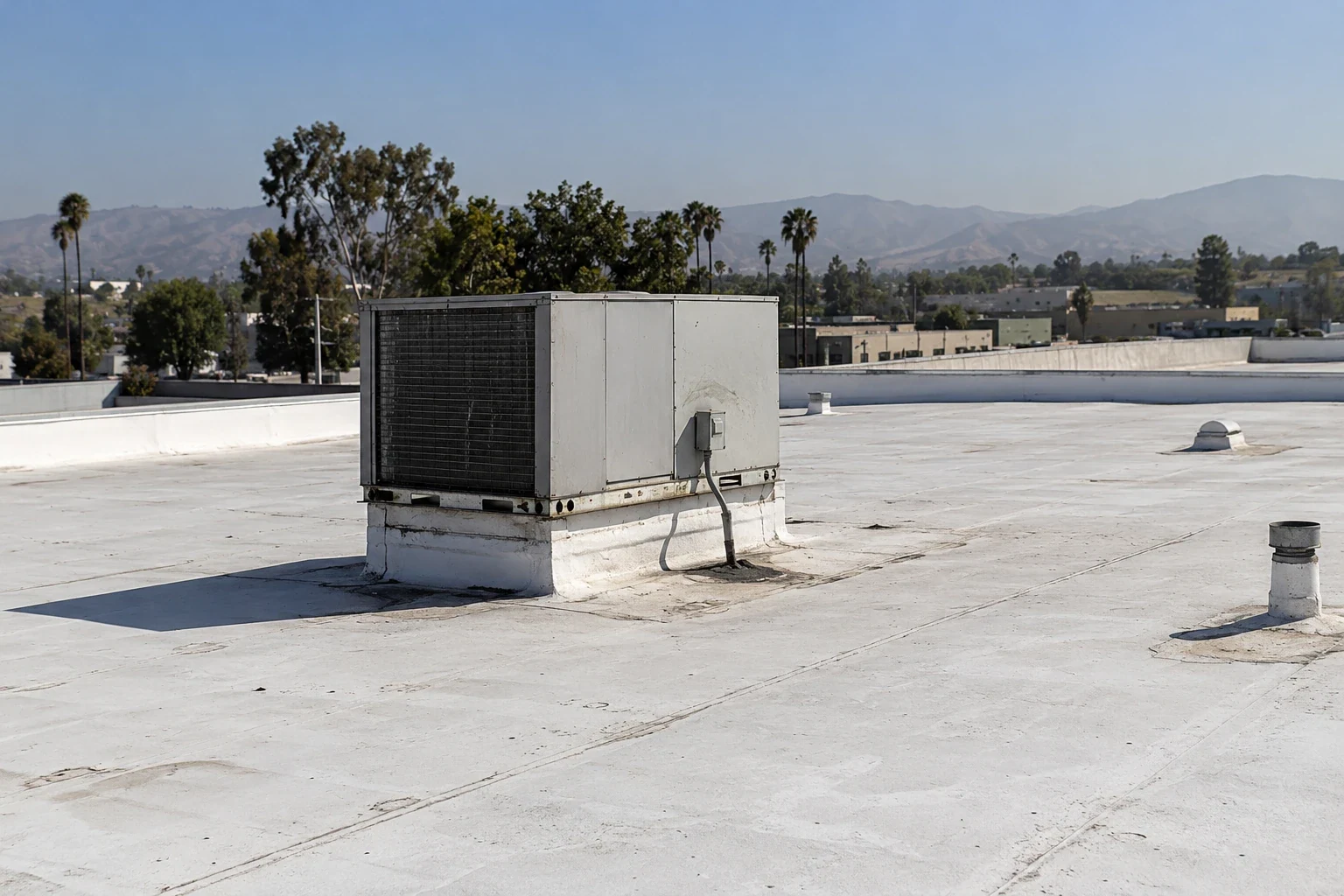
Commercial Roof Leak Repair in Daly City
Trace a commercial roof leak in Daly City, document the water path, protect occupied areas, and coordinate a repair that fits the existing assembly.
The wet ceiling is the end of the water path, not necessarily its beginning. We start with the reported room, timing, and weather, then compare that information with the roof details above and around it. Water can move along a deck or insulation joint before it shows indoors. A curb, seam, drain, edge, or penetration may sit beyond the room with the stain. We mark the likely source area only after a roof walk supports it, then define what should be opened, tested, or repaired.
For the general contractor, the useful first deliverable is a narrow scope with a protection plan. It should show which roof area is affected, how the crew will reach it, and what remains uncertain. Daly City identifies healthcare and retail among important economic activities; that is local context for coordinating access, not evidence about a building's use. We can arrange a roof inspection around the active leak and document the findings. We handle leak calls across the Daly City service area the same way: trace first, open second.
First roof checks: start near the stain, not at it
We compare the interior report with the roof layout and look at the nearest penetrations, wall transitions, drains, seams, and previous repairs. The nearest detail is a starting point, not proof. A water trail may follow a framing member or move between insulation layers. If the space is safe to access, the building contact can identify when the stain appears and whether equipment or ceiling work has changed. Those details help us choose where to inspect without opening unnecessary areas.
On the roof, we check whether the surface is compatible with a temporary or permanent repair and whether moisture has spread beyond the visible entry point. We keep a record of what is observed, what is tested, and what cannot yet be confirmed. If the membrane is wet from weather, some checks may have to wait for a safe condition. A repair scope should identify its limits and use materials compatible with the existing assembly rather than promise a result unsupported by the inspection.
Water path: follow the flashing before the field
A leak can begin at a flashing detail and travel before it reaches the occupied space. At a curb, we inspect the membrane-to-flashing transition, corners, counterflashing, and nearby equipment supports. At a drain, we check the bowl, clamping arrangement, surrounding seams, and route to the outlet. At an edge, we look at terminations and metal joints. The repair follows the path that evidence supports; it does not default to coating the area around the stain.
We also check for maintenance conditions that can mimic a membrane failure. Debris at an outlet may slow drainage, while a displaced conduit support may create a puncture risk. A ponded area deserves context: its depth, duration, drainage route, and surrounding condition matter. Daly City planning identifies commercial areas at Westlake and Serramonte, but a district plan does not describe a specific roof's drainage. We inspect the actual detail and can coordinate drain or scupper work where that condition belongs in the repair.
Interior: protect the space while the roof is checked
When water is actively entering, the first decision is how to limit damage while permanent work is prepared. We can place a temporary measure where the roof is safe to access and where the detail supports it. The building contact should identify sensitive rooms, equipment, and the route for access. We document what was protected and what still needs a permanent repair. Temporary work is a bridge to a scoped repair, not a basis for closing the investigation.
For a facility with occupants or active production, we coordinate with the general contractor and property team before moving through ceilings or restricting a route. We make a clear roof access plan, keep material staging out of required paths, and identify who can authorize after-hours entry. Our round-the-clock emergency response addresses urgent dry-in needs. Once conditions allow, we return to check the assembly and write the permanent scope from what is visible and verified. Where the ceiling below belongs to a tenant suite, the building contact confirms whether the room can be closed for the day, because a roof opening and an interior investigation often compete for the same hours. We settle that overlap before any ceiling tile or roofing material is moved, and we note who can release the room once the opening is sealed.
Weather and timing: when to return
The nearby SFO climate record shows that rainfall is concentrated in the cooler months. This station context can help the property team think about when to schedule a follow-up observation, but it does not identify the leak source or describe every Daly City roof. We use the reported room, the roof plan, and what the crew can inspect safely. If a new stain appears after a later weather event, the chronology guides a return walk rather than proving cause by itself.
Before removing material, the crew needs a stopping point that can be sealed at the end of the shift. Forecast conditions, access, cure requirements, and the amount of exposed roof affect that decision. We define a dry-in detail before opening a wet area and coordinate who will inspect it. If water is present below the surface, a moisture survey may help select test locations, but direct verification is still needed to determine the repair extent.
Closeout: close the investigation with a file
A useful leak file gives the next person enough detail to continue without repeating the first call. We record the reported location, roof area, weather information supplied by the building, observed defects, test openings, temporary work, and permanent repair. Photos should show both the detail and a wider reference point on the roof plan. We identify the limits of what was inspected, especially when equipment, wet conditions, or access prevented a full view.
The same record can support a condition report or a later capital discussion. If the repair reveals widespread failure, the owner can compare continued patching with recovery or replacement using a documented basis. We avoid treating one leak as proof that the full system is sound or failed. For the general contractor, the final handoff identifies the repaired area, any return visit, and the party responsible for roof access when other trades resume.
A leak call from Pacifica or South San Francisco gets the same treatment as one in Daly City. We use the building contact's access instructions, trace the water path, and hold the source location open until an observed defect or test supports the repair boundary.
The service note also records who supplied the interior report and when the roof was checked. That chronology can help the property team compare later observations without treating timing alone as proof of cause. The next action should remain tied to the visible condition, a test result, or a return observation rather than an assumption based only on the calendar.
Questions About Commercial Roof Leak Repair
Commercial Roofing Questions
Should we open the ceiling first?
Not automatically. We compare the interior report with the roof layout and start with the safest inspection point that can test the likely path.
How quickly can a temporary dry-in happen?
Our emergency response runs around the clock. Arrival and safe access depend on site conditions, travel, weather, and authorization.
Can a leak be traced during rain?
Some observations can be made, but wet or unsafe conditions may limit testing. We protect the interior first and complete the roof investigation when safe.
What if the source remains uncertain?
The report states what was observed and recommends a specific next test or monitoring step instead of assigning a cause without evidence.
More Commercial Roofing in Daly City
Trace the water path
Tell us where water appeared and how the roof can be accessed. We can inspect likely entry points and document a safe next step.