
KEE Roofing in Daly City, CA
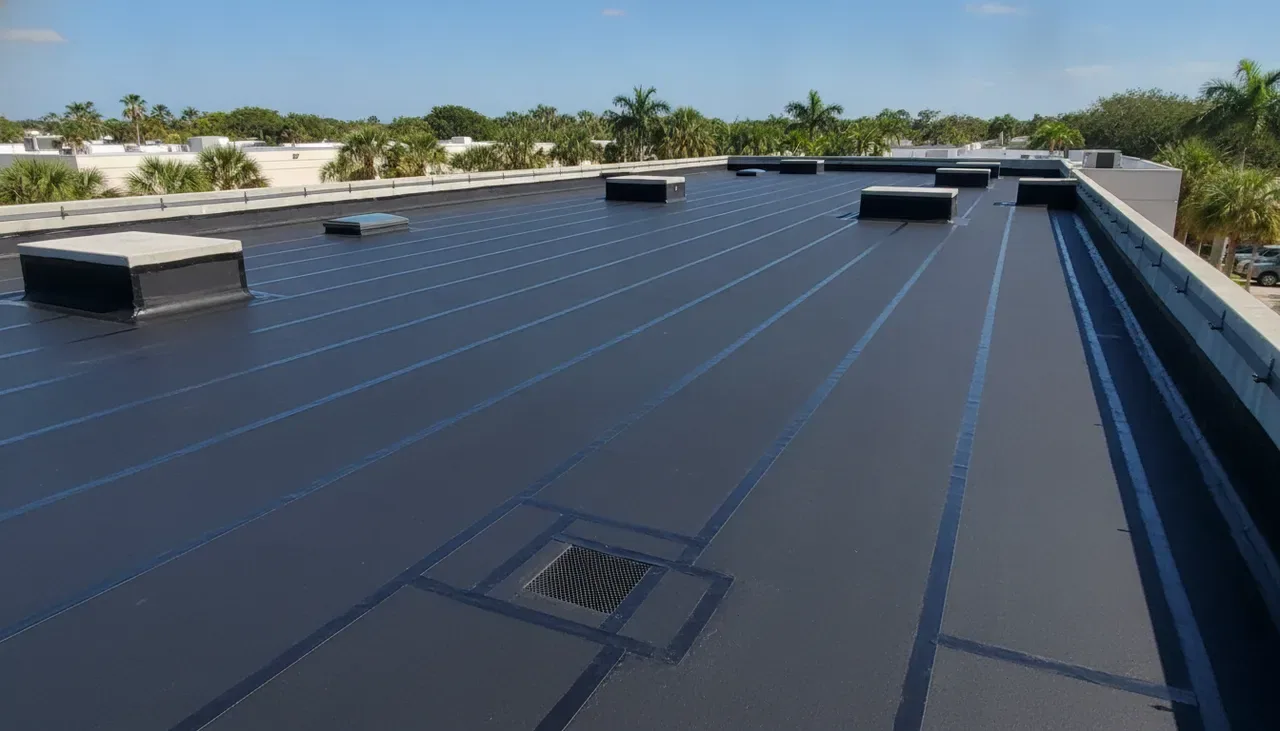
KEE Roofing in Daly City
KEE PVC-alloy membrane roofing in Daly City, CA: plasticizer retention, rooftop chemical exposure, welded details, and scope boundaries for trades.
Plasticizer is the reason a flexible membrane stays flexible, and it is also what leaves a sheet slowly when the roof sits under heat and rooftop discharge. KEE membranes address that by using a ketone ethylene ester that is blended into a PVC alloy and is designed to stay in the sheet. For a general contractor in Daly City, CA, the question is whether the roof's exposures justify that grade of membrane or whether a standard single-ply will do the job at a lower scope cost.
KEE is a hot-air-welded system, so the seam and the detail work resemble PVC installs, and it is one of the membranes we install, repair, and maintain. It is usually reserved for roofs where chemicals, fats, or long exposure make a more durable sheet worth the price difference.
System fit: Match the sheet to the exposure
The strongest reasons to select KEE are grease, oils, and chemical vapor on the roof surface. Cooking exhaust, process vents, and certain laboratory discharges can attack a membrane that was never meant to carry them, and a failed seam there turns into a seam failure repair sooner than the owner planned. Roofs with mechanical yards, where equipment is serviced often, also benefit from a sheet that tolerates incidental spills. If none of those apply, the same dollars may be better spent on insulation, drainage, or a cover board under a simpler membrane.
We walk the roof with the building engineer or manager, mark every discharge point, and photograph the stains. Daly City's City profile describes a regional hub for retail, healthcare, and small business, and each of those uses can place different equipment on the roof. We read the equipment plan instead of guessing at the exposure from the building type.
Comparison: Put KEE beside the alternatives
A fair proposal prices KEE next to at least one other option on the same boundary. TPO is a lower-cost welded sheet suited to roofs without heavy discharge. PVC offers broad chemical resistance at a mid-range price. KEE adds a longer plasticizer life where the exposure is severe. A coating, such as a silicone system, may restore a sound existing roof when the substrate allows it.
The comparison belongs to the owner, and the decision follows the capital plan. A building that will be sold or redeveloped within a short window does not need the same membrane as one held for the long term. We present the options, state what each assumes about the existing deck and insulation, and leave the choice with ownership and the project team. Where the sheet meets a different membrane, we show the termination on the drawing, because two membrane types cannot simply be welded together.
Work sequence: Stage the tear-off and the sheet together
On a KEE project the crew removes only the area it can cover that day. The tear-off boundary is marked on the roof, the exposed deck is inspected for damage, and insulation or cover board goes down before the membrane is rolled out. If the deck is wet or deteriorated, the general contractor is told before the new layers are installed, since replacing a deck panel changes the structural scope and may involve another trade.
Welding follows the board, and each seam is probed before the next section starts. Edge metal, curb flashing, and drain work are timed so that no detail is left open overnight. When the building stays occupied during reroofing, we place hoists and debris chutes away from entries and tell the property manager when noise and material movement are expected.
Access: Settle the lift, the path, and the landing
Roof access is a cost item that shows up in every proposal and is often the last thing discussed. A roof reached through a tenant stair, a ladder, or a tight service lane needs a different material plan than one with a truck ramp. Rolls of membrane are heavy, and board and adhesive add up. We identify the staging area, confirm the route with the property manager, and note any limits on delivery times along Mission Street or in the other commercial settings the City describes.
Fall protection, edge control, and rooftop equipment clearances are part of the same conversation. A written access plan that shows lift locations, tie-off points, and a path around rooftop units lets the general contractor schedule other trades without crossing the work area.
Weather window: Plan against the station normals
Of its annual precipitation, the NOAA station at San Francisco International Airport records 16.76 inches in the cool months from November through March and just 0.18 inch across the summer. That is a nearby station and not a Daly City gauge, but it gives a working picture for scheduling. Large open areas of welded sheet fit the dry summer, and winter work is divided into smaller zones with temporary closures at each wall.
Brisbane's General Plan allows light fabrication, printing, and warehousing in its Crocker Park Trade Commercial area, and buildings of that kind often have loading docks and vents that need dry-in planning. The same discipline applies on any KEE roof. Each section is welded, probed, and sealed against the weather before the crew leaves it.
Questions About KEE Roofing
Cost driver: Separate the premium from the labor
KEE costs more per square foot of membrane than many alternatives, but material is only part of the proposal. Preparation, tear-off, insulation, cover board, and the number of penetrations all change the bottom line. A roof with many curbs may cost more in labor than the membrane premium adds. We split the proposal into membrane, assembly, detail work, and access so the owner can see where each dollar goes.
Permit files for this assembly should use the city’s 2025 California code edition and local amendments, which took effect January 1, 2026. The City Building Division performs plan review and field inspection, and an application deemed complete earlier may proceed under the earlier codes. We note the status in the project file because it can change assembly requirements.
Closeout: Record the exposure map
The closeout package shows which fans and vents were flagged, which surfaces received protective pads, and where the sheet meets other membranes. If the owner later adds equipment, the record shows where to locate it and where to avoid it. We can also fold the record into a condition report that guides maintenance across the Daly City building. Welded corners and boots are probed and photographed, and each rebuilt detail is marked on the plan, so a mechanical contractor who returns to add a pipe can flash it to match the existing work instead of attaching it to an unknown surface.
Commercial Roofing Questions
What does KEE offer that standard PVC does not?
A plasticizer designed to stay in the sheet longer under heat and chemical exposure. It matters most where grease or vapors reach the roof every day.
Is KEE worth it for an office roof?
Usually not, unless rooftop discharge is heavy. For ordinary office rooftop equipment, a standard welded sheet with good drainage and insulation is the better use of budget.
Can KEE be repaired like other PVC roofs?
Yes, with compatible patches and hot-air welds. We clean the area, weld a patch, and probe the edges, then mark it on the roof plan.
Does KEE need a special substrate?
It goes over insulation or cover board suitable for single-ply. The board and attachment come from the assembly design, and we review the deck before choosing.
How do we avoid damage after the roof is done?
Mark service routes with walk pads, keep fuel and solvent off the sheet, and call for a short inspection after any trade works near the curbs.
More Commercial Roofing in Daly City
Send the equipment plan and photographs
Share the rooftop equipment list, a few photographs of the staining, and access limits. We will recommend whether KEE fits and define the scope.