
Silicone Roof Coatings in Daly City, CA
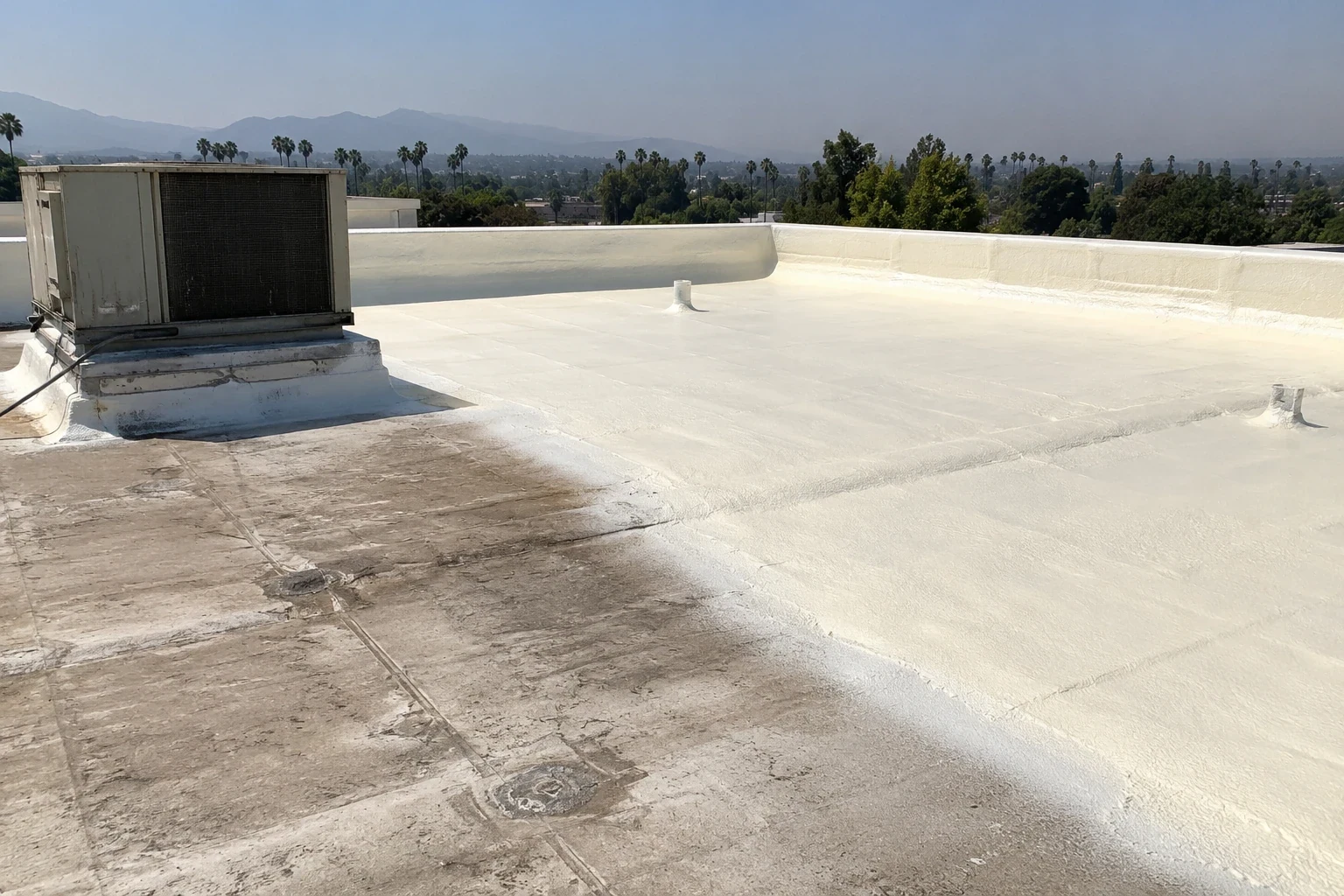
Silicone Roof Coatings in Daly City
Silicone roof coating systems in Daly City, CA: adhesion testing, ponding tolerance, seam and fastener prep, and a cure schedule that fits the wet season.
A silicone coating only holds if it bonds, and bonding is proven with a small test patch before a drum is opened for the whole roof. On a Daly City, CA building, we clean a test area, apply the coating, let it cure, and pull it to see whether it sticks. That result decides the primer, the prep, and sometimes whether coating is the right move at all. A general contractor planning a restoration should treat the adhesion test as the first scope item, not an afterthought.
Silicone coating is a liquid-applied, solvent-free or low-solvent elastomer that cures into a flexible, waterproof film. It stands up to standing water better than many coatings, and it resists ultraviolet light without chalking away. We apply it over compatible retrofit metal, single-ply, modified bitumen, and spray foam roofs as a restoration layer.
Adhesion: Test the substrate before pricing
Not every surface accepts silicone. Some existing coatings, oils, and old asphalt materials can block bonding or bleed through. The test patch tells us what primer, if any, is needed. Metal may need a rust-inhibiting primer, and certain single-ply membranes need a specific bonding layer. A failed test leads to a different system, such as a fully reinforced acrylic system or a recover.
The test is repeated at several locations because a roof can have different surface conditions in different areas. We record the results on the roof plan. The proposal lists the primers, the cleaning method, and the expected coverage so that a bid compared against ours is built from the same assumptions.
Preparation: Clean, seal, and reinforce the details
Most of the cost and most of the success of a coating job is in the prep. The roof is power-washed, loose material is removed, and rust is treated. Fasteners are tightened or replaced, seams are taped or sealed, and cracks are filled. Flashings at walls, curbs, and penetrations receive reinforcement fabric embedded in the coating so that movement does not split the film.
We check for wet insulation before any coating goes down. A coating over a wet roof traps moisture and does not fix it. A survey, test cuts, or moisture meters tell us which areas must be removed first. Where a roof has been patched many times, the patches are cleaned and primed as needed. The plan marks the areas that received extra reinforcement for future reference.
Equipment curbs, skylight frames, and pipe boots get particular attention. A curb that moves with the unit above it will crack a rigid film, so the reinforcement is wider there and the transition to the field is feathered. If rooftop trades are scheduled to return, we tell the general contractor which details to leave alone and which can be altered without breaking the coating.
Ponding water: Where silicone earns its keep
Water that sits on a roof for days is hard on most coatings. Silicone tolerates standing water better than many alternatives, which is why it is often chosen for roofs with shallow low spots that cannot be corrected without structural work. The coating does not fix the drainage, and ponding still adds weight and attracts dirt, but it protects the roof surface where water lingers.
We map the ponding areas after rain and identify whether a drain, a scupper, or a tapered fill can reduce them. Our ponding water repair work often precedes coating, because a drain that is blocked or set too high cannot be solved by film alone. The sequence lists drain work first and coating second.
Cure window: Fit application to the dry months
Silicone cures by reacting with moisture in the air, so it tolerates humidity better than some coatings, but it still needs a dry surface at application and some hours of dry weather afterward. At the nearby San Francisco International Airport NOAA station, the June through August normal is only 0.18 inch, while 16.76 inches fall between November and March. Both numbers come from a nearby station, so they guide planning without describing a single roof, and they point to summer and early fall for large coating projects.
If work runs later, we schedule shorter sections, check the forecast daily, and protect uncured areas. Dew can leave the surface damp in the early morning, so the crew waits for the roof to dry. The log records surface temperature, humidity, and cure time on each day of work, which gives the owner a day-by-day account of the conditions. On occupied buildings, we also plan for odor control and coordinate with the property manager on air intakes near the work area.
Limits: Know what silicone will not do
Silicone attracts dirt, so reflectivity declines as dust and debris settle, and periodic washing helps. Once silicone is on a roof, most other coatings will not bond to it, which means future recoats generally stay silicone. It does not add structural strength, and it cannot repair a failed insulation layer or a wet deck.
When a roof has reached the end of its life, a coating is not the right investment. That judgment comes from the condition survey, and the owner receives the findings. For roofs where a restoration makes sense, the roof coating restoration proposal explains the system, the layers, and the maintenance that follows. Reflective surfaces can also support cool roof goals where the building needs them.
Questions About Silicone Roof Coatings
Cost driver: Price thickness, prep, and access
Thickness determines the amount of material and the performance of the film. Coverage rates are set by the manufacturer for each substrate, and the proposal shows the planned thickness and the number of coats. Prep labor, primer, reinforcement at details, and access complete the price. When the owner wants a firm figure, we separate the base coating from allowances for rust, patching, and wet areas that only show up once the roof is cleaned. A roof with many penetrations will cost more per square foot than a clean field.
For a coating permit, record whether the application falls under Daly City’s locally revised 2025 California standards, in force from January 1, 2026. Title 24 plan review and field inspection are city Building Division functions. A coating project may involve reflectance and fire requirements, which we confirm with the permit path. Materials arrive by Interstate 280 and local streets, and the delivery plan for Daly City sites sets drum staging so the roof surface stays clear.
Commercial Roofing Questions
How do we know if silicone will stick to our roof?
A test patch is applied, cured, and pulled. The result tells us if a primer is needed or if another system is a better fit.
Can silicone go over an existing acrylic coating?
Sometimes, after testing. Compatibility varies, and a failed bond leaves the old coating peeling with the new one on top, so we test before committing.
Does silicone fix a leaking roof?
It seals small cracks, seams, and fasteners once the details are prepared. It cannot cure wet insulation or a failed deck, so moisture checks come first.
How often does a silicone roof need attention?
Washing and an annual walk keep the surface clear and show any damage. We record thickness and details at completion so later inspections have a baseline. A walk each spring and fall, plus a rinse of drains and low spots, is usually all the upkeep the film needs.
Is silicone a good choice for a roof with ponding?
It tolerates standing water better than many coatings, but the drainage should still be improved where the structure allows. Water that stays for days adds weight and collects grit, so we mark the low spots and track them at each visit.
More Commercial Roofing in Daly City
Send roof photographs and access limits
Share the roof type, repair history, and tenant constraints. We will plan adhesion testing and define a coating scope with a sequence that fits.