
Metal Roof Retrofit in Daly City, CA
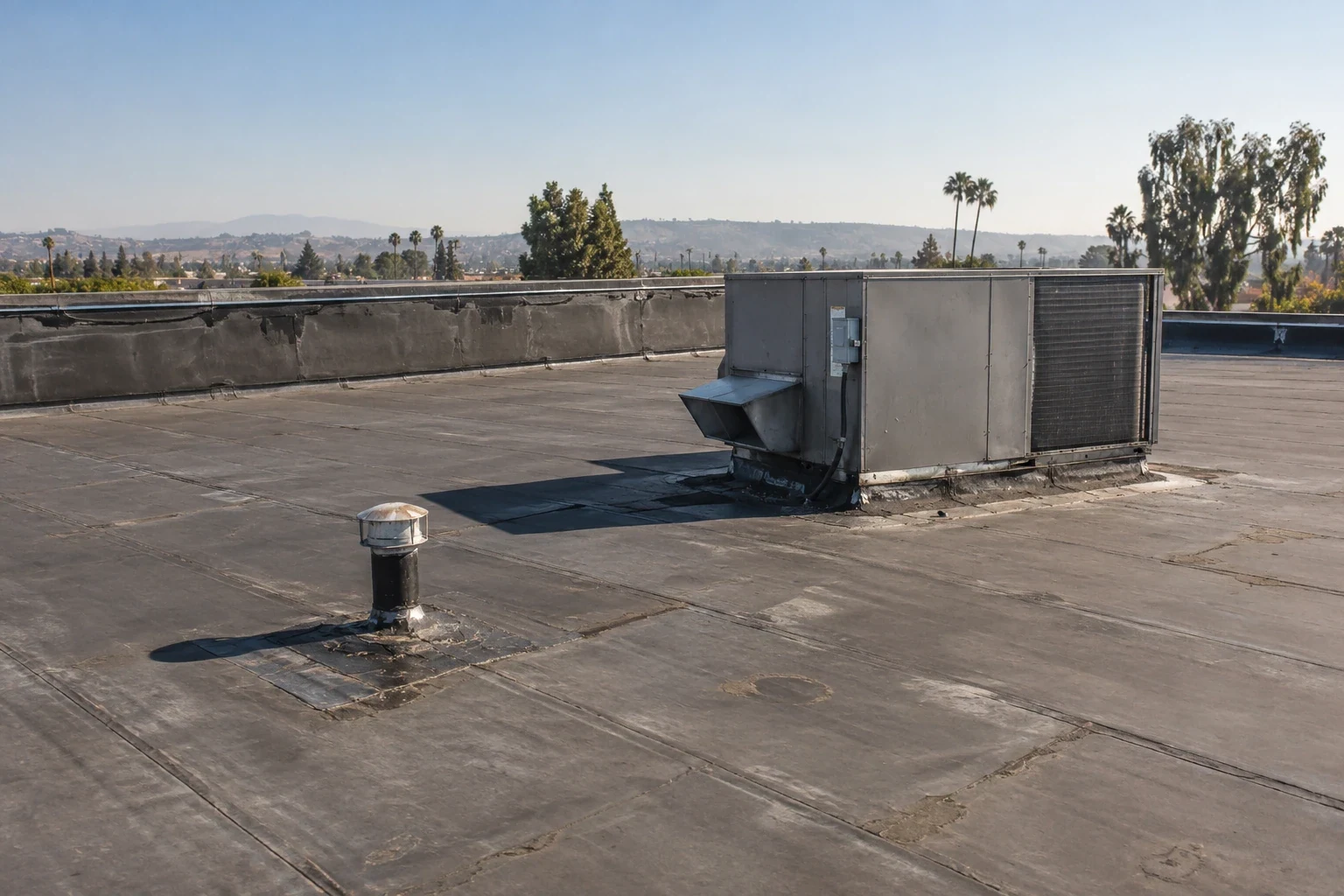
Metal Roof Retrofit in Daly City
Metal roof retrofit and restoration in Daly City, CA: exposed-fastener panel repair, fastener and seam sealing, coatings, and retrofit framing options.
Walk an exposed-fastener metal roof after a dry spell and the screws tell the story: backed-out heads, stripped holes, rubber washers cracked flat. Each one is a small opening in the roof, and a metal building in Daly City, CA can have thousands of them. The first question for a general contractor is not whether the roof leaks but how many of those openings are still sound, because that count sets the line between a maintenance scope and a retrofit.
A retrofit is work that keeps the existing metal roof in service by repairing, sealing, coating, or covering it instead of removing it. We handle fastener replacement, seam sealing, panel repair, restoration coatings, and retrofit systems that go over the old panels. The right method follows the condition of the sheet, the framing, and the building use.
Field condition: Count fasteners, laps, and rust
We begin by walking the panels and marking backed-out fasteners, split washers, and open end laps. Rust is the next check. Surface rust at a cut edge can be treated, while perforation through the sheet means that panel needs replacement or cover. We also look at the purlins and framing through the interior, since a roof that has leaked for a long time may have damaged the structure below.
Skylights, ridge caps, and wall flashing deserve their own pass. They are common leak locations and often carry sealant that has aged out. We photograph each condition, record its location on a roof plan, and sort the list into repair, restore, and replace. That list gives ownership a basis for a capital item decision instead of a reaction to the next stain on a ceiling.
Fasteners: Replace the screw, not just the sealant
A screw that has backed out will not hold again if it is simply sealed over. The common repair is a larger-diameter fastener into fresh metal or a new location, with a washer matched to the panel. In wood or steel framing, the hole condition decides whether the fastener can bite. Where framing is deteriorated, the work reaches beyond the roofing scope and the owner needs to know that before the schedule is set.
We replace fasteners in a pattern, working across the roof so that every panel is checked. Seams get tape or sealant compatible with the metal and the coating that may follow. Each area completed is marked on the plan, because a repaired fastener line has to be distinguished from one that is waiting. That record keeps the next maintenance visit from repeating work already done.
At the end of the retrofit, we walk the roof with the owner or manager, re-check a sample of the new fasteners, and photograph every lap and skylight curb. The closeout set names the coating or sealant products used, the surfaces they were applied to, and the areas that were left untreated and why. A roof that has this record can be inspected quickly each year, and a leak report can be matched to a known repair instead of starting the search from scratch.
Retrofit options: Coat, cover, or reframe
Where panels are sound, a restoration coating system can seal fasteners and seams and add reflectivity. A silicone coating suits ponding areas, while an acrylic system is common on well-drained slopes. Both need a clean, primed substrate, and metal often requires a specific primer for rust or galvanized surfaces.
Where panels are failing but the structure is solid, a new standing seam roof can be installed over the old one on retrofit framing or sub-purlins. This avoids tear-off and keeps the building operating, though it adds load and changes the roof height at curbs and walls. An engineer should confirm capacity, and the proposal lists the added height at each transition. Full panel replacement is the option when the sheet and framing are both at the end of their useful life.
Season: Seal before the first storm
Sealant, tape, and coatings need dry surfaces and moderate temperatures. At the NOAA station for San Francisco International Airport, 16.76 of 19.64 annual inches fall between November and March, a station figure that points to late summer and early fall as the natural window for restoration. Fasteners and seams that are sealed before the first heavy rain avoid a season of repeated leaks in the interior.
Large open roofs on warehouse and light industrial buildings dry quickly but stay slick when dew is on the metal. Brisbane's Crocker Park Trade Commercial area allows light fabrication, printing, and warehousing, and a metal roof on any building of that kind gets the same handling. Crews start after the surface dries and set safe walk paths on the plan, so that the work does not become a hazard on a damp sheet.
Occupied operations: Protect the floor below
Metal retrofit work is noisy. Fastener replacement, panel handling, and framing create vibration and sound that carry through the building. Fumes from sealants and coatings may require ventilation planning, especially when air intakes sit near the work. We discuss shift timing with the property manager, protect equipment and stored goods where a leak or debris could land, and place a clear safety zone at ground level under any overhead work.
For buildings that operate around the clock, we divide the roof into zones and finish one before opening the next. Our commercial roof repair crews can stage temporary patches over active leaks while the larger scope is approved, so that operations are not waiting on a decision.
Questions About Metal Roof Retrofit
Cost and code: Price the condition, not the square footage
Cost follows condition: fastener count, panel damage, rust treatment, framing repair, coating thickness, and access. A building with many penetrations costs more to seal than a clean expanse. We state allowances for concealed conditions, like framing damage found after panels are lifted, so that surprises have a rule instead of a dispute. Materials come in by Interstate 280 and local streets, and long panels or coating drums are scheduled to match crew availability and staging space.
When a metal retrofit needs a permit, note that Daly City’s changes to the 2025 California standards became effective on January 1, 2026; Title 24 review and field checks go through the Building Division. Some retrofit scopes need permits, and others do not, so we confirm the path early. Our Daly City proposals show what the permit covers and what it does not.
Commercial Roofing Questions
How many fasteners are too many to keep replacing?
When replacement fasteners keep backing out, the issue is usually the panel or the framing. We test pull-out, check the metal, and recommend cover or replacement when the base cannot hold.
Will a coating stop leaks at every screw?
A coating seals tightly when the fasteners are first replaced or tightened and the surface is prepared. Over loose screws it will not hold, so the sequence is fasteners, seams, primer, coating.
Can a new metal roof go over the old one?
Yes, when the structure can carry it and the old roof gives a stable base. A retrofit adds height at edges and curbs, and we draw those changes before work starts.
What should an owner expect from rust?
Surface rust gets cleaned and primed. Holes through the sheet mean that panel needs patching, replacement, or cover. We mark each class of damage separately on the roof plan.
Is retrofit cheaper than replacement?
Usually the scope is lower because tear-off is avoided, but the answer depends on framing, panel condition, and building access. We compare both on the same boundary.
More Commercial Roofing in Daly City
Send photographs and the building age
Share a few photographs of the fasteners and laps, plus any leak history. We will walk the roof and define a retrofit scope with a work sequence.