
Acrylic Roof Coatings in Daly City, CA
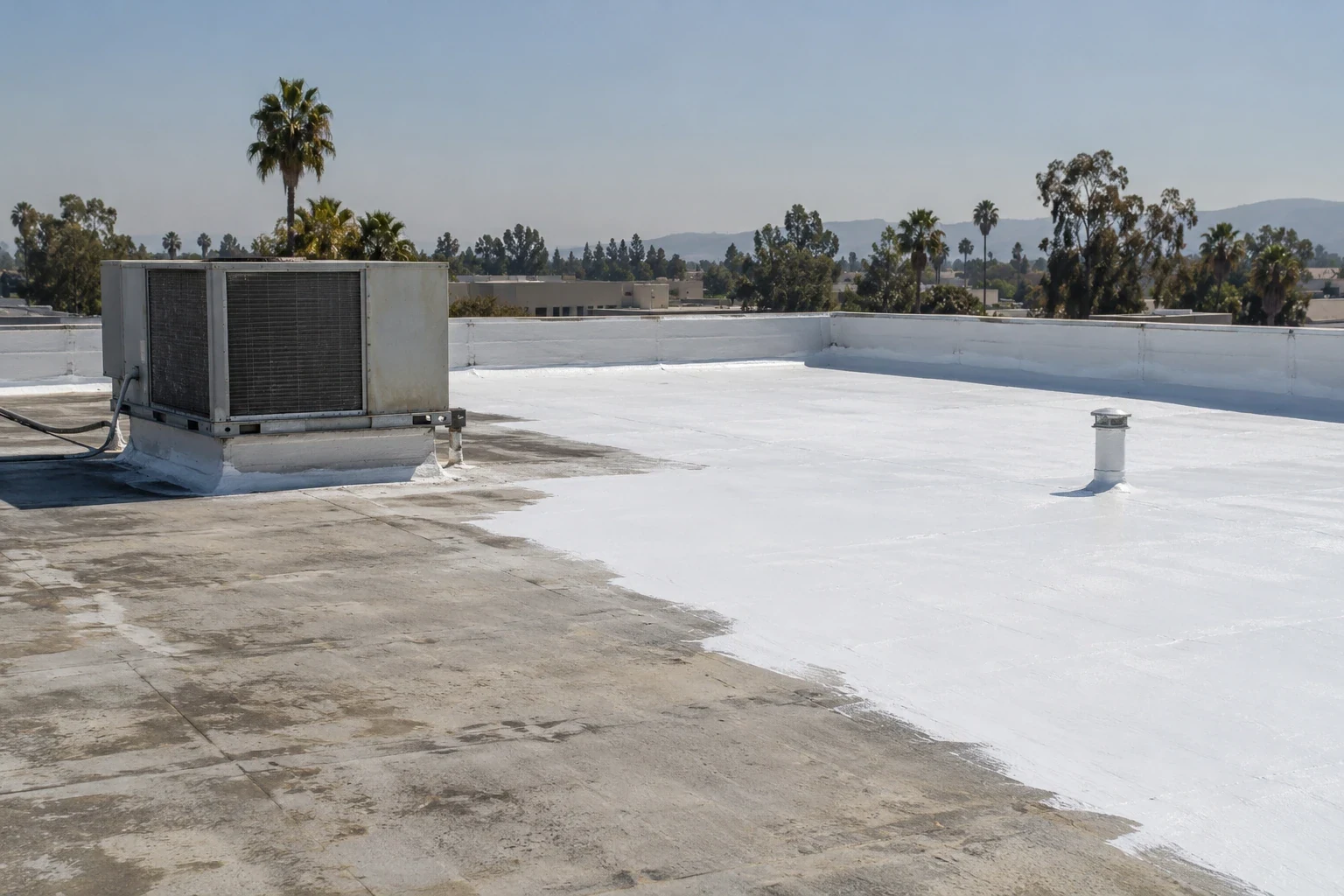
Acrylic Roof Coatings in Daly City
Acrylic roof coating systems in Daly City, CA: water-based application, drainage limits, reinforcement at seams, and timing around the dry and wet seasons.
Acrylic restoration succeeds only when the existing roof can accept a water-based film and the crew has a dry interval to apply it. That makes the first decision a condition decision: identify the membrane, locate weak seams, check drainage, and confirm that the substrate is dry. On a Daly City roof, coating can be a useful way to renew a sound surface; it is a poor answer to wet insulation or a low area that stays flooded.
We inspect before discussing color or price. The scope records the repairs needed, the preparation standard, and the thickness the selected system must reach. The owner can compare that work with a silicone coating where standing water changes the product choice.
Substrate Fit: Confirm What the Film Will Bond To
Coatings are not interchangeable primers for every roof. Metal, modified bitumen, built-up roofing, single-ply membranes, and spray foam each present a different surface and different repair needs. We identify the existing assembly and test representative areas where compatibility is uncertain. A patch that is loose, chalky, oily, or made from an unknown product has to be resolved before a new layer can be relied.
Preparation is scoped by condition. Washing removes dirt and biological growth; rusted metal, open seams, failed fasteners, and damaged flashings need their own treatment. Fabric reinforcement may be specified at a seam or transition, but it is not a substitute for replacing a failed detail. The work notes identify which areas receive reinforcement and what limits remain in the existing assembly.
For a retrofit, the history of earlier coatings also affects preparation. A small test area can help confirm whether cleaning, primer, or a different system is needed before the full roof is staged. We photograph representative conditions, note incompatible patch material, and carry those findings into the scope. If the selected film requires primer, it is applied at the specified rate and allowed to dry as directed. At a parapet or penetration, we inspect the transition after preparation rather than covering debris or a loose edge. This record lets the owner see what was accepted and what needed repair before field application.
Drainage: Resolve Water That Will Not Leave
Water sitting for days can soften an acrylic film, so the low points matter more than the broad roof field. We check drain bowls, strainers, scuppers, and the path water follows after rainfall. A blocked outlet calls for maintenance; a drain set too high, a settlement dip, or an inadequate slope may require a defined correction. The coating proposal should list that work separately instead of implying that another coat will level the roof.
If ponding remains after drainage repairs, acrylic may not be the right selection. A built-up roof can also require repair or replacement rather than encapsulation when blisters, wet layers, or widespread loss of adhesion are present. We use the condition findings to state where coating is suitable and where another assembly should be compared.
Dry Window: Schedule Around the Cool-Season Rains
Daly City’s nearby NOAA station illustrates a concentrated wet season, though it is not a reading from every city roof. The 1991 to 2020 normal at San Francisco International Airport totals 19.64 inches of annual precipitation; 16.76 inches fall from November through March. June through August total just 0.18 inch at that station. Those records help explain why a coating schedule needs a real dry window, while the roof itself still has to be checked each morning.
Water-based acrylic must dry between coats and remain protected through its specified cure period. Dew, shaded sections, and a changing forecast can affect when work starts even during a generally dry stretch. We plan manageable application areas, verify the surface is ready, and keep a weather log with the completed sections and coat details. If rain threatens uncured work, the crew pauses rather than applying over an unsuitable surface.
Film Build: Specify the Application, Then Measure It
A restoration scope should say how the system will be installed, not just name the coating. The manufacturer’s instructions set the compatible primer, reinforcement method, coverage, and target dry-film thickness. We identify whether application will use spray, roller, or brush at each type of detail and include the cure interval between passes. At edges, penetrations, and changes in plane, the finish has to meet the specified detail without leaving a thin spot.
During installation, coverage and wet-film readings can be checked against the area and material used. The closeout record notes repairs, application conditions, and any locations where the substrate required a change to the plan. A light finish may support cool roof objectives, but reflectance should be weighed with the owner’s actual energy and maintenance goals rather than promised as a fixed savings.
Repair or Recover: Compare the Whole Roof Assembly
Coating is most defensible when the membrane remains attached, the insulation is dry, and drainage works. Test cuts or other investigative work can reveal wet material that a clean-looking surface hides. If wet insulation, widespread blistering, or a failing deck appears, those conditions need a repair or replacement scope before any restoration price is meaningful. The proposal separates preparation, concealed-condition allowances, and coating so the owner can see what each option includes.
Our roof coating restoration estimate can be compared with a recover or replacement using the same roof boundary. The City identifies retail, healthcare, and small-business activity among Daly City’s economic strengths, so a building manager may also need to coordinate the work with tenant access and operating hours. The scope should identify the actual assembly and work limits, not assume that one coating fits every property.
Questions About Acrylic Roof Coatings
Permit and Care: Keep the Scope Documented
January 1, 2026 marked the start of Daly City’s local amendments to California’s 2025 construction standards. For an application already in process, the complete date recorded by the Building Division determines whether the former code set remains available. The Division handles Title 24 plan review and on-site construction inspections. Confirm the permit history and required reviews with City staff before mobilizing, because a roof proposal cannot decide which rules govern.
Regional links such as BART, Interstate 280, US 101, and State Route 82 can orient a staging discussion, but they do not establish a truck approach or site access. The property manager should approve the material path, safe staging area, and pedestrian controls. After the film is installed, preventive maintenance can track drains, details, adhesion, and coating wear. A Daly City roof record should note repairs and observed conditions, so the next inspection can compare like areas rather than rely on memory.
Commercial Roofing Questions
When is acrylic coating preferable to silicone?
Acrylic can fit a sound roof with effective drainage and no persistent ponding. If water remains after storms, correct the drainage or compare another system before choosing the coating.
Can acrylic be applied after several rainy days?
Only after the roof surface and any repaired areas meet the product’s dry-substrate requirements. The crew checks conditions before application and waits for a forecast window that allows the specified cure.
What if rain reaches a new coat?
Uncured material may be damaged. The affected area is assessed after conditions clear, then cleaned or recoated as required by the system instructions; the application record should note the interruption.
How long will an acrylic restoration last?
There is no single service life for every roof. Substrate condition, film thickness, drainage, exposure, and upkeep all matter, so the proposal should state the system and maintenance assumptions.
Can acrylic seal every seam and fastener?
No. Loose fasteners, failed flashing, and moving joints need repair before coating. Reinforcement is used only at compatible details specified for the system, not as a bridge over a defective assembly.
More Commercial Roofing in Daly City
Share the roof survey and rain history
Send photographs, repair history, and tenant limits. We will test the roof and define an acrylic scope or recommend another system.