
Commercial Roof Coating Restoration in Daly City, CA
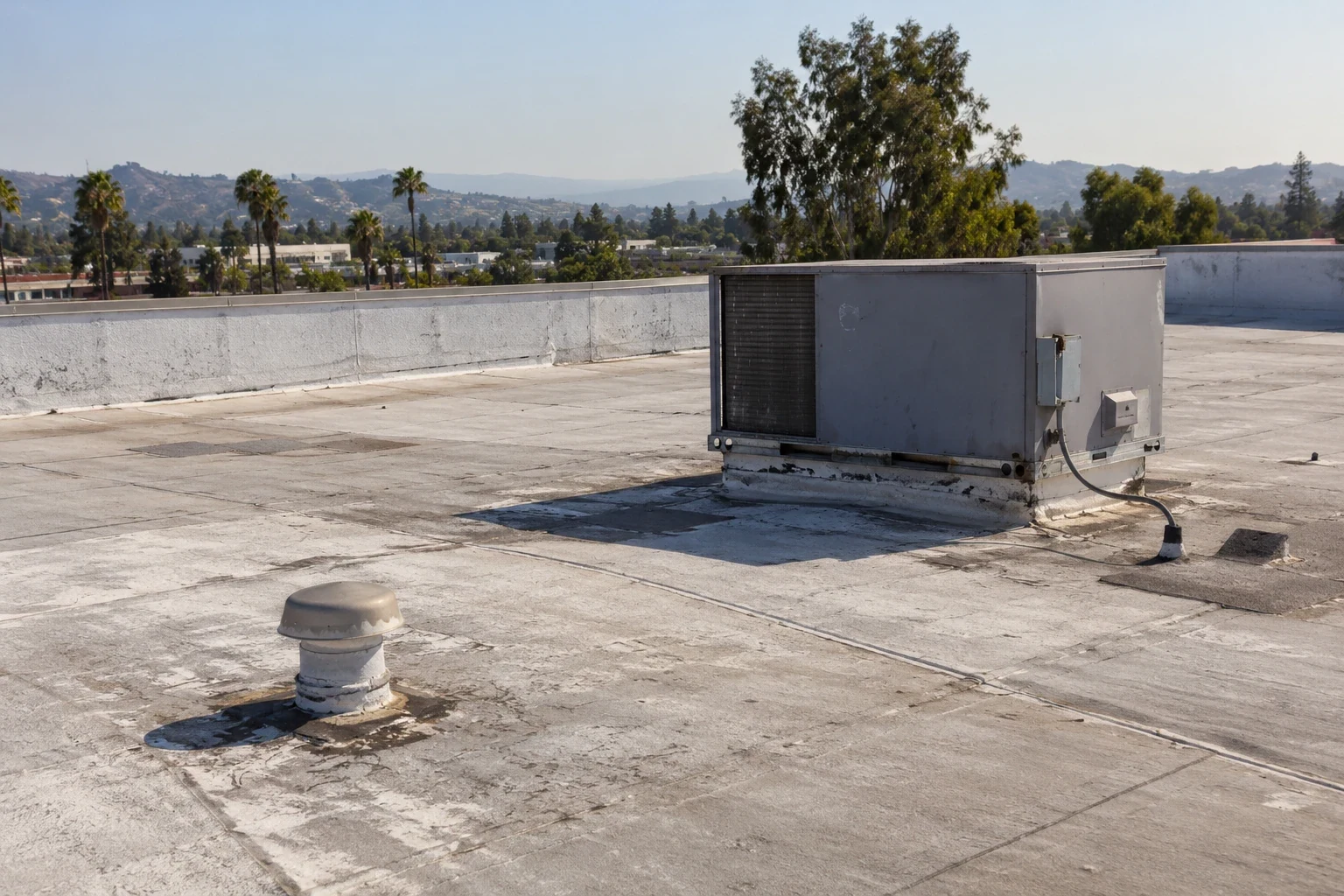
Commercial Roof Coating Restoration in Daly City
Assess a Daly City roof coating for adhesion, drainage, and substrate condition before setting a restoration scope or coating boundary.
A coating line can hide the question that matters most: what surface did it bond to, and what condition sits beneath it? In Daly City, we begin by identifying the existing assembly, repair history, drainage paths, and edges where the coating ends. We do not treat a colored surface as proof that the roof is ready for another layer. A general contractor needs to know whether the work is restoration, localized repair, or a broader replacement decision, because each has a different scope boundary and handoff. Westlake and Serramonte are named commercial areas in Daly City, while Mission Street and Geneva Avenue are designated commercial corridors. That helps frame occupied work without describing any particular building. City profile materials identify employment centers in San Francisco and San Mateo County as nearby, helpful for dispatch but unrelated to an individual roof's assembly. If coating remains a candidate, connect its limits to the commercial roof inspection and compare the assembly with silicone roof coatings or acrylic roof coatings before pricing.
Substrate: Confirm what the coating will bond to
A restoration decision starts with the surface underfoot, not the product brochure. We identify the membrane or cap sheet where visible, check whether prior coatings are present, and note areas of peeling, blistering, open seams, or exposed reinforcement. Test locations should represent different roof zones rather than a convenient single patch. Adhesion testing and manufacturer compatibility review belong in the scope when the existing layers are uncertain. Wet insulation, trapped moisture, or deteriorated substrate cannot be made sound by adding a finish coat. We mark areas requiring removal or repair and state what remains unverified. For a roof with a questionable assembly, infrared moisture surveys or targeted test cuts may be considered under a separate approved scope. If the field condition points to a coating system, the existing membrane, whether TPO, EPDM, or another sheet, has to be confirmed rather than assumed.
Drainage: Keep water paths out of the coating guess
Coating work follows the roof's geometry, including crickets, saddles, low points, and discharge details. Before applying material, we map drain paths and confirm that debris, ponding, or a damaged drain flange is addressed independently. A coating that bridges a moving joint or changes a drain opening can create a new maintenance issue. At each drain, scupper, curb, and edge, the scope should state whether the detail is included, excluded, or assigned to another trade. Drain and scupper repairs are scoped separately. This is particularly important where equipment or conduit work overlaps the roof, since the crew needs a protected path and a clear handoff. For a broader location view, Pacifica planning identifies commercial activity at district centers and along Highway 1; that context helps with area-level routing but does not prove conditions at a specific building. A project near the Mission Street corridor may have tight staging constraints; we confirm actual access with the general contractor rather than infer it from the address. A commercial roof repair remains a better fit when the defect is local and the existing coating does not require broad restoration.
Assembly: Match the system to the existing roof
A coating system is selected only after the base surface and intended service conditions are understood. Compatibility depends on substrate, prior coating chemistry, required preparation, reinforcement at transitions, and how the finished system terminates. Product selection also needs a review of current manufacturer instructions and any applicable warranty conditions. A coating installation alone does not establish a warranty extension. We identify which submittals are needed, what surface preparation is included, and who approves test results before production starts. If a membrane replacement is under consideration, compare restoration with a commercial roof recover or overlay and a complete commercial roof replacement. Product-specific questions, such as single-ply manufacturer details, can be answered after the installed assembly is confirmed. The decision record should include the test area, preparation method, accepted result, and the boundary where the coating work stops.
Preparation: Price detail work separately
The visible coating area is only one part of the restoration price. Surface cleaning, removal of loose material, seam repairs, reinforcement, primer, access, protection of rooftop equipment, and cure conditions can change labor and sequencing. A roof with many curbs and transitions carries more detail work than an uninterrupted field, even if the measured area is similar. The estimate should state the preparation standard, repairs included, excluded substrate conditions, application limits, and unit prices for verified additions. This makes a change order easier to evaluate if test areas reveal a different condition. A general contractor can align that pricing with other scopes and confirm when another trade may return to the finished roof. If capital alternatives are being compared, a roof capital plan should distinguish restoration from replacement rather than compare only first cost. The roof's condition, access, and required detail work are the cost drivers; corridor names do not predict those variables.
Weather: Sequence around the actual application window
Coating installation requires suitable surface and ambient conditions under the selected product's current instructions. We check the forecast, substrate dryness, dew risk, and protection plan before releasing a roof area for application. At the NOAA station near SFO, the November-to-March stretch holds most of the annual normal (16.76 of 19.64 inches); those are station records rather than a parcel-level measurement. Those records describe the station, not all local roofs, but the cool-season concentration makes open work and cure protection a specific schedule concern. The general contractor should know which area is released, what is protected, and who checks temporary conditions at the end of shift. A wet surface or a closing weather window can require resequencing rather than rushed application. We document the hold point and the decision to resume. Storm damage is a separate path from restoration, and a coating should never be used to conceal an unresolved leak.
Questions About Commercial Roof Coating Restoration
Acceptance: Record what passed and what remains
A coating closeout records the installed product, preparation, repairs, application areas, test outcomes, weather interruptions, and final inspection. We identify areas excluded from the work and photograph each transition where the coating meets an existing detail. If the scope includes roof drains, confirm that openings remain clear and that no coating changed the intended path. The general contractor should receive the same roof plan used for the work, updated with any boundary changes. That avoids a later trade relying on an outdated drawing. For buildings in Westlake or Serramonte, planning materials describe commercial activity at the area level; they do not identify the roof assembly at a specific property. Field records do. If a repair remains pending, track it as a separate item and do not present the restoration as complete. Share the condition record, test results, and access dates to review whether a coating scope is technically supportable and how it fits the project sequence.
Commercial Roofing Questions
Can a coating fix wet insulation?
No. A coating does not dry or replace wet insulation. Moisture investigation and removal or repair of affected materials must be scoped before restoration proceeds.
What is checked before coating starts?
Confirm the substrate, prior layers, adhesion, drainage details, surface preparation, product compatibility, weather limits, and protection for adjacent equipment. Test areas should represent the roof zones in the proposed scope.
Does a new coating automatically extend a warranty?
No warranty extension should be assumed. Product, installer eligibility, existing assembly, preparation, and current manufacturer requirements all need review before any warranty language is included.
How is a coating estimate compared with replacement?
Compare the same roof areas and include preparation, detail repairs, access, exclusions, and the condition risk that remains. A lower initial coating price is not an equivalent scope if underlying material stays unverified.
What should the GC coordinate?
Set the roof release area, weather hold points, adjacent trade access, equipment protection, and end-of-shift checks. Record any change in the coating boundary before the next crew enters.
More Commercial Roofing in Daly City
Review a coating candidate
Send the available roof plan, known coating history, leak locations, and access rules. We can define the test areas and identify what must be verified before a restoration price is set.