
Carlisle SynTec Roofing in Daly City, CA
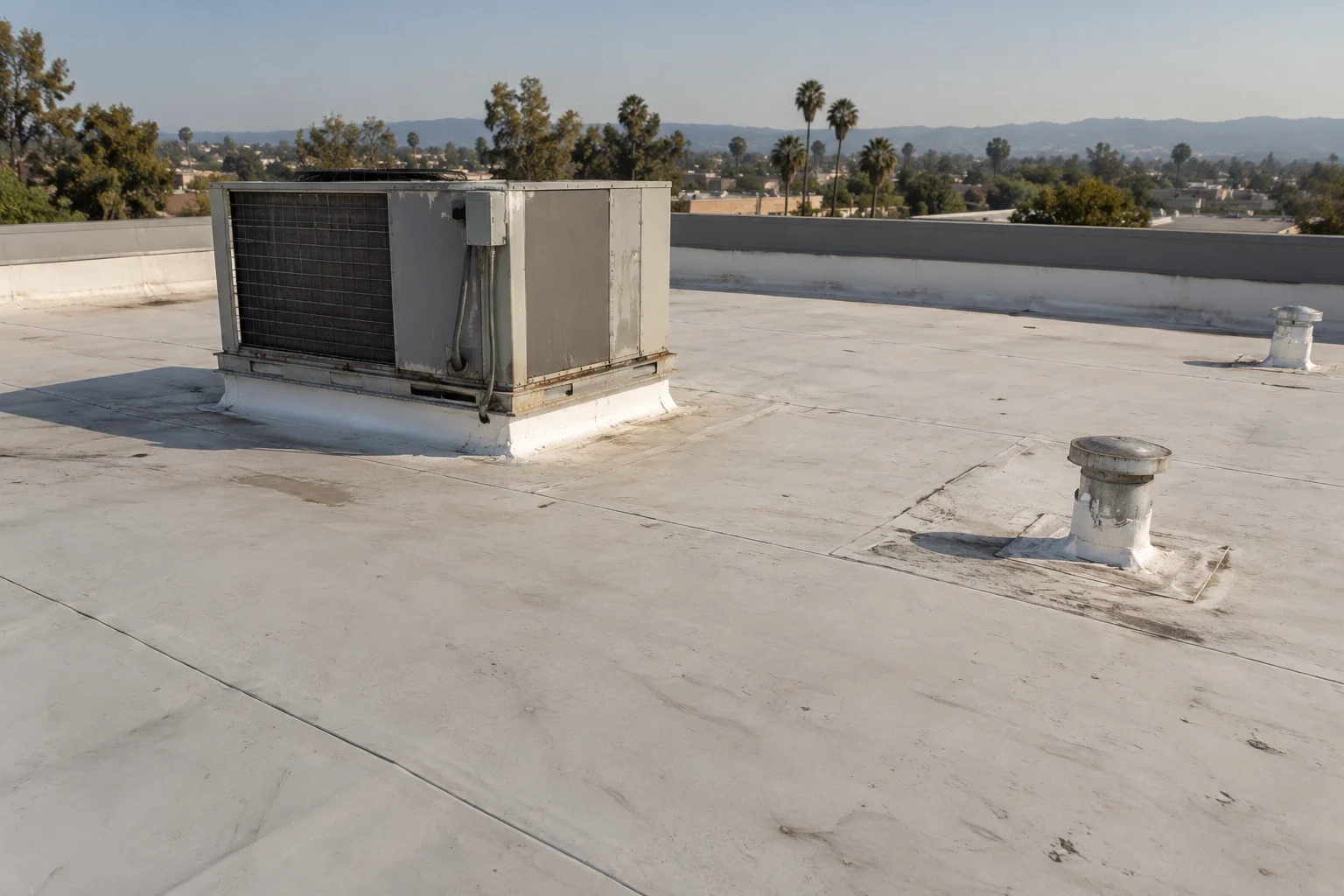
Carlisle SynTec Roofing in Daly City
Carlisle SynTec roofing in Daly City, CA: Sure-Weld TPO, Sure-Seal EPDM and Sure-Flex PVC installation, repair, and the handoffs between trades.
Carlisle SynTec is a single-ply manufacturer, and its three best known lines split the work in a useful way: Sure-Weld for TPO, Sure-Seal for EPDM, and Sure-Flex for PVC, while the sister brand Versico sells overlapping membranes. A general contractor who sees the Carlisle name in a specification is really looking at one of three different installations, each with its own seam method, its own adhesive or welding sequence, and its own idea of where the roof ends and the next trade begins. The first job in a Daly City, CA scope is sorting out which of the three applies.
We install and repair all three membrane types. On a recover or a tear-off, the manufacturer's published details govern how the sheet turns up a wall, closes around a pipe, and terminates at an edge. Our part is to confirm those details against what is actually exposed on the roof and to write the differences into the scope before material is released.
Three sheets: Sure-Weld, Sure-Seal and Sure-Flex are not interchangeable
Sure-Weld is a heat-welded thermoplastic. Seams are fused with hot air, and the finished lap should read as one piece of sheet. It suits buildings that want a white surface and a clean line at the parapet, and it is a common match for a TPO roof with mechanically fastened or fully adhered attachment.
Sure-Seal is a vulcanized rubber sheet. It comes in wide rolls, which keeps the seam count low across large fields, and the laps are joined with splice tape or adhesive instead of heat. That makes EPDM forgiving in cooler weather, but it also means the seam depends on clean surfaces and on the primer reaching the right tack.
Sure-Flex is the PVC line. Like TPO, it welds, and it is chosen where a roof sees grease exhaust, cooking residue, or other chemical exposure that a different membrane would tolerate less well. A PVC roof over a restaurant kitchen is the textbook case.
Field condition: What the old roof tells us about the new one
Carlisle details assume a certain surface under the sheet. Before the order is placed we core the existing roof at the places the moisture survey flags, count the layers, and check the deck where fasteners would land. A roof that carries two earlier layers may not accept a third without a cover board or a complete tear-off, and a deck that has rusted through at the fastener line will not hold a mechanically attached plate.
The same inspection reveals what the old membrane left behind. Adhesive residue, coal-tar pitch, and asphalt-based coatings can each react with a new single-ply sheet if the separation layer is missing, so we raise any unaddressed chemistry with the specifier before a sheet is rolled out.
Mission Street and Geneva Avenue are Daly City's named corridors, with Westlake and Serramonte as its commercial areas, but a corridor name says nothing about the roof beneath a given building. On any commercial roof, rooftop equipment tends to arrive in separate projects. Each addition cuts into the roof and leaves its own flashing, so one membrane can carry several vintages of detail.
Sequence: Dry-in comes before the next trade moves in
A Carlisle roof is only watertight when the details are closed. The field sheet may go down in a day, but the flashing at walls, curbs, and drains takes longer and cannot be left open overnight in wet weather. The airport NOAA station is the nearest weather record, and it is a station reading, not a citywide Daly City one: about 16.76 of its 19.64 yearly inches land between November and March, while June through August adds only 0.18. A summer sequence can therefore run longer and looser than the same scope in winter.
Other trades are waiting on the roof. Electricians, mechanical contractors, and solar installers all need it dry and walkable. We agree in advance which section is released to them first, where walk pads and temporary protection go, and who repairs a penetration that another trade makes after we leave. The written handoff protects the membrane and also protects the other trade from being blamed for a leak that began with a missing boot.
Scope boundary: Where a repair ends and the old roof begins
A Carlisle scope is not always a full replacement. Repairs and partial reroofs tie new sheet into old, and the compatibility of the two decides whether the tie-in will last. A new TPO patch (including the EverGuard sheet from GAF) cannot be welded to an old EPDM field, and a splice between PVC and TPO is not a weld at all. We identify the existing membrane by testing a sample, mark the limit of the repair on the roof, and choose a transition detail that is designed for the two materials in the same place.
This is also where a commercial roof repair stops being a repair. When the test cores show wet insulation beyond the first leak, the scope grows, and the owner should see that decision with numbers and photographs. A patch that covers wet insulation hides the problem and does nothing about it.
Cost driver: Attachment, details, and the access window
Material cost follows thickness and attachment. A fully adhered sheet needs more adhesive and more labor than a mechanically fastened one, but it avoids the fastener plates and gives a flatter surface. A thicker membrane costs more per square and generally tolerates more foot traffic. The details, as always, take the time: parapet height, the number of curbs, the length of expansion joints, and the distance from the loading point to the work.
Permits and code cycles matter too. Daly City's 2025 California code, adopted with local amendments, took effect on January 1, 2026, while an application already complete before that day may stay with the older codes. We ask which applies before insulation values are set, because a change in the required R-value changes board thickness and every height that depends on it.
Whatever warranty the manufacturer issues rests on the approved system and its inspection requirements. We write those requirements into the work sequence so the inspection date is a planned event, not a surprise at the end.
Questions About Carlisle SynTec Roofing
Closeout: Photographs, test results, and a clean drain path
The record we leave shows each termination, penetration, and drain by roof area, with notes on seam testing where it was done. It helps the next roofer who works there, and it supports any manufacturer inspection. The same record format carries to roofs in Pacifica, San Bruno, or anywhere else on the Peninsula we are asked to work.
Drains get a final check that is easy to skip: we pour water at each one and watch the flow, because a membrane that is perfect on paper can still hold a pond if a bowl sits a quarter inch high. After that, a maintenance visit before the first fall storm keeps the debris out of the drain path.
Commercial Roofing Questions
Which Carlisle sheet suits a restaurant roof?
Grease exhaust points toward the PVC line, because the membrane resists the fats and oils that wear down other single-plies. We also check how the exhaust fan discharges and whether a grease containment tray is in place.
Is Sure-Seal EPDM still worth considering?
For roofs with many penetrations and a need for easy field repair, it remains a practical choice. Black membranes absorb heat, so the energy and comfort questions are worth raising with the building owner early.
Can an old EPDM roof receive a new TPO overlay?
Only after testing. The insulation must be dry, the old sheet must be sound enough to carry the new layer, and a separation sheet or cover board often goes in between. A tear-off is the fallback if any of those fail.
Who inspects the roof for the manufacturer's records?
The manufacturer sets its own inspection process, and we plan our work to meet its dates and requirements. We photograph each completed area so the inspector sees finished details instead of covered ones.
Does a wet winter change the Carlisle schedule?
It adds weather days and shortens the area we open at one time. Welding and adhesive work have temperature and moisture limits, so we choose start times from the data sheet instead of the calendar.
More Commercial Roofing in Daly City
Share the Carlisle specification and the roof access plan
Send the specification pages, the existing roof details, and the access limits. We will confirm the system type, mark the scope boundaries, and return a sequence the other trades can use.