
GAF Commercial Roofing Systems in Daly City, CA
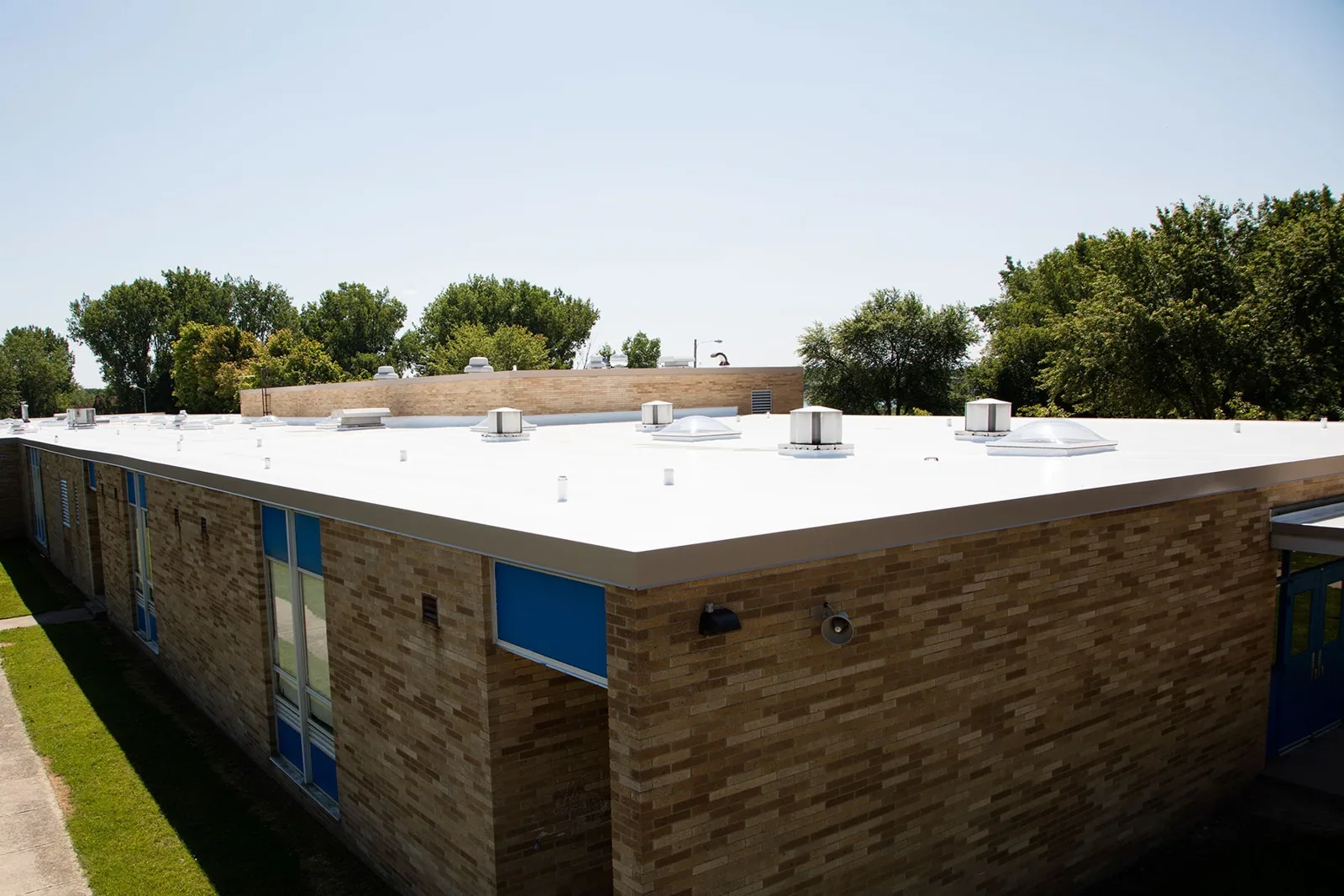
GAF Commercial Roofing Systems in Daly City
GAF commercial roofing in Daly City, CA: how we install and repair EverGuard TPO and modified bitumen, and how specs and wet-season timing affect the work.
A specification that names GAF has already made the first scope decision: the membrane family, the attachment method, and the details the manufacturer expects at every edge. What remains for the field is to match that document to the roof that is actually exposed. On a project in Daly City, CA, that usually means reading the specification next to the existing roof plan, marking where the old system stops, and agreeing who protects the open area if the forecast turns before the sheet is closed.
GAF sells single-ply and modified bitumen systems for low-slope commercial roofs. The best known single-ply line is EverGuard TPO, and the company also makes self-adhered and torch-applied modified bitumen sheets, polyiso insulation, cover boards, and the flashings that go with them. We install and repair these membrane types and treat the published installation requirements as the baseline for any bid that names the product, much as we do with Carlisle SynTec or Versico scopes.
Membrane choice: Match the sheet to the roof it will sit on
EverGuard TPO is a heat-welded thermoplastic sheet, and it is the usual choice when an owner wants a white reflective surface at a reasonable material cost. Its strength is the welded seam, which fuses two sheets into one continuous layer when the welder temperature, speed, and surface cleanliness are right. Its weakness is the same seam: an underheated weld can look fine from the walkway and still open, so we probe seams after welding.
The modified bitumen side of the line works differently. A self-adhered sheet bonds to a primed or prepared substrate without a flame, which matters on occupied buildings where torch work is restricted by insurance or by the tenant's lease. A torch-applied or hot-applied layered system gives a thicker, redundant roof with a granulated cap, and it tolerates foot traffic from rooftop equipment service better than a thin single-ply. A roof with frequent mechanical service, like many shopping center roofs, often earns a heavier cap sheet.
Substrate: Know what is under the new sheet before it is ordered
A GAF specification assumes a dry, sound surface. The existing roof rarely arrives that way. Before the order is placed we cut test openings, check the insulation for trapped moisture, and look for deck deflection or corroded fasteners that would not hold a new plate. A moisture survey with infrared imaging narrows where those cores should go, so the sample points are chosen instead of scattered.
The result sorts the roof into three areas: sound enough to receive a recover, wet enough that the insulation must be removed, and uncertain enough that it needs a second look. Each area has a different cost and a different dry-in plan. A recover with new cover board and a fully adhered sheet is the shorter path, while a tear-off exposes the deck and puts the schedule on the weather. When an owner is weighing the two, the recover over the existing roof comparison starts with those moisture readings, not with the material price.
Wet season: Time the open area against the rain record
The weather record that applies is NOAA's station at San Francisco International Airport, a station reading and not a citywide Daly City measurement. Most of its yearly total, 16.76 of 19.64 inches, falls from November to March, while the summer quarter adds just 0.18. For a GAF roof, that split sets the working rhythm. Tear-off and the first layer of membrane belong in the dry months when adhesives cure on schedule and the open deck sees little rain.
A roof that fails in January still has to be made dry, so we phase the work in sections small enough to close the same day. The temporary tie-in at the end of each day has its own materials, and the scope names who owns it.
Field condition: Details decide whether the system performs
Most of a membrane roof is simple field sheet. The work and the risk collect at the walls, curbs, drains, and penetrations. For a GAF system those details follow the manufacturer's published sequence: a base flashing turned up the wall, a termination bar or reglet at the top, and a sealant joint that is checked and not just filled.
A Daly City building near Mission Street, Geneva Avenue, Westlake, or Serramonte, all named in city planning materials as commercial settings, may carry a rooftop unit added years after the original roof. Those curbs often sit lower than the code-required height or share a flange with an old patch. We measure each curb before the membrane is ordered so the flashing can be built to the new height instead of stretched. Drain bowls, sumps, and overflow scuppers get the same treatment, because a drain and scupper detail that is a half inch high will hold water through the winter.
Cost driver: Where the price actually collects
Square footage of field membrane is the easy number. The estimate moves on removal depth, insulation thickness, the count of penetrations, the length of wall flashing, and how many separate access windows the building allows. A retail center that keeps its entrances open takes more phases than a closed building. The same planning carries into Brisbane, where the Crocker Park Trade Commercial area allows light fabrication, printing, warehousing, and retail, and into Oyster Point, one of South San Francisco's specific plan areas: each use sets its own access hours.
Permit and inspection steps add timing, not only cost. Daly City began enforcing its amended version of the 2025 California Building Standards Code on January 1, 2026. A permit application accepted as complete earlier can stay on the codes that applied when it was accepted. We confirm the code cycle before insulation values and fastening patterns are fixed.
If a warranty is part of the project, its terms belong to the manufacturer and hinge on the specified system, the inspection steps, and the deck at application, so each requirement is written down with the way it will be met.
Questions About GAF Commercial Roofing Systems
Closeout: Leave the next trade a usable record
When the last seam is probed and the final detail is flashed, the job is still not finished until the paper matches the roof. We photograph every termination, penetration, and drain, label the photographs by roof area, and record which seams were tested and which were repaired. The record shows where the membrane begins and ends, so a later solar installer, mechanical contractor, or antenna crew can find the limit of the roof system before they cut into it.
It ties back to the written condition report that started the scope, so the roof's before and after sit in one file for the next owner or lender.
If a leak appears later, the photographs point us straight to the flashing or seam in question. For routine care of these roofs, a scheduled maintenance visit keeps drains clear and catches small seam or sealant problems ahead of the November rains.
Commercial Roofing Questions
Does a GAF specification limit which contractor can bid?
A specification can name installer qualifications, and we read those lines before we price. We install the membrane types in a GAF scope. Send the specification pages and we will mark each requirement against the work.
Is EverGuard TPO the right call for a Daly City flat roof?
It fits many low-slope roofs, especially where a white reflective surface and welded seams suit the building. Roofs with heavy equipment traffic or old layered assemblies may be better served by a modified bitumen cap sheet. The existing deck and the access plan make the final call.
Can a self-adhered sheet go on without a torch?
Yes, on a clean, primed, dry substrate within the temperature range the manufacturer lists. That is why it is a common choice on occupied buildings where open flame is restricted. Cold, damp mornings can still delay the start.
What happens if rain is forecast during tear-off?
We stop opening new area and close the exposed section with a temporary tie-in before the weather arrives. Given the November to March rain pattern at the airport station, the schedule should carry weather days in the wet months.
Who owns the temporary seal at the end of each day?
We do, and the scope says so. A temporary dry-in is written as a line item with the material, the area, and the person who inspects it before the crew leaves, so the general contractor knows who to call.
More Commercial Roofing in Daly City
Send the specification and the roof plan
Share the GAF specification pages, the existing roof information, and the access limits. We will walk the roof, mark the scope boundaries, and return a sequence the other trades can plan.