
Ponding Water Roof Repair in Daly City, CA
Ponding Water Roof Repair in Daly City
Find why water stands on a commercial roof in Daly City and fix it with drain work, tapered insulation, crickets or a new membrane detail.
A dry-weather walk tells you more about ponding than a rainy one, because the stains stay after the water leaves. On a flat commercial roof in Daly City, CA, we look for rings of dirt, algae, shiny membrane and curled seams, then follow them to the low spots. Standing water is a symptom with several causes: a blocked drain, a drain set above the surrounding field, a deck that has deflected, insulation that has compressed or a roof that was never sloped enough to shed water. The repair depends on which cause we find, so we measure before we recommend. We mark each low area on the roof plan, note the nearest drain and take levels where the pattern is not obvious.
The next decision is whether the ponding is a maintenance item or a design problem.
Drain path: Start with the outlets
The cheapest fix is clearing the drain, so we check outlets first. Leaves, grit, membrane scraps and trash gather at the strainer, and a blocked drain can hold water around it for days. Debris also collects behind curbs and against parapets, where water has nowhere else to go, so we sweep those pockets before concluding that the roof is flat. Rooftop units that drain condensate onto the membrane add water in dry weather too, and we trace each condensate line to its outlet. We lift the strainer, probe the leader, flush it and look for a cracked bowl or a loose clamping ring. Then we look at the roof around the drain. A drain bowl that sits above the finished roof surface cannot take the last inch of water, and a sump that was never formed leaves a permanent pond. Roof drains and scuppers that are low, clean and sealed are the first line of defense, and overflow scuppers give water a second route if the primary drain fails.
Structure and slope: Read the deck, not just the surface
When the drains are clear and water still stands, the cause is usually in the roof's shape. A deck can deflect between supports, especially under rooftop equipment, so water collects at mid-span. Insulation boards can crush under foot traffic or heavy equipment, leaving depressions. Some roofs were built with only a slight pitch and a few drains placed far apart. We take levels, mark the high and low points and sketch the water path. If the deck itself has moved, we note that for the building owner and recommend a structural opinion before adding weight. A roof that drains poorly because of the structure needs a different answer from one that drains poorly because of a clogged strainer.
Rooftop equipment adds a second question. A heavy unit or a mechanical platform that was added after the roof was built may sit on a deck area that has since sagged. We check whether the low spot lines up with the equipment, and we inspect the supports for a design that allows roof loads. Moving or reshimming a support can sometimes flatten the dip, and it costs far less than reshaping the whole roof.
Wet season: Use the rain record to schedule the work
Normals at the San Francisco International Airport station place 16.76 inches of the 19.64-inch year in the November to March window and only 0.18 inches in June through August. The pattern means ponded areas get their longest test in winter and dry for months in summer, when the stains are easiest to read. The dry months are the time to correct slope, add drains and tie in tapered insulation. A winter repair is still possible for drain clearing and small patches, but major changes to the roof shape belong in the dry window so the new work is not rained on while it is open. Owners with roofs in nearby Brisbane or South San Francisco can use the same dry-season window when they schedule major drainage changes. We suggest a post-storm check after the first heavy rain, which shows whether the correction worked. A short walk the morning after, with photographs of each corrected low area, is enough to confirm that water now leaves the roof at the drain and not along the wall.
System detail: Fix the shape with tapered insulation, crickets or new drains
Once the cause is known, the correction is specific. Tapered insulation adds slope so water moves toward a drain. A cricket diverts water around a curb or behind a rooftop unit. A new drain or scupper placed at the low point removes the pond. Where only a small area is affected, a cover board and tapered insulation section can be added under a new membrane patch. In a larger area, a recover or replacement is the cleaner route. The membrane over the corrected area, for example a TPO sheet with heat-welded seams, is welded or adhered with new flashing at every tie-in, so the shape change does not create a seam problem at the edge of the repair.
Membrane effects: Check what the water has done
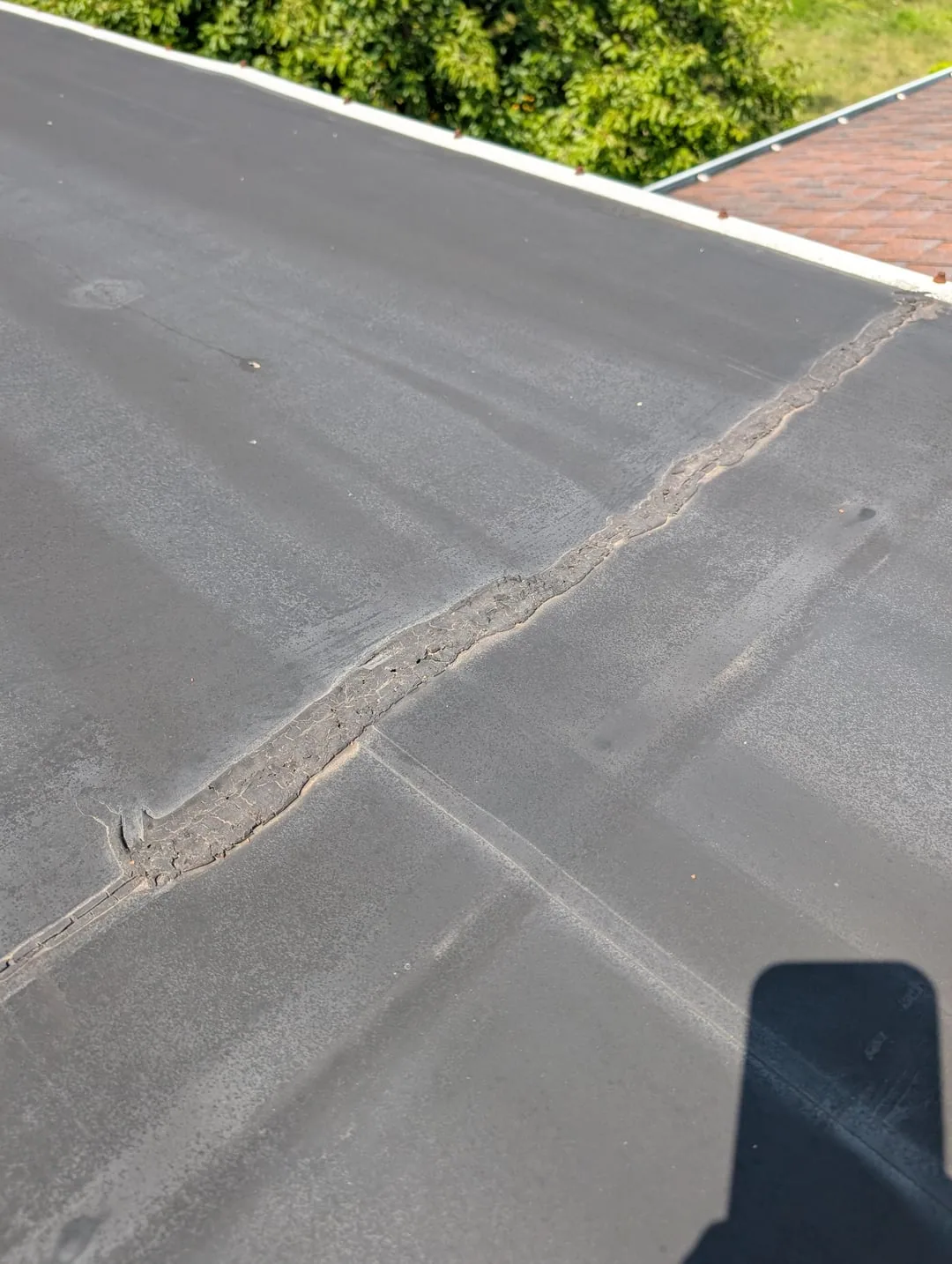
Standing water speeds up wear. Seams under water can open, algae and debris collect, and flashings at curbs may stay wet and soften. We probe the seams within the ponded area, inspect flashing bases and look for blisters or soft spots. If the membrane has been exposed to long-standing water, a seam repair or a patch may be needed along with the slope correction. The right sequence is to fix the drainage first and the membrane second, because a new patch in a pond will fail for the same reason the old one did. A puncture inside the ponded area, which we treat as a membrane puncture repair, is a priority because water sits directly over the opening. Insulation under the pond may be wet, which we check with an infrared moisture survey.
Questions About Ponding Water Roof Repair
Cost and closeout: Price the cause, then record the result
The price follows the cause. Drain clearing is a maintenance visit. New drains require plumbing coordination, roof cuts and flashing. Tapered insulation is priced by roof area and thickness, plus the membrane over it. For a building on Mission Street, on Geneva Avenue or in Westlake, cost tracks the roof area and the access the site allows. We list each item separately and mark it on the plan. At closeout, we photograph the finished slope, the drain details and the tie-ins, and we recommend a check after the first heavy rain. Properties in South San Francisco and Brisbane receive the same documentation.
Commercial Roofing Questions
Is a little standing water after rain a problem?
A small amount that clears within a day is normal on many low-slope roofs. Water that stays for days, leaves stains or grows algae points to a drainage problem worth fixing.
Can ponding be fixed with a coating alone?
A coating cannot add slope. A restoration coating can seal a worn membrane, but if water still stands, it will wear the coating as well. The slope or drain problem should be solved first.
Should the drains be replaced or just cleaned?
Cleaning comes first, and a clean drain is photographed with the strainer in place. If the drain bowl is cracked, set above the roof surface or placed away from the low point, a replacement or a new drain at the low area is warranted.
How does ponding affect a roof warranty?
Some manufacturers limit coverage where water stands. We note the ponding in the report so the owner can check the warranty terms for the existing roof.
What does the Building Division need for a drainage change?
New drains or structural changes may need a permit from the Building Division, which reviews plans under Title 24. The 2025 California code edition became effective January 1, 2026, so we confirm the path first.
More Commercial Roofing in Daly City
Have a roof with standing water?
Tell us where the water stands and how long it stays. We will inspect the drains, measure the slope and recommend the repair.