
Spray Polyurethane Foam Roofing in Daly City, CA
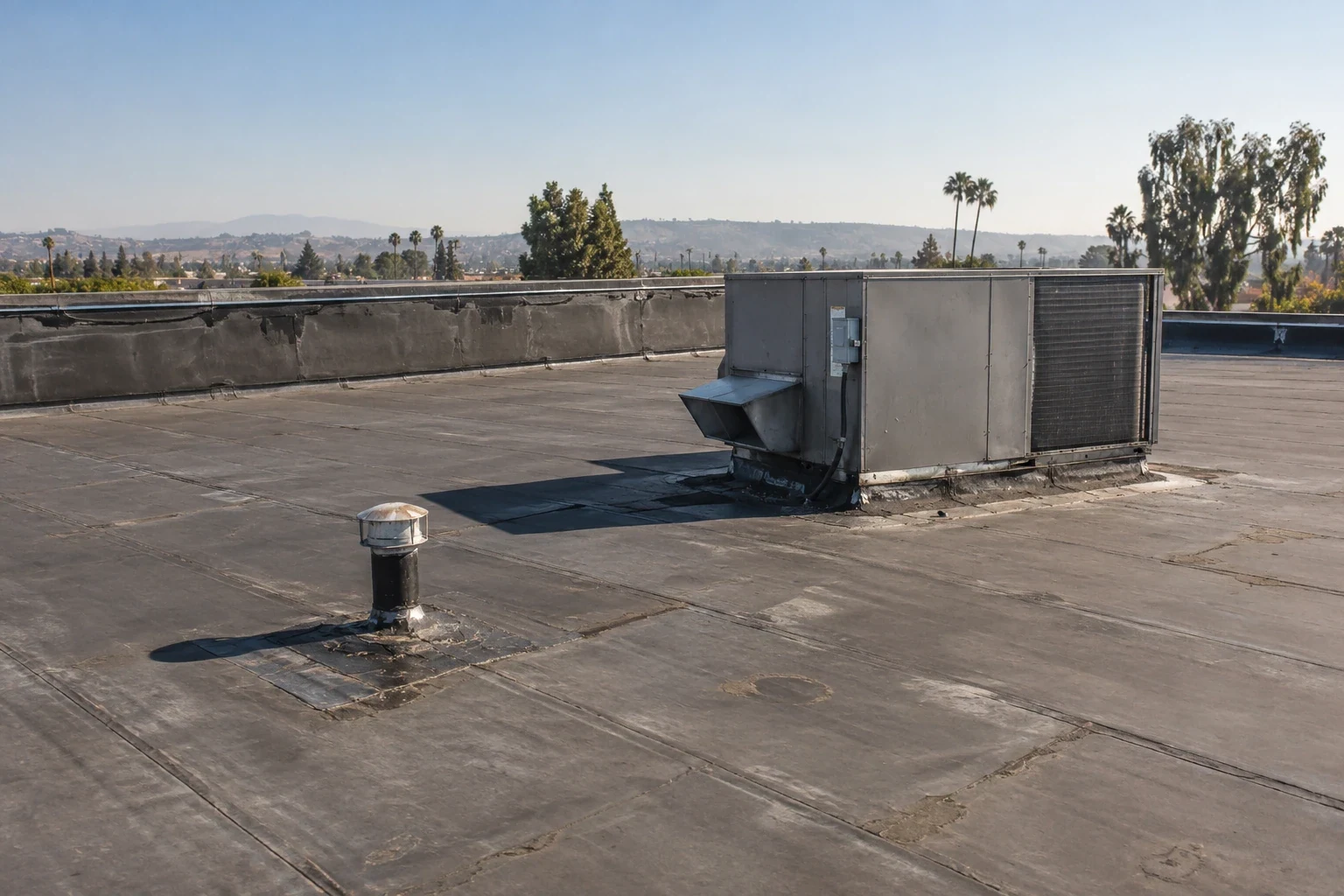
Spray Polyurethane Foam Roofing in Daly City
Spray polyurethane foam (SPF) roofing in Daly City, CA: insulating layers without seams, overspray control, coating needs, and spray-day coordination.
Spray foam is applied by a rig parked on the ground, and everything within the drift line of that rig becomes part of the scope. Cars, glass, painted walls, and rooftop equipment can all collect overspray if the wind shifts, so an SPF job in Daly City, CA begins with a wind rule and a protection plan before the first pass. The general contractor needs to know who moves vehicles, who covers glazing, and who calls the stop when conditions change.
Spray polyurethane foam is a two-component liquid that expands into a rigid, closed-cell insulating layer directly on the roof. It conforms to curves, penetrations, and uneven surfaces without seams, and it adds insulation value and some slope correction in the same operation. It must be protected from sunlight by a coating, and we install, repair, and recoat foam systems as part of our commercial roofing work.
Substrate: Start with a clean, dry, sound base
SPF bonds to metal, concrete, wood, and many existing membranes, but only when the surface is clean, dry, and free of oil or loose material. Existing roofs must be tested for moisture, because foam over wet insulation traps water. We use an infrared moisture survey, test cuts, and visual checks to decide how much of the old roof can stay. An infrared scan helps find damp areas, and cuts confirm the findings.
Where foam goes over an old membrane, loose areas are removed and fasteners are secured. A primer may be required for certain substrates. The plan identifies the surfaces that will receive foam, those that will be protected, and the points where foam ends. Gaps at walls and edges are detailed with metal or membrane flashing so the foam does not become the water barrier at its own termination.
Spray day: Control wind, temperature, and drift
Foam performs well when sprayed in the right conditions. Surface temperature, air temperature, humidity, and wind all affect how the chemicals mix and cure. Wind carries overspray, so a measured limit is set before the day starts, and the crew has authority to stop when gusts exceed it. Barriers and covers protect adjacent property, and a ground crew watches the drift line while the applicator works on the roof.
A mild marine setting can leave roof surfaces damp in the morning, which affects how foam bonds. The nearby San Francisco International Airport station reports a mean annual temperature of 58.7 degrees Fahrenheit, a station record rather than a Daly City measurement. Mild air does not make a good spray day, so we check the roof surface, not just the forecast, and we delay the start until the surface is dry.
Thickness and slope: Build the foam into the drain path
Foam is sprayed in passes, and the thickness is measured at test points. Because it can be built thicker in low areas, it can improve drainage by correcting small dips or by creating a crowned profile around drains. This advantage is limited by the structure; foam can alter drainage within a modest range, but it is not a substitute for repairing a deflected deck.
We map drains, scuppers, and ponding areas before spraying and decide where added thickness will help. Final thickness is checked at the end, and the foam surface is left with its natural texture, which serves as the base for the coating. Drains receive sumps or extended flanges so that the finished foam and coating direct water into the outlet. A roof that drains well has a better chance of keeping its coating intact. Our drain and scupper work carries the same detail.
Protective coating: Finish the foam the same week
Foam breaks down in sunlight, so it must receive a protective coating soon after spraying. Silicone and acrylic coatings are common, and each suits different conditions. A silicone coating tolerates ponding and a wide range of weather, while an acrylic system is a cost-conscious option on roofs that drain well. Granules can be added for walkway areas or to meet certain fire and wear requirements.
Coating thickness and cure time must be monitored. We schedule the coating within the manufacturer's allowed window, and we protect the cured foam from rain and traffic until the first coat is down. Walk pads are laid at service paths to equipment, since the foam surface can be punctured by heavy foot traffic or dropped tools. After the coating cures, we inspect the surface for pinholes, thin spots, and any place where foam met a wall or curb, and we touch up those areas before the crew demobilizes. The inspection photographs go to the project file with the thickness readings. A short written summary lists any area where thickness was adjusted for drainage, so a later repair crew knows where the foam is deeper than the rest of the roof.
Wet season: Match spray days to the station record
NOAA normals for the nearby airport station put 16.76 inches of precipitation in November through March and 0.18 inch in June through August. That contrast is the reason SPF work is nearly always planned for the dry months. Rain on uncured foam or on an unprepared substrate causes bonding and moisture problems, and the cost of redoing a section outweighs any benefit of starting early.
If the schedule has to move into the cool season, the sequence breaks the roof into small areas that can be sprayed and coated in a single stretch of dry weather. Each area is closed and inspected before the crew leaves. For a cold or humid building interior, such as a cold storage facility, the insulation value of foam also helps reduce condensation risk, though the vapor design needs to be reviewed with the engineer.
Questions About Spray Polyurethane Foam Roofing
Cost driver: Weigh insulation value against protection
SPF is priced by thickness and area, and the extras include primer, coatings, walk pads, and protection for surrounding property. Because it also adds insulation, the owner can weigh the cost against the alternative of separate insulation and membrane. The comparison should be run on the same roof boundary, including any tear-off, and it should list the impact on tenants during application.
Rig access matters for the same reason: a hose run that crosses a drive aisle needs a flagger and a schedule. Foam-roof permit documents should cite Daly City’s local changes to the 2025 California code, effective January 1, 2026; the Building Division carries out Title 24 plan review and inspections in the field. Energy and fire requirements affect foam selection, and we confirm them early. Trucks and rigs reach Daly City roofs by Interstate 280 and local streets, and the rig location, hose route, and loading plan go into the schedule.
Commercial Roofing Questions
Can foam be applied over an existing roof?
Often, when the old roof is dry and firmly attached. We test for moisture and secure loose areas, then decide how much of the existing system can remain.
Why is overspray such a concern?
Droplets can drift onto vehicles, glass, and walls and cure there. Wind limits, barriers, and a ground watcher keep that from happening.
Does foam need a coating?
Yes. Sunlight degrades bare foam, so a protective coating goes on soon after spraying, and the coating schedule is part of the proposal.
How is a foam roof repaired later?
We cut out the damaged area, dry the substrate, spray new foam, and recoat. Repairs are marked on the plan so the coating thickness is known.
Can foam help with ponding?
Within limits. Added thickness can reduce small dips, but a deflected deck needs structural attention before foam will solve the drainage.
More Commercial Roofing in Daly City
Share the roof survey and wind limits
Send drawings, moisture results, and any restrictions on vehicles or glazing. We will define a foam scope with a spray-day plan.