
Storm Damage Roof Repair in Daly City, CA
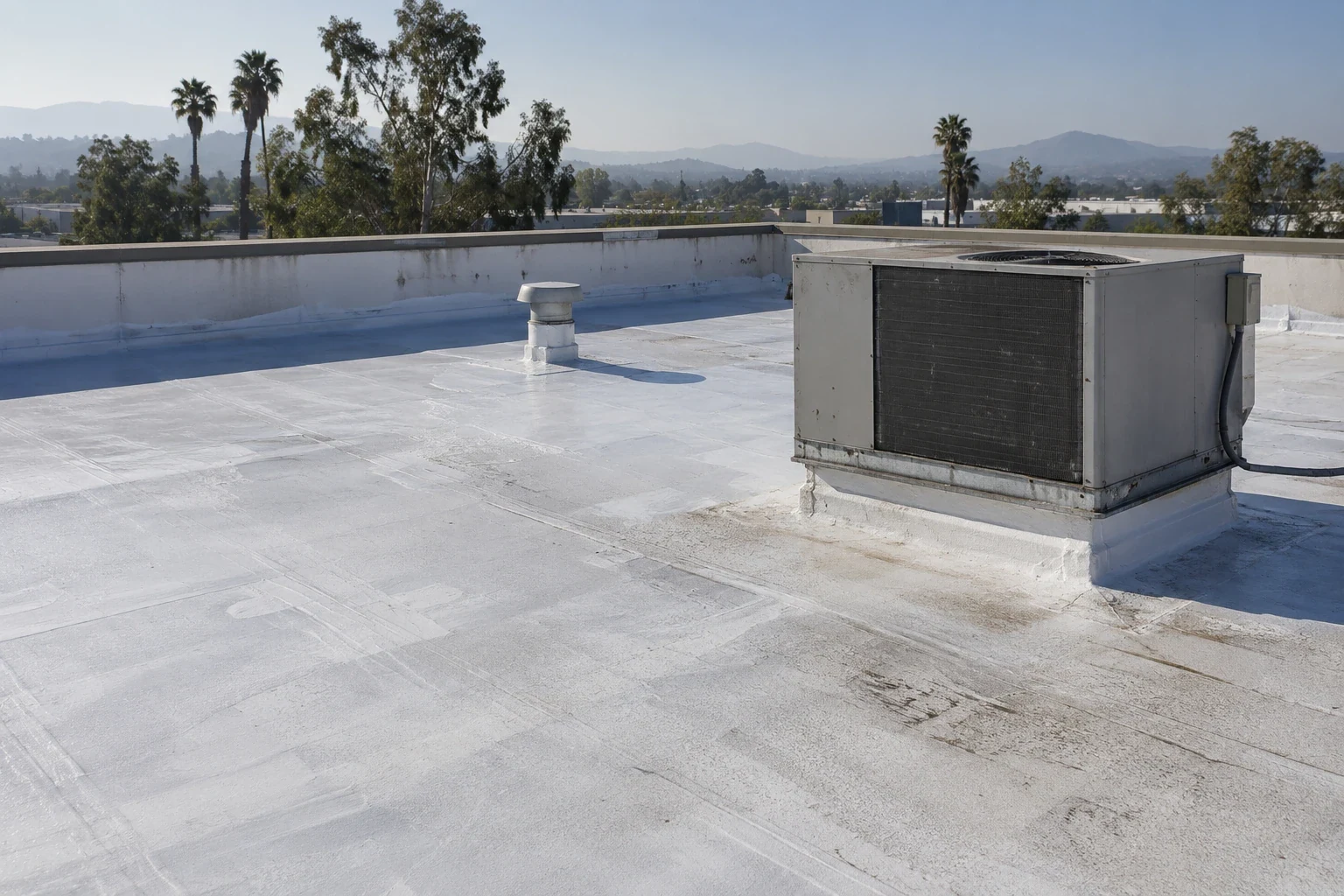
Storm Damage Roof Repair in Daly City
Document roof damage in Daly City with a bounded repair scope, temporary protection plan, and clear record of areas that remain open.
A loose edge, lifted flashing, or puncture needs a location before it becomes a repair quantity. In Daly City, we start a storm-damage review by separating observed roof conditions from the event description, then map each finding to the area, assembly, and next action. That keeps a general contractor from pricing a whole roof when only defined sections need attention, while also preventing a small visible defect from being treated as proof that hidden layers are sound. We document the condition, access limits, and any temporary protection already in place. The city plan names Westlake, Serramonte, Mission Street, and Geneva Avenue among its commercial settings, which helps with dispatch routing but says nothing about a damaged roof. A commercial roof inspection can document the broader assembly, while emergency roof repair addresses immediate protection needs.
Triage: Sort observed damage by roof area
The first repair schedule should separate damage by type and location: membrane cut, displaced edge metal, damaged curb flashing, blocked drain, or a seam requiring further evaluation. We photograph each item with a roof-plan reference and note whether the substrate is visible. That record supports a quantity review without suggesting that every mark came from the same event. If a tear-off boundary is proposed, identify the receiving surface and the temporary dry-in detail before removing material. A targeted commercial roof repair may be appropriate for isolated damage; a broader replacement comparison belongs in a separate scope. For membrane-specific work, the installed assembly must be identified before choosing repair materials. Repair materials for a TPO roof differ from those for a modified bitumen roof, so the installed assembly is identified before anything is ordered.
Protection: Scope temporary cover as real work
Temporary protection needs an owner, a boundary, and a check at the end of the shift. We identify where water could enter, what material can cover the opening without damaging adjacent surfaces, and which trade will maintain that condition until permanent repair. A tarp or sealant note without a defined tie-down or compatible transition is not a complete plan. The general contractor should know if equipment, conduit, or rooftop access will cross the protected zone. We record the temporary detail, photograph the finished condition, and state the next inspection point. When rain is forecast, the sequence may call for a smaller daily opening and an earlier closeout walk. San Francisco International Airport station USW00023234 has a 19.64-inch annual precipitation normal, and November through March supplies 16.76 inches of it. Those records belong to the station, not the roof under review. Review roof drains and scuppers when drainage features are part of the damage path, since debris from the same event often lands at an outlet and slows the next rain.
Cause: Do not infer more than one symptom shows
Interior staining can direct attention to a roof zone, but the entry path may involve a seam, flashing, fastener, drain, or a transition several feet away. We trace the suspected route, compare the report with roof conditions, and state what inspection can and cannot confirm. If moisture has traveled through insulation, define whether test cuts or other investigation are authorized before opening the assembly. A repair proposal should separate verified work from allowance items that depend on conditions found after removal. That distinction is especially helpful during occupied renovations, where a crew may need a narrow access window and a protected interior area. A condition report can preserve findings for the next project phase, while infrared moisture survey work is a separate diagnostic option when the question warrants it. Neither a report nor a scan replaces field confirmation of an exposed assembly.
Quantities: Make repairs and exclusions visible
Repair cost follows the area opened, the detail count, access requirements, and what is found below the surface. The estimate should show measured quantities where possible, describe temporary protection, and identify unit pricing for concealed deterioration only when that pricing is approved. It should also state whether the work includes interior protection, after-hours access, removal of wet material, or replacement of adjacent insulation. Do not blend those items into an unexplained lump sum. A clean scope lets the general contractor compare a repair against a roof recover or replacement without assuming they deliver the same result. If ownership is evaluating several capital choices, roof capital planning can carry the repair into a broader decision record. The City's Building Division oversees plan review and field inspection of construction and renovation work; coordinate permit questions through the project path rather than infer requirements from an event description.
Handoff: Coordinate the repair with the next trade
A repaired area can be disturbed by mechanical, electrical, or access work scheduled afterward. Before repair begins, we identify rooftop equipment routes, curb changes, conduit supports, and any planned penetrations. The project team can then decide whether the roofing crew repairs first, returns after the trade, or handles a defined final tie-in. Document who controls roof access during each phase and who signs off on protection at shift end. The work sequence also needs a clear limit where existing materials remain untouched. This is useful on commercial corridors such as Geneva Avenue, where the city recognizes mixed-use planning, but the property-specific loading and tenant rules must be confirmed with the site team. For buildings farther along the Peninsula, a storm repair in Pacifica follows the same scope steps, with that building's own access and tenant rules.
Questions About Storm Damage Roof Repair
Closeout: Record what the crew found
The closeout should list each repair location, the work performed, materials actually installed, remaining exclusions, and the condition of temporary protection at demobilization. Attach before-and-after photographs that show the reference point, not only a close view of a patch. Record weather interruptions and any area not accessed. If a concealed condition changed the scope, preserve the approval and the revised quantity. The result is a repair record that an owner can use to compare a later inspection without mistaking a temporary measure for permanent work. A general contractor should receive the roof plan markup and know whether another trade must stay off the repaired area until a specified point. We also identify the person responsible for confirming the area is released, so the next crew does not rely on an informal text message or an outdated drawing. For a portfolio with repeat work, roof asset management can track repairs by date and roof zone. Share the event report, current roof plan, and access requirements so we can separate immediate protection from permanent repair and price each part clearly.
Commercial Roofing Questions
What does a damage review confirm?
It records visible conditions, locations, access limits, and the work that can be scoped from those observations. Hidden layers or a cause may require a separate investigation after the assembly is opened.
Can one estimate cover temporary and permanent work?
It can list both, but the line items should remain distinct. Temporary protection has its own material, boundary, inspection, and removal or transition plan.
How are concealed conditions handled?
State what is unknown, define whether opening or testing is authorized, and use an approved unit price or change process for verified additions. Do not present an unverified condition as completed scope.
Should an interior stain define the repair area?
No. The stain is a lead for tracing the entry path. Roof inspection must connect it to a seam, penetration, drain, edge, or other condition before repair limits are set.
What records help the next trade?
Provide an updated roof plan, marked repair limits, dated photographs, material notes, remaining exclusions, and the access or protection rules that apply after the crew leaves.
More Commercial Roofing in Daly City
Define the repair boundary
Share the event notes, roof plan, photographs, access limits, and any temporary protection already installed. We can separate immediate stabilization from permanent repair and document the handoff.