
College and University Roofing in Daly City, CA
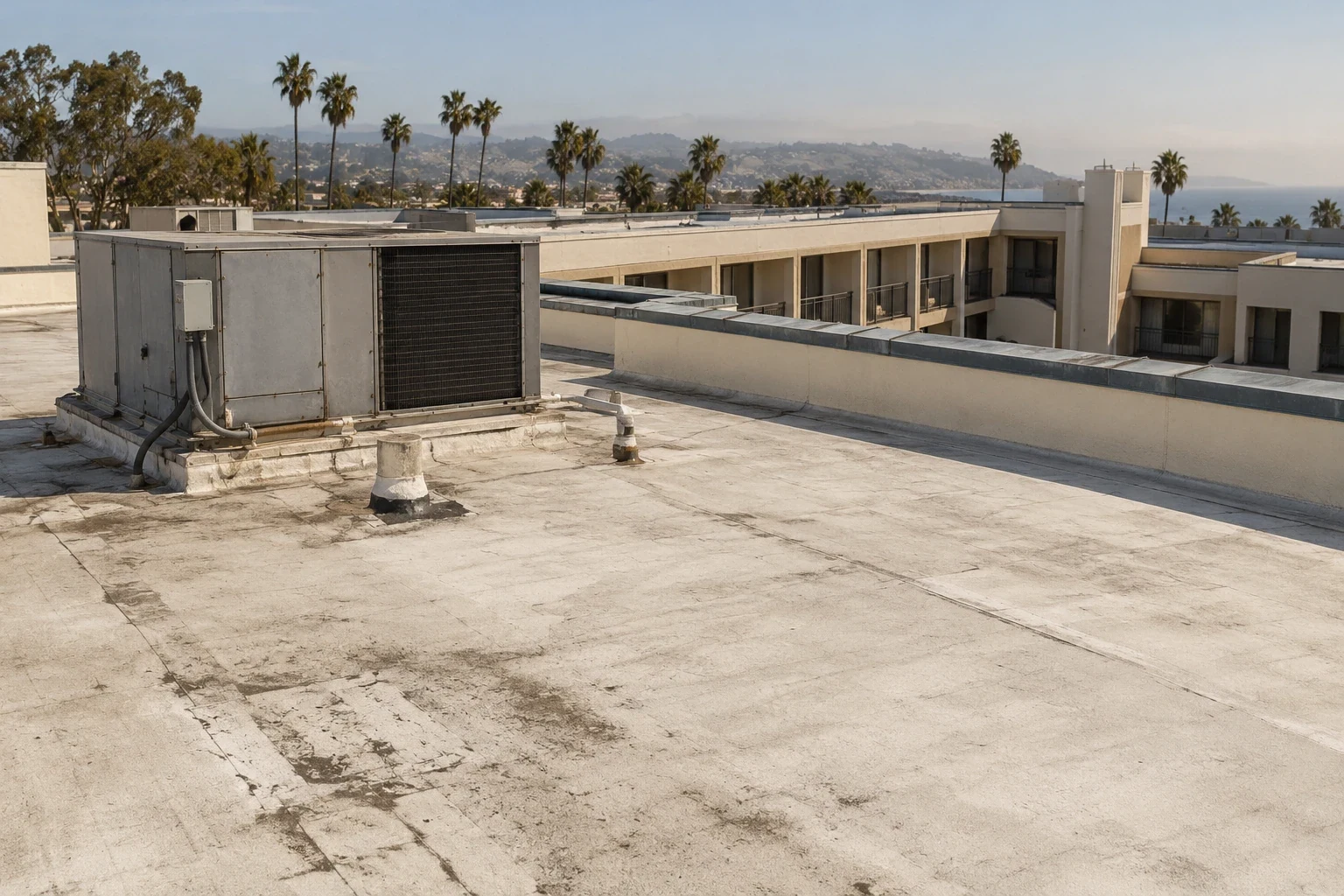
College and University Roofing in Daly City
Coordinate college roof repair or replacement in Daly City around occupied buildings, access windows, drainage, and clear handoffs between trades.
Before a college wing opens for the next term, the roof scope needs a boundary that facilities, the GC, and other trades can use. We map the work area, mark access points, and identify spaces below that require notice or protection. For a college project in the Daly City service area, the GC may also weigh nearby trade settings when routing deliveries: Brisbane's Crocker Park Trade Commercial area permits light fabrication, warehousing, retail, and services, while Millbrae's downtown plan includes office, hotel, retail, and residential uses. Neither describes a campus roof, so we inspect the building itself and identify conditions affecting repair, replacement, or a phased project.
Campus-style properties can combine classrooms, offices, labs, dining, and support rooms, each with a different operating schedule. We label roof areas, record penetrations and drainage, and agree how each phase will close. An inspection of the commercial roof gives the project team a shared starting point. We can also review a school building roof or healthcare roof scope when connected facilities have distinct access needs.
Building map: Divide roof areas by use and assembly
One property can have several membrane types, deck conditions, and elevations. We inspect seams, penetrations, curbs, parapets, wall flashings, drains, overflow points, skylights, and transitions to metal roofs. A ceiling stain in a teaching room is a place to start tracing, not proof of the roof entry point. We follow the water path, compare it with available roof plans, and mark visible defects by area. Where records leave a gap, an approved test opening can confirm the layers and substrate.
The scope should distinguish urgent repair from planned replacement. We note what remains, where tear-off begins, and how the new membrane meets an adjoining section. Wet insulation or incompatible attachment can change the work, so the proposal needs an authorization boundary for concealed conditions. A drain and overflow review can isolate water-management work from membrane replacement.
Seasonal window: Protect exposed work before rain returns
The NOAA normal at the nearby San Francisco International Airport station records most precipitation in the November through March period and very little during June through August. Those figures belong to the station, not to an individual Daly City property. For a college project, the seasonal contrast makes sequencing worth settling early: identify the open-roof limit, keep a reliable dry-in plan, and schedule test cuts and tie-ins with enough time to close the area. We still check actual surface moisture and system instructions before welding or adhering a membrane.
Breaks between academic terms can create useful access windows, but the schedule should not assume an empty building. We confirm program dates, move-in periods, deliveries, lab or dining access, and any events that restrict staging. If rain interrupts a phase, the daily closeout should state which roof areas are sealed and who accepts the protection. A rapid roof response is available around the clock, every day, including holidays, when an active failure needs attention. The planned project remains governed by the written scope and release sequence.
Access window: Assign the roof and interior handoffs
Roofing may overlap with HVAC replacement, electrical conduit, glazing, or solar installation. The GC should establish which trade enters each area first, who removes or resets equipment, and who accepts flashing after the related work is complete. We identify the material route, fall-protection limits, interior barricades, and access contact for each building. If students, staff, or visitors remain nearby, the active work boundary needs signage and a daily check. Any work opening must have a named closeout point and an agreed temporary protection detail.
Daly City's profile calls the city a regional hub where retail, healthcare, and small business sit near San Francisco and San Mateo County job centers. That regional connection may matter to contractor mobilization and deliveries, while roof access is decided at the actual property. We coordinate with the institution's representative and the GC rather than assume a standard schedule. A phased plan can define entries and daily closure, and a multi-building roof program can keep site-level records distinct when work spans more than one address.
Tie-in detail: Resolve the roof edge before equipment returns
Membrane selection follows the deck, insulation, slope, attachment, exposure, and existing assembly. TPO or PVC seams are heat welded, while EPDM joints depend on compatible splice materials and proper preparation. Modified bitumen and built-up systems use their specified plies, surfacing, and flashing. Metal roof areas require a separate review of panel movement, fasteners, and transitions. At every system, roof edges, parapets, expansion joints, curbs, and drains must be detailed to accept the new work without leaving an exposed termination.
Equipment supports need attention before final membrane installation. We confirm curb heights, service clearances, conduit paths, and the sequence for reconnecting equipment, then document who owns each tie-in. Protective walk paths can reduce wear where routine maintenance crosses the roof. An option such as TPO roofing should be weighed against the verified substrate and project requirements, not selected from a short product list. If a different assembly is present, the scope should describe its actual materials before any compatibility decision is made.
Budget split: Keep base work separate from exposed conditions
Price follows the defined roof area, demolition depth, membrane and insulation quantities, drain and edge details, access equipment, staging, and work phases. A small roof zone may still require several mobilizations if classes, staff, or another trade must keep operating. We identify the labor and material included in the base scope, list assumptions about the existing layers, and state how the team authorizes additions. That gives the GC a comparable alternate without hiding the cost of temporary protection, interior control, debris handling, or a late equipment handoff.
For Daly City projects, the locally amended 2025 standards took effect on January 1, 2026. An application completed before that date may retain its earlier code basis, so the institutional team should settle permit status before the GC locks the roof details.
Questions About College and University Roofing
Closeout file: Leave each building ready for the next trade
At each phase, we inspect welds or seams, wall and curb flashings, drain connections, edge metal, and tie-ins before the next trade moves back into the area. Photos should carry the same roof-zone names as the plan and show both detail and orientation. The closeout record separates work completed from observations left outside the authorized scope. It should identify accepted changes, access restrictions, and any roof area that remains for future planning. A general contractor can then reconcile the installed work with the drawing and the facilities contact's record.
We prepare a condition report with marked photographs when the scope calls for it. A useful report states which surfaces were opened, what was repaired or replaced, and where the new assembly stops. For a property portfolio, the same labels can be carried into maintenance records, while each building retains its own boundaries. Share the current roof plan, access controls, building schedule, and known leak locations so we can set a trade-ready sequence with the GC.
Commercial Roofing Questions
How should a campus reroof be divided?
Start with roof zones, building use, and system boundaries. We map each phase, define where removal stops, and identify the crew or trade responsible for every tie-in.
Can work happen between academic terms?
It can, if access, material delivery, equipment work, and dry-in all fit the available window. We confirm the calendar and protect areas that remain occupied.
What does a leak report establish?
A report identifies where water was observed. We inspect above and around that room, then document the likely roof path and any test needed to confirm the scope.
How do other trades affect the roof price?
Equipment moves, conduit, glazing, and staging can add access and tie-in work. We list those boundaries and coordination assumptions so the GC can compare the same scope.
What should be handed over at phase end?
Give the next team the sealed work boundary, roof-zone photos, open items, accepted changes, and the contact responsible for releasing access.
More Commercial Roofing in Daly City
Set a trade-ready campus scope
Share roof plans, building schedules, access limits, and leak records. We can inspect the roof areas, mark the handoffs, and prepare a sequence the GC can coordinate.