
Commercial Roofing in Foster City, CA
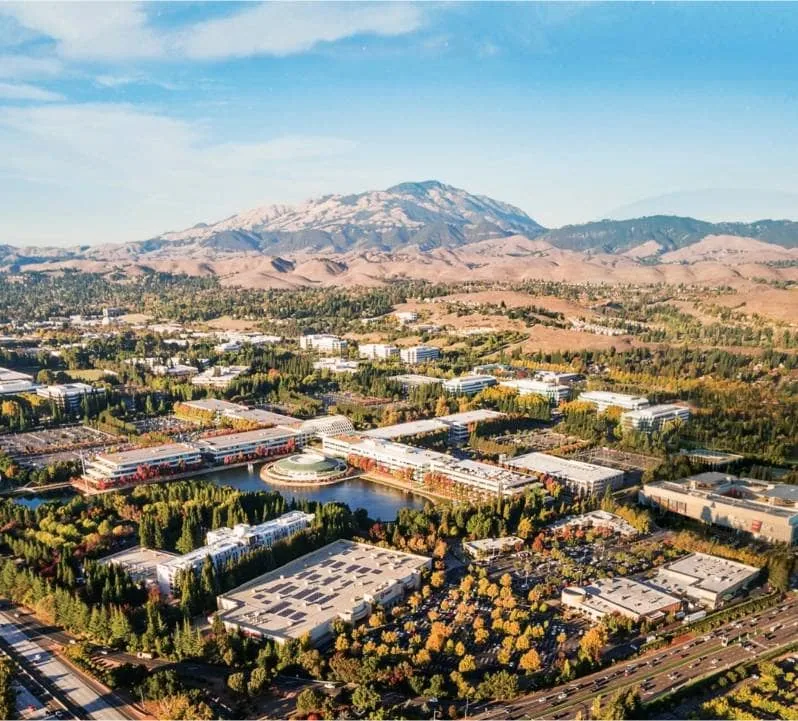
Foster City in Daly City
Roof replacement, repair, recover and maintenance for Foster City commercial buildings, scoped around access, tenants, drains and the wet-season calendar.
Roof access is a logistics question before it is a roofing question. Foster City's General Plan includes a circulation element and maps for commercial-center access and the roadway network, and those are exactly the documents a general contractor reads when planning where a lift will stand and how material gets to a roof. We start our scope with the same questions: how does equipment reach the building, which hours are open, and where does the crew stage without blocking tenants or deliveries.
Foster City owners and project teams can call on us for roof repair, replacement, recover, coating and upkeep. Plans and a note on the problem are enough to start; after a walk we write a scope a project manager can schedule against.
Town Center Commercial: planning for a central commercial area
The city identifies Town Center Commercial as the designation for its central commercial area. For a roofing contractor, a designation like that is a signal about use, not about construction. It tells us there is likely a mix of commercial activity to coordinate around, and it tells us nothing about the roof assembly on any given building. We confirm that with a walk and a few probes.
What the designation does change is the planning mindset. A central commercial area means customers, deliveries and tenants share space with the work, so the scope boundary has to include protection of walkways, entries and loading zones. We include a site logistics line in each scope: crane or lift location, debris path, tenant contact, and the hours when noise is acceptable.
Those items cost money and time, and listing them early prevents disputes later.
Work sequence: how a replacement unfolds
A replacement follows a fixed order. First comes the walk and the test cuts that confirm insulation and deck condition. Next, the scope boundary is drawn, with tie-ins to adjacent roofs, walls and equipment marked. Materials are ordered to match the confirmed system, and the access window is agreed. Tear-off then proceeds in sections that can be dried in the same day, and the new insulation, cover board and membrane are installed behind it.
After the field is complete, flashings, edge metal and penetrations are finished and inspected. A last walk catches loose fasteners, unsealed terminations and debris in drains. The closeout record follows with photographs and installed-material records.
Skipping steps in this order is where trouble starts: a membrane laid over unchecked insulation, or edge metal installed before the field is sealed, leaves problems that are costly to reach later.
Field condition: drains, ponding and seams
On low-slope roofs, water that stays after rain is the first clue. Ponding stresses seams, speeds up membrane wear and can overload a deck if it persists. We map where water collects, check the drain bowls and scuppers for debris and clamping rings that have loosened, and compare the low spots to the deck slope. Sometimes the fix is as small as a new drain sump or tapered insulation crickets; sometimes the field needs reworking.
Seams get a physical check. On single-ply roofs we probe welded or glued seams for open edges, and on modified bitumen we look for lifted laps and granule loss. Flashing at parapets and curbs is checked for height, termination and sealant condition. When water will not drain, the choices run from clearing and re-sloping to full ponding water repair, and we price each one.
Seasonal timing: the airport station pattern
San Francisco International Airport supplies the regional rainfall record. Its normals show 19.64 inches in a year, with the bulk, 16.76 inches, landing in the November to March stretch and only 0.18 inches across the summer. For a low-slope roof with drains and scuppers, that pattern sets the calendar: wet months favor inspection, drain clearing and small repairs, and dry months favor larger work on open roof area.
An owner who plans a summer replacement has to order material early and secure the access window well before the dry season arrives. Waiting for the first storms to expose a weak spot compresses everything into a narrow window and limits the options. A fall check of drains and flashings is cheap and often prevents an emergency call.
System detail: matching membrane to the roof
The right membrane depends on the roof, not the catalog. An EPDM sheet is a common choice where foot traffic is light and the deck is simple, while heat-welded TPO or PVC suits roofs with many penetrations because seams can be fused around details. Modified bitumen gives a thick, redundant surface where tenants or technicians walk often. Standing seam or retrofit metal is a different conversation, since it changes the roof's drainage and attachment entirely.
Insulation and cover board matter as much as the sheet. A cover board protects the insulation from punctures and gives the adhered membrane a firmer substrate, and the thickness of insulation affects the height of every flashing. We confirm those heights on the roof before ordering, because a curb that sits too low for the new stack-up needs rework that is easier to plan than to improvise.
Where energy performance matters, a reflective membrane or coating can be specified, and we describe the tradeoff in plain terms.
Questions About Foster City
Cost drivers: what changes the price
Four things move the number most. Moisture in the insulation decides whether a recover is possible. Deck condition determines how much substrate repair is needed. Detail count, meaning curbs, pipes, drains and wall terminations, drives labor. Logistics, including crane use, staging area, working hours and tenant protection, adds to the schedule and the bill.
Each of these is separated in the scope so an asset manager can treat the roof as a capital planning item with a defined horizon. Options such as a higher-grade insulation, a thicker membrane or a more durable edge metal show up as separate lines, and the owner decides which to take now and which to defer.
Handoff: to the next trade
Once roofing is done, other trades often follow: mechanical, electrical, signage or solar. We mark which roof areas are closed out and what the newcomers must protect. If equipment needs new curbs, we recommend setting them before the membrane goes down so the flashing is done once. Our occupied building reroofing plans also name who to call if something goes wrong.
The closeout record lists the system installed, photographs of each tie-in, and any repair or detail work, organized by roof area for the next owner, lender or tenant. If something fails after hours, our response runs around the clock, every day, including holidays, with a temporary repair logged the same way so the permanent fix can follow. Owners with other buildings in the area can have us carry the same format across the portfolio, including in San Mateo and Belmont.
Commercial Roofing Questions
What does a central commercial designation mean for a reroof?
It tells us tenants, customers and deliveries share the site. We plan walkway protection, lift placement and work hours into the scope.
How do you handle standing water on a low-slope roof?
We map it, clear the drains, and compare the low spots to the deck. The fix may be a new sump, tapered insulation or a reworked field.
When should a replacement be scheduled?
Summer, when the nearby airport station normally records 0.18 inches over three months. Material orders and access need to be set before then.
Can new rooftop equipment be added after the roof is done?
It can. Curbs set before the membrane keep flashing simple, and later additions follow the manufacturer repair details recorded at closeout.
What do you provide at the end of a project?
Tie-in photographs, the installed-materials list, repaired details, and manufacturer paperwork, all filed by roof area.
More Commercial Roofing in Daly City
Send plans, access limits and the roof problem
We will walk the roof and return a trade-ready scope with a workable sequence for your Foster City building.