
Wind Damage Roof Repair in Daly City, CA
Wind Damage Roof Repair in Daly City
Inspect, dry in and repair wind-damaged commercial roofs in Daly City: edge metal, lifted flashings, torn seams and displaced insulation or ballast.
After a windy night, the first place to look is the perimeter, because wind lifts a roof from its edges before it touches the field. For a commercial building in Daly City, CA, we walk the parapet, the coping, the edge metal and the corners, then work inward toward rooftop units, skylights and drains. Lifted metal, curled membrane and loose flashing show where the pressure got under the system. We photograph each item, mark it on a roof plan and decide which openings need a temporary cover that day. Wind damage is often partial, so the plan separates the sections that are watertight from those that are not, and it shows what must be fixed first to keep rain out of the building.
We also look at what the wind did to the things on the roof. Rooftop unit panels can be torn loose, condensate lines can be bent and signage supports can shift, and each of those changes the flashing around it. A unit that moved a half inch on its curb can open the base flashing even if nothing else looks wrong. We check the curb, the fasteners and the sealant for every unit before we leave the roof.
The repair that follows depends on how the roof is held down and where it let go.
Attachment: Find out how the roof is held down
A roof can be mechanically fastened, fully adhered, ballasted or held by a combination, and each fails differently in wind. A fastened sheet may show fluttering, pulled fasteners and torn plates along a row. An adhered sheet may show bubbles and delaminated patches. A ballasted roof may show displaced stone and a bare membrane. We identify the attachment method from the edge details and from test cuts when needed, then compare the failure pattern to the method. If fasteners have pulled out of the deck, simply patching the sheet leaves the weak point in place, so the scope may include new fasteners or plates in the affected rows. On a ballasted roof, we reset the stone to the depth and coverage the roof was designed for and add paver or edge ballast where displacement was worst, because bare membrane left exposed ages quickly in sun and wind. On an adhered roof, we cut out the delaminated patch back to sound bond and weld or adhere new membrane over it, then probe the perimeter of the patch.
Edge and corner: Repair the metal that holds the membrane
Coping, fascia and edge metal hold the membrane at the perimeter. When a metal piece lifts, the membrane under it loses its restraint and the edge can peel. We check the cleat, the fasteners and the sealant at each joint, and look for bent sections and open laps. Corners and parapet returns carry the highest uplift, so they get the closest look. A damaged edge may need replacement metal with a continuous cleat, a staggered splice arrangement so laps do not line up with the damaged run, new fasteners at closer spacing, and a new flashing strip where the old one tore. The edge metal and coping detail needs to match the roof system, and the repair is documented with photographs of the fastener pattern.
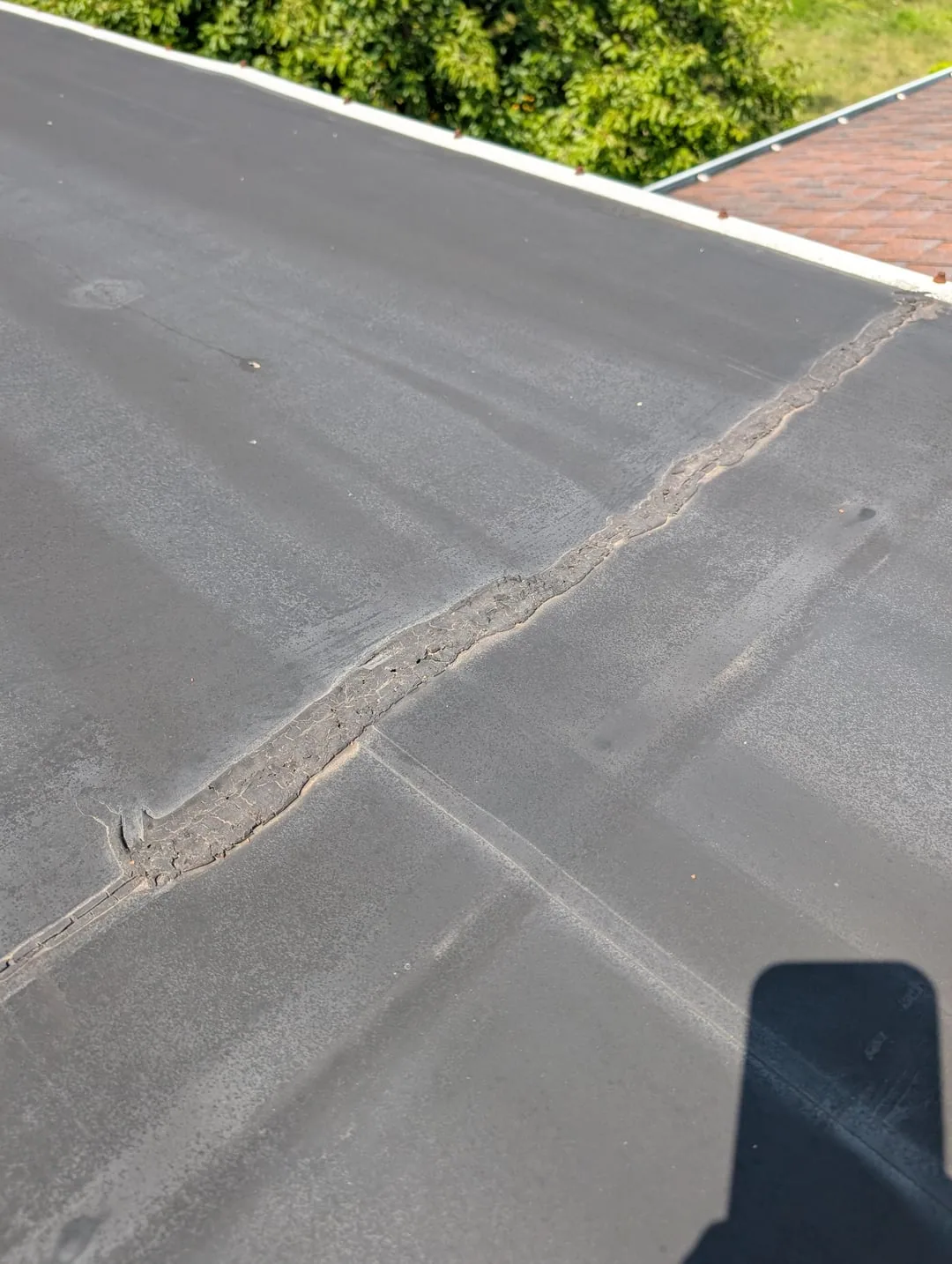
When the membrane at the edge has torn, a failed flashing repair and a seam repair often go together. A torn edge strip lets wind get under the sheet, and the next gust can open a seam further inboard. For that reason we check the nearest seam to every damaged edge and probe it before the repair is closed.
Temporary dry-in: Close the opening before the next front
Rain after wind is the cost multiplier. San Francisco International Airport station normals list 16.76 of 19.64 annual inches for November through March, and 0.18 inches for the three summer months, so an opening in winter is far more likely to be rained on than one in July. We place a temporary cover where it is safe to do so, using sheet membrane, tape or sealant and ballast, and secure it against further wind. Emergency response runs around the clock, which matters when damage is found at night. The temporary work is listed in the report so it is not mistaken for the final repair. If the wind also moved rooftop equipment, we do not leave a loose unit unsecured, and we tell the building contact which mechanical contractor should reset it. Interior protection, such as covering racks or moving stock, is the owner's call, and we flag the rooms below the openings so that call is made quickly.
Debris and puncture: Look past the obvious tear
Wind carries debris, and what it lands on can be as damaging as the wind itself. Loose screens, signs, equipment covers and tree limbs may have struck the roof some distance from where they came from. We look for punctures, gouges and cuts along the flight path, and for damage to skylights and rooftop units. Where the membrane was punctured, we also check for wet insulation below it, since a small hole can feed water into a large area. A membrane puncture repair may be part of the wind scope. An infrared survey after the next rain can locate moisture that is not visible from the surface.
Cost and timing: Separate the quick fix from the permanent repair
The cost of wind repair follows the number of damaged areas, the edge length that needs replacement, insulation that has to be removed and the access required. Whether a building stands on Mission Street, in Westlake or in Serramonte, the pricing follows its own parapet height, edge length and rooftop equipment. We price the temporary work, the permanent work and any related items such as damaged skylight flashing as separate lines. If the damage is part of an insurance claim, the claim documentation follows the same line items.
Questions About Wind Damage Roof Repair
Closeout: Record what was restored and what was left
At completion, we inspect each repaired area, photograph edge metal, fasteners, flashings and seams and mark them on the roof plan. Items we left alone because they were sound are listed so the owner knows they were checked, and anything we recommend monitoring gets a date for the next look. The record helps the next inspection compare conditions, and it supports a longer-term plan with commercial roof repair or, if the roof is near the end of its life, replacement. Properties in South San Francisco and Pacifica receive the same format.
Commercial Roofing Questions
How soon after a windstorm should the roof be inspected?
As soon as it is safe to reach. A lifted edge or open seam can let rain in on the next storm, and the earlier the opening is covered, the smaller the interior damage.
Can wind damage be repaired without replacing the roof?
Often. If the deck and insulation are dry and the damage is limited to the edge, seams or flashings, targeted repair is practical. A larger area of lifted membrane or wet insulation may call for section replacement, and we show the boundary of that section on the roof plan before pricing it.
What does a temporary cover look like?
It is a sheet of membrane or tarp-like material, sealed at the edges and held down with ballast or battens. It keeps rain out until the permanent repair, and it is photographed so the final repair can replace it.
Do you check the rest of the roof after a wind event?
Yes. We walk the full roof, including areas that look sound, and test seams and flashings near the damaged section. The report lists what was checked.
Is a permit needed for wind repair in Daly City?
Permit need follows the scope of the repair. Title 24 review and inspection sit with the Building Division, and the 2025 California code amendments became effective January 1, 2026. We confirm whether the repair needs a permit before work begins.
More Commercial Roofing in Daly City
Report wind damage
Tell us the address, what you saw and how the roof can be reached. We will inspect, dry in the opening and write the repair scope.