
Johns Manville Roofing Systems in Daly City, CA
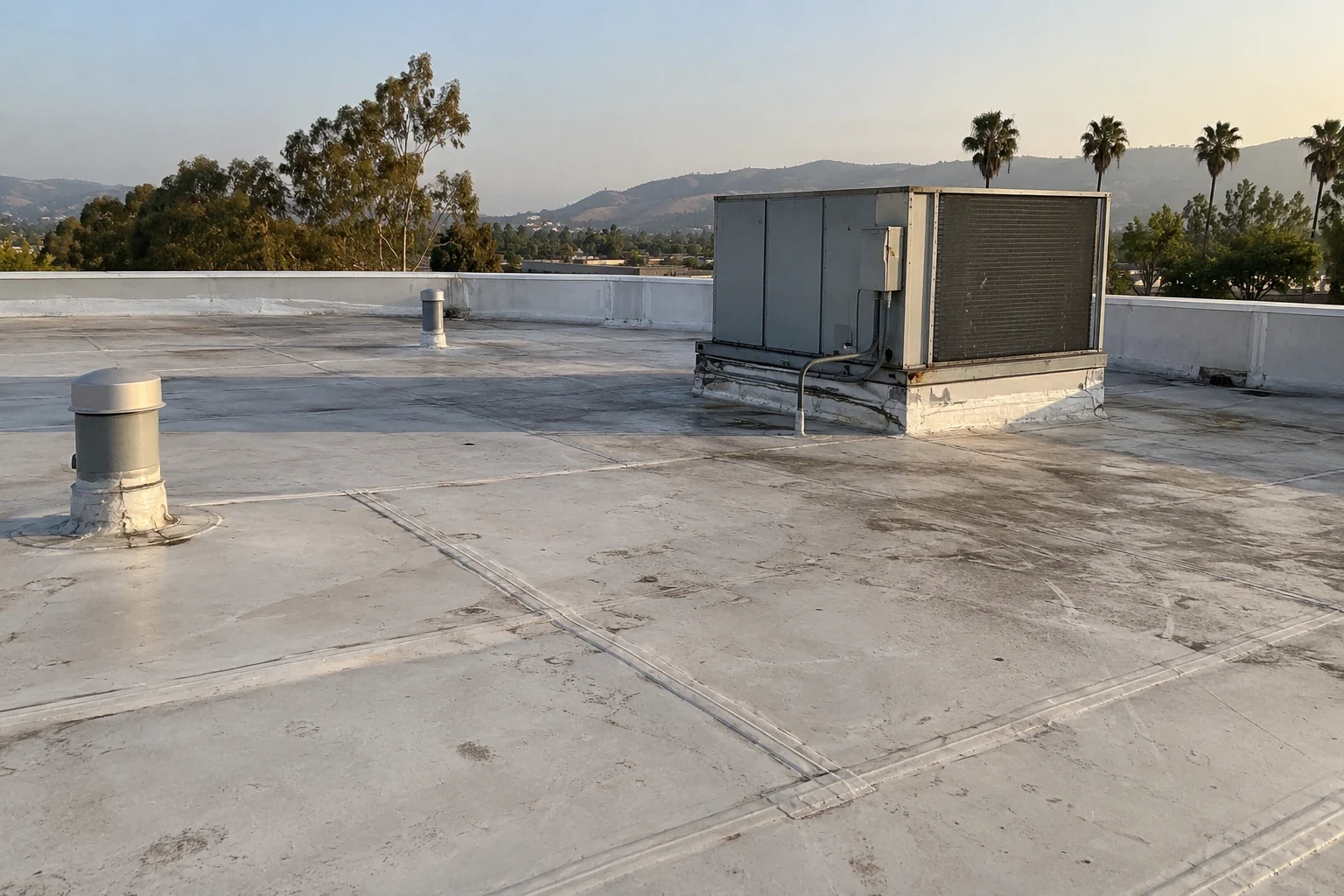
Johns Manville Roofing Systems in Daly City
Johns Manville roofing in Daly City, CA: built-up, modified bitumen, single-ply and polyiso insulation scopes, with sequencing for the wet season.
A Johns Manville specification can ask for a layered asphalt roof, a modified bitumen cap, a single-ply sheet, or a polyiso insulation package, and the name on the drawing does not say which. That is the first thing to settle on a Daly City, CA project. A built-up roof is assembled in the field from plies, bitumen, and a surfacing, while a single-ply roof arrives as a rolled sheet. The two put very different loads on the schedule, the deck, and the building's neighbors.
We install and repair built-up, modified bitumen, TPO, PVC, and EPDM roofs, so a Johns Manville scope can be priced against the actual layers called for. Where a specification names an insulation product, such as a polyiso board, we price the board, the fastening pattern, and the cover board as one assembly, because the roof is only as flat as the layers beneath the membrane.
Layered systems: Plies, bitumen and the cap that takes the weather
A built-up roof gets its strength from redundancy. Several plies of reinforcing fabric are mopped or adhered with bitumen, and a cap sheet or a surfacing sits on top to take sun and traffic. If the top layer is nicked, the plies below still turn water. That redundancy is why a layered roof is a sensible choice where rooftop equipment draws regular service visits.
The modified bitumen side of the line uses polymer-modified sheets, applied by torch, hot asphalt, cold adhesive, or self-adhesion. Each method has a different safety plan. Torch application brings open flame to a roof, which many insurers and some leases restrict, so an occupied building often steers toward a cold-applied or self-adhered sheet. Hot asphalt needs a kettle, a staging area, and a managed odor plan. We write the application method into the scope with the fire watch and staging areas shown, so the general contractor can see what the roof will be doing day by day.
Scope boundary: Mark the tear-off before the kettle is lit
Because layered roofs are heavy, the removal limit is often the most expensive line in the scope. The existing roof may carry gravel, multiple plies, and a coating that all have to come off, and the weight of the debris has to be hoisted or chuted to a dumpster that fits the site. We walk the roof, cut test squares to count layers, and mark the limit of removal on the surface and on the drawing.
At the edges, the scope boundary decides who pays for surprises. If the deck is found wet or deteriorated beneath the old plies, replacement of that deck section should be a unit-priced item agreed before the work starts, not a negotiation held on a half-open roof. The same approach applies to saturated insulation, which we measure and map with a moisture survey so the unit counts are not guessed.
Wet season: Hot work, adhesives and open area
Layered roofs do not like rain on an open surface. Moisture trapped between plies turns to blisters later, and wet insulation loses its thermal value. The San Francisco International Airport NOAA station reports one location, not a citywide Daly City figure, and its yearly normal of 19.64 inches is lopsided: 16.76 inches arrive from November through March, against a summer total of 0.18.
We therefore plan built-up and modified bitumen work for the dry months where the building allows, and we limit each day's open area to what can be covered by evening. In the wet months, a roof that must be replaced is staged in small bays, each dried in and tied off before the next is opened. A temporary tie-in is written into the sequence with a named owner, because someone has to walk the roof the following morning and check it before the crew starts again.
Field condition: Insulation, drains and the slope between them
Polyiso insulation is installed in layers with staggered joints, and tapered sections can be added to push water toward drains. The thickness at the drain sump is the number that decides whether the roof drains: too thin and a ponding area forms, too thick and the sump no longer connects to the pipe. Before we order, we measure every drain, scupper, and low spot and draw the tapered layout.
Commercial buildings along Mission Street and Geneva Avenue, and in the Serramonte and Westlake commercial areas, are identified by the City of Daly City as commercial settings. That context is useful for access and phasing, but it does not tell us what the roof under a particular building contains. We confirm each roof by coring it, and we adjust the insulation plan to what we find. A related look at the insulation and cover board package shows why a few added inches can change every flashing height.
Cost driver: Layers, labor and the permitted path
A layered roof usually costs more in labor than a rolled single-ply sheet because more passes cover the same area. The material cost follows ply count and cap type, and the debris cost follows the weight of what is removed. Add the crane or hoist time, the safety setup for hot work, and any odor or noise limits imposed by tenants, and the price reflects how the building will be used while the roof is open.
Code timing is part of the number. Daly City's amended version of the 2025 California Building Standards Code has applied since January 1, 2026, and the Building Division handles plan review and field inspection. A file already complete before that day can continue under the earlier edition. We confirm which cycle applies, since insulation values and fastening requirements move with it.
The same scope in South San Francisco or San Francisco answers to a different city's permit office, so we check the local process before the schedule is fixed. A layered roof for a warehouse or print shop in Brisbane's Crocker Park Trade Commercial area would raise the same hoist, kettle, and staging questions.
Questions About Johns Manville Roofing Systems
Closeout: Records for the manufacturer and the next owner
The final record lists the plies installed, the cap type, the insulation thickness and layout, and the location of each repair. It includes photographs of the flashings and drains. For a layered system, the record also notes how the roof was dried in each day, since that history helps explain a later blister or seam problem. An owner who plans to sell or refinance can then show a documented system, and a future roofer can see how to tie into it. The approach is similar to the way we close out Soprema modified bitumen work and Holcim Elevate single-ply work.
Commercial Roofing Questions
Does a built-up roof still make sense for a new project?
It does where redundancy and foot traffic matter, such as roofs with frequent equipment service. It is heavier and slower to install than a single-ply, and it needs a plan for hot work and odor.
Can modified bitumen be installed without open flame?
Yes. Self-adhered and cold-applied sheets avoid torches entirely. They need a clean substrate and workable temperatures, so cold, damp mornings can delay the start.
What does polyiso insulation add to the scope?
It sets the roof's thermal performance and its finished height. We price the board, the fasteners, and the cover board together, then check wall and curb heights against the thicker assembly.
How are wet or damaged decks handled mid-project?
We agree a unit price for deck repair before the tear-off begins. Then if cores or the open roof show deterioration, the owner already knows the cost per section and the work continues.
Why map the tapered layout before ordering?
Taper is cut to the roof, board by board. If a drain sits half an inch off, the cut sheet will not match, so we measure first and the supplier cuts to a drawing that fits.
More Commercial Roofing in Daly City
Related pages
- built-up roof
- modified bitumen
- moisture survey
- insulation and cover board
- South San Francisco
- San Francisco
- Soprema
- Holcim Elevate
Browse by category
Send the layer schedule and the access limits
Share the specification, the existing roof information, and the building's restrictions on hot work. We will walk the roof, confirm the layers, and write a sequence the other trades can follow.