
Grocery Store Roofing in Daly City, CA
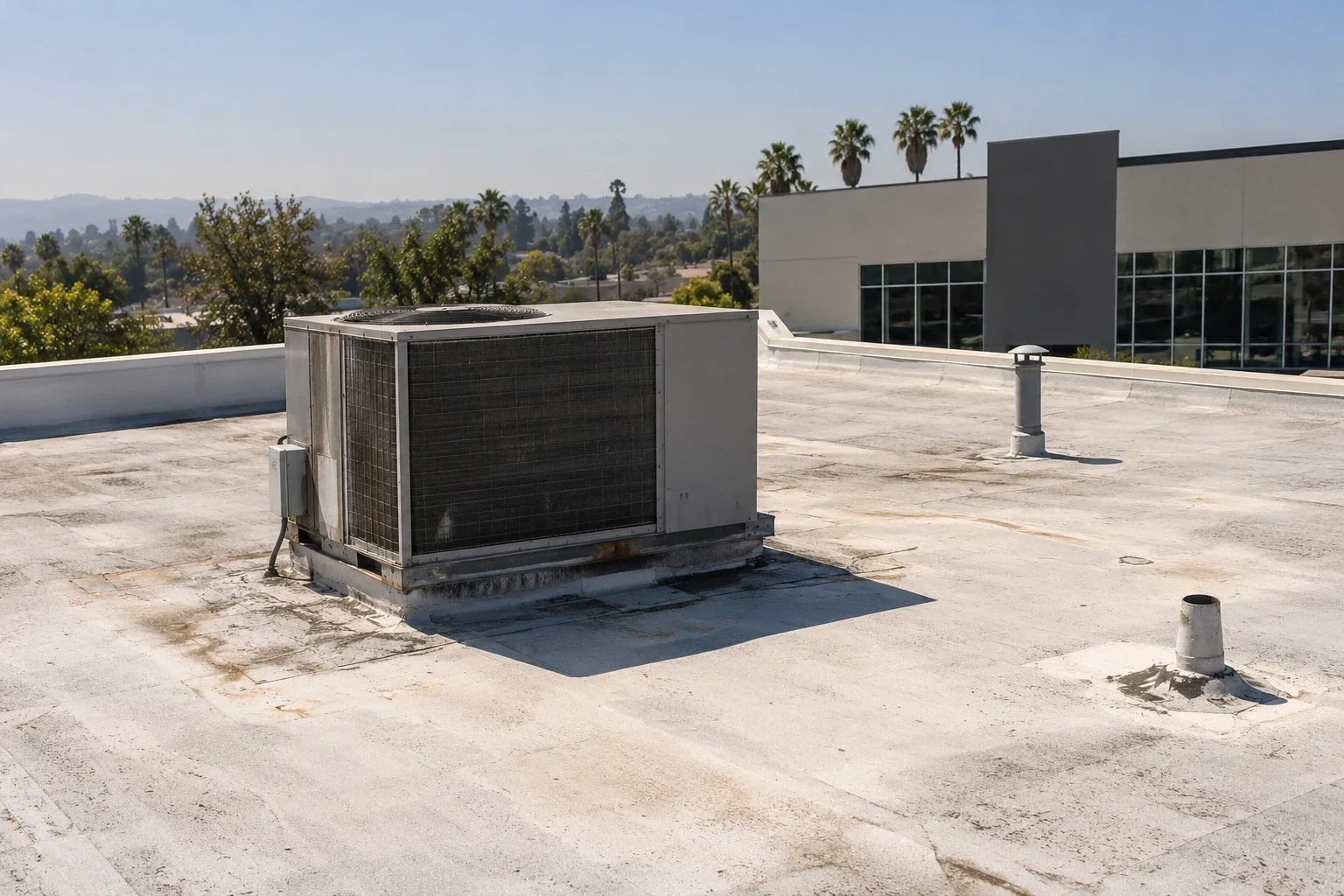
Grocery Store Roofing in Daly City
Coordinate grocery roof repair in Daly City around receiving, refrigeration equipment, drainage, and store access, with mapped work limits and trade handoffs.
A refrigeration service call can meet a roof leak at the same curb, so scope ownership needs to be settled before either crew opens the area. For a grocery store in Daly City, CA, we map the roof zone to coolers, rooftop equipment, loading, and customer access. The city counts retail and healthcare among the important parts of its economy and names Westlake and Serramonte among its commercial areas. Those facts help frame the local property context, not any particular store's equipment or roof assembly. We inspect the actual conditions and give the GC a sequence that keeps equipment access and the roof tie-in in the same discussion.
Grocery buildings often have continuous refrigeration and ventilation needs, roof penetrations, drains, and membrane areas that may have received different repairs. We record seams, curb flashing, wall transitions, drain paths, and the work boundary before choosing an option. A commercial roof inspection can establish the condition and locations for review. Coordination for a store in the Daly City service area starts from the refrigeration schedule, and access planning resembles that for a shopping center roof or a restaurant roof.
Equipment curb: Keep roofing and refrigeration work aligned
We inspect curb height, membrane turn-up, counterflashing, corners, nearby seams, conduit, and the path used by service technicians. A wet ceiling near a cooler does not establish whether the opening, unit, drain, or wall transition is the entry point. We trace the roof path, photograph visible conditions, and list any test needed to separate roof work from refrigeration repair. The project plan should say who disconnects or moves equipment, who prepares the curb, and who accepts the finished flashing.
Where equipment remains, access should be protected through the phase and after closeout. We identify service routes and any walk protection required by the selected assembly. If the curb is being replaced, we confirm its dimensions and support before setting the final membrane detail. Equipment curb and support work can define that boundary. Keep the base roofing scope clear about utilities, controls, and connections handled by another trade so the tie-in is not left waiting after the membrane crew has finished.
Drainage: Find the outlet before widening the repair
Drain bowls, strainers, scuppers, overflow routes, low points, and crickets all affect where water goes. We note debris, visible ponding, open seams, and failed flashings, then distinguish service cleaning from roof correction. A clogged outlet may need maintenance; a persistently low area may require a different correction. We do not price slope changes from a photograph alone. The inspection record should identify the outlet and the roof area it serves so the owner can decide whether the work belongs in the current repair.
NOAA's San Francisco International Airport station reports a normal cool-season precipitation concentration from November through March and very little precipitation in summer. The airport station record informs seasonal planning, while onsite surface and substrate conditions govern installation. A drain and scupper review can define outlet work, and a ponding-water repair can address the membrane or slope question as a separate scope.
Store operations: Set receiving and access windows
Before mobilization, the GC and store representative should identify loading hours, customer entries, material routes, staging, debris removal, and roof access. We list the zone opened each day, the temporary cover, and the person who confirms dry-in before the crew leaves. Deliveries may share the same lane as a lift or waste container, so the plan needs time windows rather than a general note to coordinate. If refrigeration, HVAC, electrical, or signage work overlaps, establish the trade order and acceptance point before final flashing.
Daly City describes its economy as diversified across professional services, retail and wholesale trade, and manufacturing. The separate mention of San Francisco and San Mateo County job centers helps frame delivery routing; the grocery property's hours remain site-specific. Those references support local logistics context, but the property's own hours, access rules, and tenant needs control the work plan. Occupied-building phasing can define protected routes and work limits. If an active leak needs immediate containment, our around-the-clock response is available on holidays and weekends as well as ordinary workdays.
Membrane choice: Check the substrate and details first
TPO and PVC seams are heat welded; EPDM uses compatible splice materials; modified bitumen and built-up systems rely on specified plies and flashing. We verify which assembly is present before recommending repair, recover, or replacement. The roof may include different materials at additions or equipment zones. Each tie-in needs a compatible detail at the curb, wall, drain, and perimeter. A coating is considered only if the existing surface and system support it, and it does not replace drainage or flashing corrections.
The assembly record should include insulation, cover board, attachment, and any observed deck condition. If material is removed, the boundary and method are agreed before work begins. A TPO system may be an option when requirements and substrate permit, while an existing membrane should be repaired with compatible products. We can also document replacement limits where the condition extends beyond one curb or isolated seam. The goal is a roof plan that distinguishes what was renewed from what remains.
Scope price: Separate roofing from equipment allowances
Price depends on roof area, removal depth, insulation, membrane, drain work, flashing quantity, equipment curbs, access equipment, staging, and phase count. Refrigeration work can add coordination around disconnects, service availability, and reinstallation; those tasks should have a named owner. We state base quantities and assumptions, then identify how concealed wet insulation or deck damage is reviewed and authorized. A proposal that combines all equipment and roof work into one unclear allowance makes trade responsibility difficult to track.
Daly City put its locally amended 2025 building standards into effect January 1, 2026. A submission deemed complete before then may retain the previous code basis, so check the store’s permit record before finalizing the roof and equipment details.
Questions About Grocery Store Roofing
Closeout photos: Record the curb and the work boundary
We inspect the completed membrane, seams, curb flashing, drain details, wall transitions, and tie-ins before turning the roof area back to other trades. Photos use roof-zone labels and show each detail in context. The closeout notes state what was repaired or removed, what assembly remains, what changed by authorization, and which observations were not included. That record helps the next refrigeration or roof service team locate the curb and understand where the current scope ended.
Mission Street and Bayshore are identified in city economic-development material, and Westlake and Serramonte appear among commercial areas in Daly City's profile. These are planning references, not evidence about a specific grocery building. The useful project record is the marked roof plan, equipment list, access notes, and labeled photos. A roof condition record can preserve those items for facilities review. Share current roof plans, leak reports, equipment schedules, and receiving limits so we can set a roof work sequence with clear trade ownership.
Commercial Roofing Questions
Who handles flashing when a cooler is replaced?
The GC should assign curb preparation and acceptance before equipment removal. We define the roofing tie-in and coordinate its timing with the refrigeration crew.
Can roofing proceed while the store is open?
Often, if customer paths, loading, material movement, and each active roof zone are planned. We agree on notices and end-of-shift dry-in with the store contact.
Does ponding mean the membrane must be replaced?
No. We inspect drains, slope, seams, and the affected area before selecting cleaning, a localized correction, or broader membrane work.
What belongs in the roofing price?
List membrane, insulation, drains, curbs, access, staging, and the included phases. Equipment connections and concealed conditions need separate ownership and approval rules.
Which closeout details help the next service call?
Use a labeled roof plan, curb and drain photos, completed repair limits, retained materials, accepted changes, and any area still awaiting review.
More Commercial Roofing in Daly City
Coordinate roofing with refrigeration
Share roof plans, equipment schedules, receiving windows, and leak reports. We can inspect the roof zones and set a clear curb and dry-in handoff with the GC.