
Commercial Roofing in Oakland, CA
Oakland in Daly City
Commercial roof repair, replacement, recover and coating for Oakland downtown, commercial and industrial buildings, with clear scopes and dry-in sequencing.
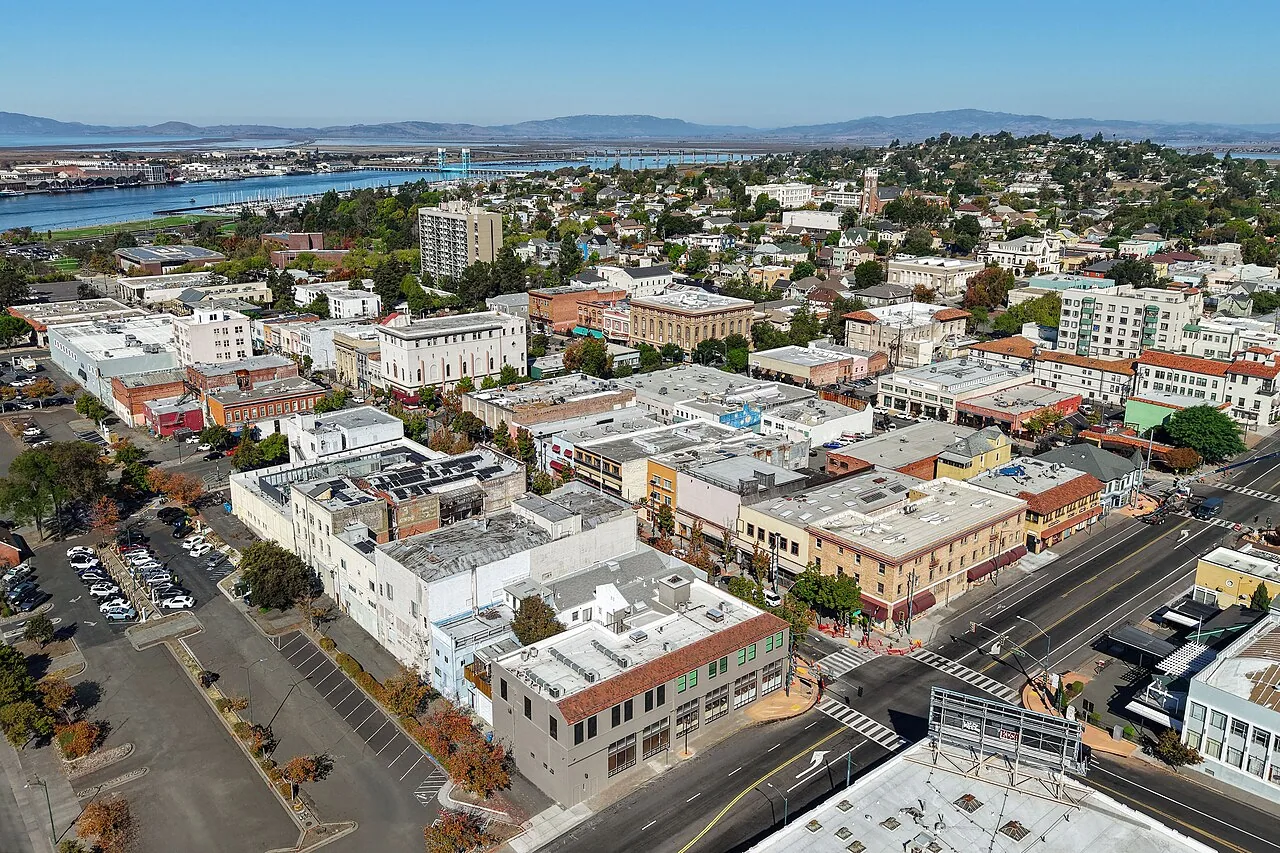
The roof area on a multi-use building is rarely one roof. It is a set of levels, parapets and equipment zones, and each one has an owner, a drain path and a tie-in. Oakland's planning framework covers downtown, port-related, commercial and industrial areas, so a project team working across the city may be handling very different buildings under one schedule. We start every Oakland scope the same way: walk each roof area, record its field condition, and write down where one scope ends and the next begins.
Commercial roof repair, replacement, recovery, coating and maintenance in Oakland run through the same walk-first process for owners, managers and general contractors. Plans and a description of the problem are the starting point.
Planning areas: downtown, port-related, commercial and industrial
The General Plan treats these areas as distinct, and roofing follows the same logic. A downtown building tends to raise access, street protection and tenant questions. A commercial property raises customer and parking questions. An industrial building raises questions about equipment, process exhaust and loading activity. The planning label does not tell us what roof a building has; the walk does.
For port-related and industrial properties, we look at roof area, penetration count and the condition of the edge metal and gutters. Skylights, smoke vents and exhaust fans are common detail points on larger low-slope roofs. For downtown buildings, we look at parapets, wall flashings and roof drains that may be shared with neighboring structures. The scope names each of these and states who is responsible.
That written boundary saves time later, because the general contractor can price, schedule and sequence the work without waiting on clarifications.
Shared walls and neighboring roofs deserve a mention in the scope as well. When a parapet or a drain serves two owners, the record shows who approved the work and who inspected it afterward.
Work sequence: a phased replacement
Large or multi-level roofs are best replaced in phases. We begin with the walk and test cuts, then draw the phase lines so that each phase ends at a natural break, such as a parapet, an expansion joint or a change in roof height. Each phase is dried in before the crew leaves it, and the tie-in to the next phase is protected with a temporary seal.
Within a phase, the order is fixed. Tear-off exposes the deck. Damaged deck is repaired. Insulation and cover board go down, then the membrane, then the flashings and edge metal. A last walk finds loose fasteners and unsealed terminations. The closeout record follows.
Phasing lets the owner spread cost across budget years, and it lets tenants stay in place. It also means each phase has a defined record, which makes a later tenant request or lender question simple to answer.
Field condition: wear from traffic and equipment
Commercial roofs show their age at traffic paths and equipment. Technicians walk the same routes to the same units, and the membrane along those routes scuffs, cracks at seams and sometimes tears. Condensate lines that drip onto the sheet stain and weaken it. Pipe supports without pads sit on the surface and wear through.
We map those paths on the first walk. We probe seams, check flashing heights, look for blisters and open laps, and note where water collects. If the surface does not explain a leak, an infrared moisture survey maps temperature patterns that suggest trapped water, and a test cut confirms them.
The findings go into a marked plan with photographs. The owner sees what to fix now, what to schedule and what to watch, and the project team sees where the roofing scope meets other trades. A commercial roof inspection record built this way can be updated each year.
System detail: choosing a membrane for the use
The membrane should match what happens on the roof. Where foot traffic is heavy, modified bitumen or a reinforced single-ply sheet with walk pads holds up. Where exhaust or grease reaches the surface, a PVC sheet resists many chemicals better than other single-ply options. Where the roof is large and simple, a mechanically attached or adhered TPO sheet is efficient to install. Where a sound metal roof is leaking at fasteners and seams, repair and sealing may be the better answer than replacement.
Beneath the membrane, insulation thickness and cover board choice affect both energy performance and puncture resistance. We confirm the stack-up height before ordering so that curbs, wall flashings and drain sumps can be adjusted in sequence.
The comparison we write for the owner lists each option, what it covers and what it leaves alone, along with the likely time to the next capital item. That makes the choice a business decision, not a guess.
Rain timing: from the airport record
The airport station gives the closest regional record. A normal year there brings 19.64 inches of rain, 16.76 of it from November through March, and the summer quarter brings 0.18. For Oakland owners that points replacement, recover and coating toward the dry months, and leaves the wet months for inspection, drain work and repair.
The first heavy storm after a dry summer finds every clogged drain, every cracked sealant joint and every loose flashing. Clearing drains and scuppers before November is the least expensive roof work an owner can buy, and it goes further when loose edge metal and cracked sealant are fixed on the same visit. A project that has to extend into winter keeps its open area small and gets its temporary tie-ins checked before each forecast storm.
Questions About Oakland
Cost drivers: across building types
The same list of conditions applies across downtown, commercial and industrial buildings. Wet insulation must be replaced. Damaged deck must be repaired. Every curb, pipe and drain adds labor. Access by lift, crane or interior route affects both time and cost, and tenant protection can be a major line on occupied buildings. Permit review, material lead times and the date a building must be dry all shape the earliest start, so we ask for those dates at the first meeting and plan backward from the one that cannot move.
Industrial properties may add costs for exhaust-resistant membranes or for work scheduled around loading and production. Downtown properties may add street protection and limited staging. Every item gets its own line, which lets the owner separate roof costs from operating costs. A restoration coating can extend a sound membrane, and a capital planning review sets a multi-year spending plan.
Handoff and closeout: lists and records
Once roofing is complete, other trades follow, and the general contractor gets a written list of walk routes, walk pads and final penetrations. Our closeout record holds photographs, installed materials, repaired details and manufacturer paperwork by roof area, and a preventive maintenance program keeps the roof healthy afterward.
Emergency calls are answered every day, holidays included. We also work in nearby Alameda and San Leandro.
Commercial Roofing Questions
Can a multi-level building be reroofed in phases?
Yes. Phase lines follow parapets, joints or height changes, and each phase is dried in and closed out before the next begins.
What differs on an industrial roof?
Exhaust, equipment and loading schedules. We check membrane condition near vents and plan work around production hours.
How are shared drains and parapets handled?
We name each party in the scope, so authorization, cost and inspection are agreed before work begins.
What does a fall roof visit cover?
Drains, scuppers, sealant at penetrations, loose edge metal and flashing terminations, before the November through March rain period.
What is in the closeout record?
Photographs at tie-ins, installed materials, repaired details and manufacturer paperwork, organized by roof area.
More Commercial Roofing in Daly City
Send the plans and the access limits
Share the roof plan, tenant hours and what you see on the roof. We will return a trade-ready scope and a workable sequence for your Oakland building.