
Commercial Roofing in Redwood City, CA
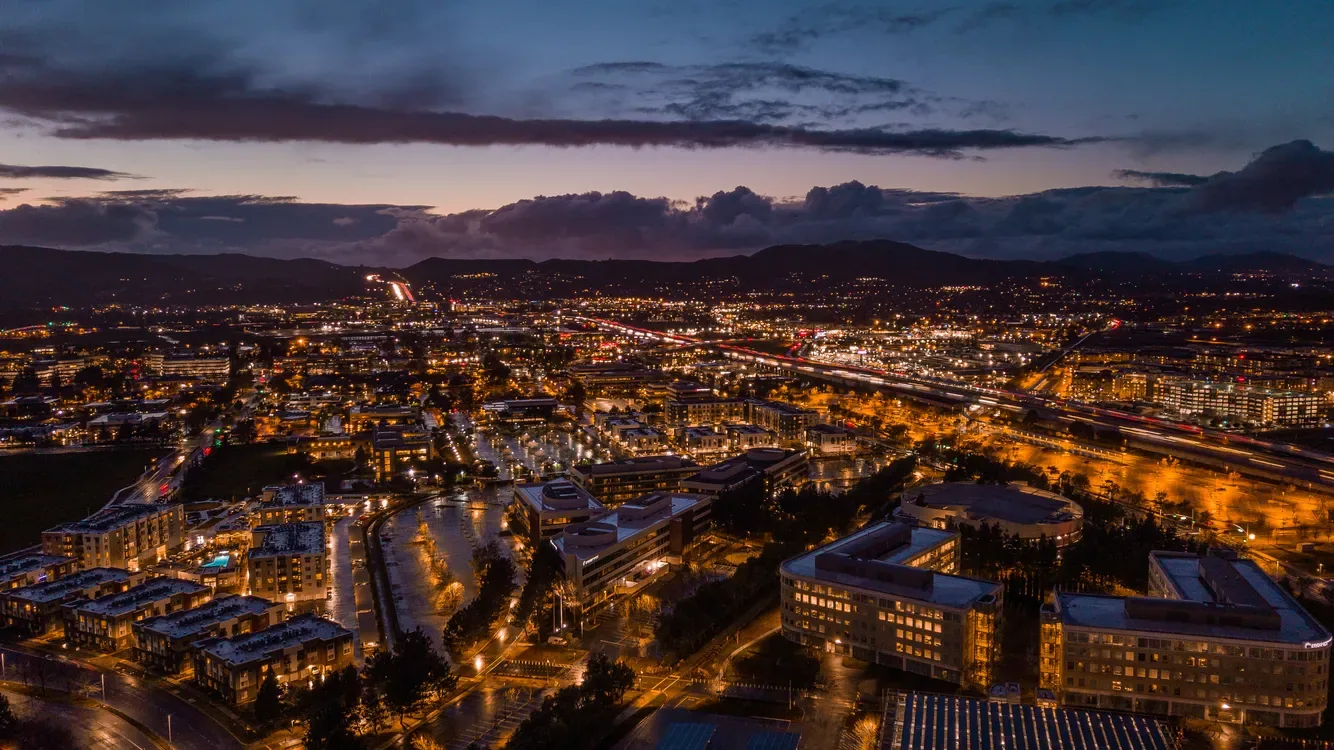
Redwood City in Daly City
Commercial roof repair, replacement, recover and coating for Redwood City buildings, from Redwood Shores offices to port-area industrial roofs.
Equipment drives the roofing scope on a science or technology building. Redwood Shores, which the city promotes to life-science, biotech and traditional IT companies, is the kind of setting where a roof may carry exhaust, air handling and cooling gear that the roofing crew has to work around without interrupting. The first coordination point is the equipment schedule: which units stay, which are replaced, and when the mechanical contractor needs the roof.
Redwood City owners, managers and contractors can call us for repair, replacement, recover, coating and maintenance on commercial roofs. Bring the equipment list, the plans and the symptom, and the walk that follows ends with a written scope.
Redwood Shores: roofs that serve technical tenants
The city promotes Redwood Shores to biotech, life-science and traditional IT companies. We read that as context for the kind of equipment a roof may carry, not as proof of what is on any specific building. On the first walk we count the units, check the curbs and supports, and record piping, conduit and ductwork that crosses the membrane.
Technical tenants care about continuity. A leak above a lab or a server room is not an inconvenience; it can stop operations. So the scope for these buildings includes protection planning: temporary covers, drain checks before storms, and a defined contact for the tenant's facility team. We agree on an access window, and we confirm who can authorize work near sensitive equipment. If the tenant needs a shutdown for a unit, the roofing sequence waits for that window instead of asking the facility team to improvise.
For a project team, the result is a roof plan that matches the building's operating needs and a schedule that does not surprise the tenant.
Where a tenant keeps its own facility staff, we name them in the plan and agree who can approve a change in the field, so a decision about a curb or a drain never waits on a phone tree.
Sequence: replacing a roof beside live equipment
Reroofing around live mechanical equipment is done in stages. We first confirm which units can be temporarily isolated and which must keep running. Then we section the roof so that the area around each running unit is handled with extra protection, and flashing at its curb is completed before the section is left for the night.
Tear-off, insulation, cover board and membrane go down in sequence, and each section is dried in the same shift. Curbs that need raising for the new stack-up are modified before the membrane arrives. Piping and conduit supports get new pads. After the field, the details are finished and inspected.
Documenting the sequence helps the mechanical contractor. They know when each area is safe to approach, and the roofing record shows what was done at every curb. Our curb and support work is part of this sequence.
Caltrain and the port: industrial and logistics roofs
Every Caltrain line stops in Redwood City, and its port provides deep-water access in the South Bay. For a roofing contractor, those transportation links suggest commercial and industrial activity nearby, which may include warehouse and distribution space. We do not assume particular buildings or roof types from a transit or port designation; we identify the system on the walk.
Where an owner does have a warehouse or distribution property, the roof questions are familiar. A warehouse roof usually means long runs of seams to inspect, punctures from dropped material near dock zones, and skylights or smoke vents that become leak points as their curbs age. Our warehouse roofing work addresses those details, and a distribution center roof adds scheduling around dock hours and inbound freight.
Field condition: reading the membrane around equipment
Around rooftop equipment, membranes wear in a predictable pattern. Service technicians walk the same path to the same units, and that path shows scuffing, seam stress and sometimes punctures from dropped tools or fasteners. Condensate that drips onto the sheet stains it and can degrade some materials over time. Pipe supports without pads press into the surface and cut through it.
We map those paths on the first walk, then look at what lies beneath. Wet insulation near a curb is a common finding, since flashing is the most frequent entry point for water. A thermal survey, followed by a test cut, tells us how far the moisture has spread and whether a repair or a larger replacement is the right answer.
The findings go into a marked plan with photographs and short descriptions. The owner sees what must be fixed now, what can be scheduled, and what can be watched, and the project team sees where the roofing scope will touch other trades. That plan is also the starting point for a commercial roof inspection record that can be updated each year.
Rain timing: drain readiness
Weather context comes from the airport station nearby. Its normals record 19.64 inches in a year, with 16.76 inches falling from November to March and just 0.18 inches in the summer quarter. That pattern puts the pressure on drains and flashings in winter and opens a clear working window in summer.
For technical tenants, drain readiness is the main preparation. Overflow scuppers and secondary drains matter most here, since they are the last path for water when a primary drain clogs. We clear drains and scuppers, check overflow paths, and look at sealant and flashing at every equipment curb before the first heavy storm. A blocked drain over a sensitive space is the type of failure a short fall visit prevents. When a project must run into the wet season, we limit the open area and stage a crew to respond to forecast storms.
Questions About Redwood City
Cost drivers: equipment, access and interior protection
On equipment-heavy roofs, the cost list differs from a simple warehouse. Curb modifications, equipment shutdown coordination, temporary protection and night or weekend work all add to the price. The condition of the insulation and deck still matters most, and wet insulation must be replaced regardless of the membrane above it.
Items belonging to the roof and items belonging to operations appear on different lines, so the owner can weigh each. A restoration coating may suit a sound, dry membrane and delay a larger project, while a replacement fits roofs at the end of their service life. For asset managers with several buildings, a multi-site roof program sets priorities and budget years across the portfolio.
Closeout: records and emergency response
On completion, the owner holds photographs of each tie-in, a materials list, repaired details and manufacturer paperwork, sorted by roof area. Tenant changes, lender requests and later service calls all draw on it. A crew answers leak calls at night and on holidays, and the stop-gap repair goes into the record the same way as planned work.
Nearby, we also work in Menlo Park and San Carlos.
Commercial Roofing Questions
Can rooftop equipment keep running during a reroof?
Often. We section the roof, protect the area around each running unit and finish its curb flashing before leaving the section.
How do you protect a lab or server room below the roof?
With drain checks before storms, temporary covers on open areas and a named contact on the tenant's facility team.
What changes on a warehouse roof near the port?
Seam count, dock traffic and skylight flashing take more attention. We inspect those first and plan around dock hours.
Should curbs be modified before the membrane arrives?
Yes. New insulation and cover board change the stack-up height, and curb flashing must match it.
When is the best time for a coating?
Summer, when rain nearly stops and the roof can stay open through a full working day.
More Commercial Roofing in Daly City
Share the equipment list and the plans
Tell us what sits on the roof, who needs it and when it must be dry. We will return a trade-ready scope and sequence for your Redwood City building.