
Commercial Roofing in San Carlos, CA
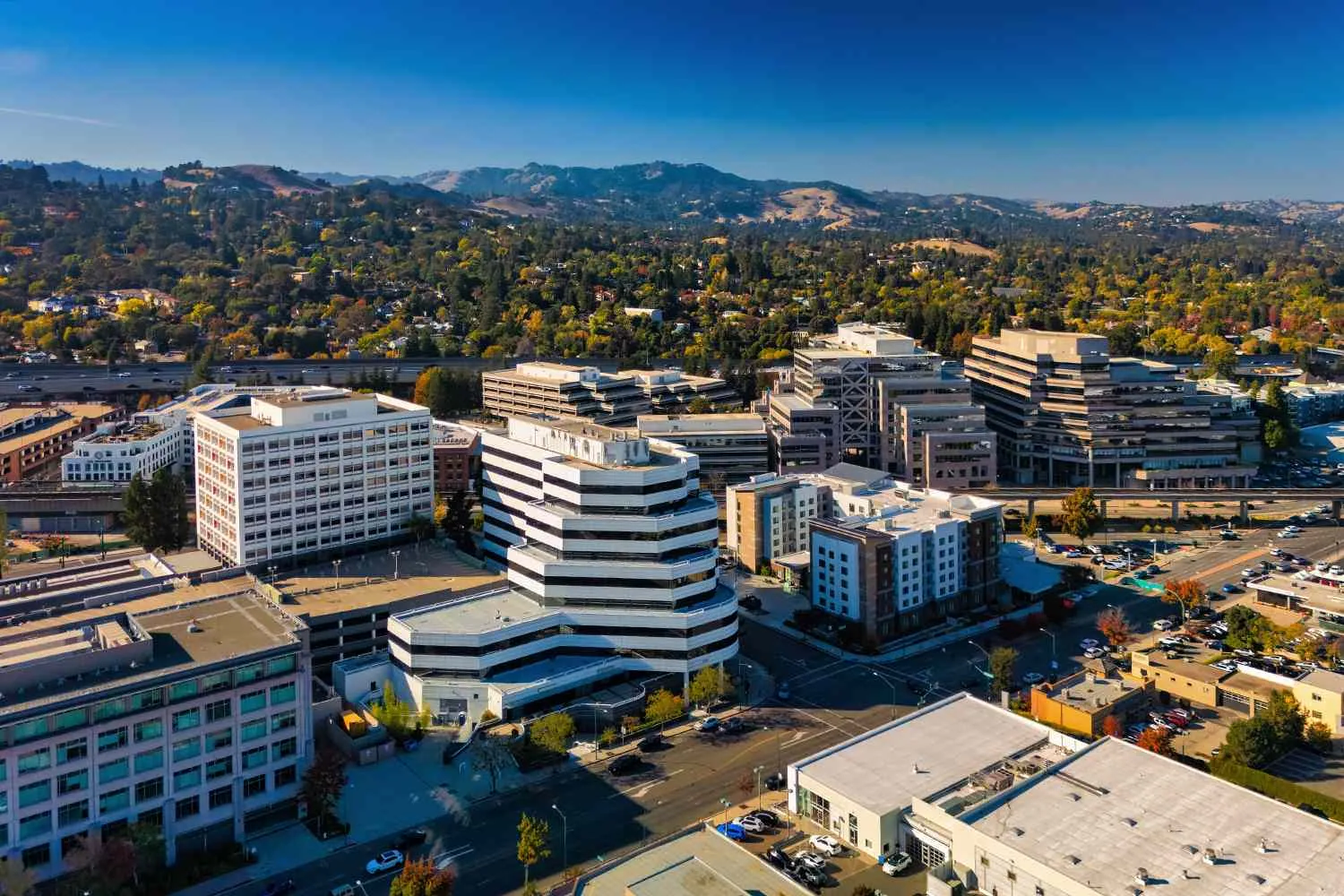
San Carlos in Daly City
Roofing for San Carlos office, research and industrial properties: repair, recover, replacement and coating, scoped around access, equipment and weather.
Industrial and office roofs carry more than weather. They carry the equipment, ducting and conduit that keep the tenant running, and every one of those items is a penetration the roofing scope has to account for. San Carlos planning identifies commercial, office, research-and-development and industrial areas, with El Camino Real, Old County Road, Brittan Avenue and Industrial Road named as employment corridors. The roof questions that follow are practical: what is on the roof, who services it, and how often will someone be walking across the membrane.
San Carlos buildings get the full range of roof work from us: repair, replacement, recover, coating and maintenance. The equipment list, the drawings and the problem you see are what we need before the walk.
Employment corridors: planning access and phasing
Roof work along an employment corridor depends on the rhythm of the day. Shift changes, deliveries and parking affect where a lift can stand and when a crane can lift. On El Camino Real, Old County Road, Brittan Avenue or Industrial Road, the questions are the same: where do trucks turn, which doors stay clear, and which tenants run early or late?
A corridor name tells us the setting, not the roof. We confirm the building with a walk, and we write the access plan into the scope. That includes lift or crane position, debris path, material staging, tenant contact and work hours. For operations that cannot stop, such as a lab or a production line, we phase the roof so the area above the sensitive space is handled at agreed times and with added protection below.
Shift schedules deserve a line in the plan. If a tenant runs two shifts, the quiet hours for tear-off may be narrow, and we would rather price a phased weekend plan than promise a pace the neighbors cannot tolerate.
Research and office buildings: equipment on the roof
Research-and-development and office uses often put exhaust fans, air handlers, condensers and piping on the roof. Each of them sits on a curb or a support, and each is a place where flashing can fail. We inventory every penetration on the first walk and record whether the curb flashing is intact, whether the support legs have pads, and whether the pipe boots are sealed.
When equipment will be replaced soon, the roof scope should wait or coordinate with that work, because setting a new unit on a finished roof invites punctures. Our curb and support work can be sequenced with the mechanical contractor so the unit lands on a flashed curb and the membrane is walked only once. Walk pads along the service route protect the sheet from daily foot traffic. We also check that condensate lines drain away from the membrane and that refrigerant and electrical runs are supported off the surface, since a line that rests on the sheet wears through it over time.
Industrial Arts District: smaller industrial properties
The Industrial Arts District is a multi-property area intended for small-scale industrial, artisan and manufacturing businesses. Smaller industrial buildings raise a different set of roof concerns: process exhaust, dust collection, vents and skylights may all reach the roof, and the businesses below may use materials that are hard on a membrane. We do not assume which properties have which systems; we identify them on the walk.
For industrial roofs, chemical exposure from exhaust, oils or cleaning agents can shorten membrane life, and some systems resist those better than others. A flex industrial roof may also need repairs coordinated with a tenant move, so we plan around the lease calendar when the owner shares it. Where a property has multiple small tenants, we divide the scope so each tenant's interior protection is handled on its own schedule.
Wet and dry seasons: timing the work
The rain pattern for the area is best read from the airport station's normals: 19.64 inches over a year, of which 16.76 inches come between November and March, and a mere 0.18 inches over the three summer months. For industrial and office roofs, the useful reading is that summer gives a long, dry working window and winter punishes any open or weakened area.
We therefore push replacement, recover and coating toward the dry season where the schedule permits, and we use the wet season for walks, moisture surveys and repair of known leaks. A drain cleared in October has a real chance of keeping a flat roof from ponding in January. Over sensitive interiors, even a small leak can interrupt operations, so we prepare temporary protection before the forecast turns.
Field condition: what we mark on the first walk
The first walk produces a marked roof plan, not a general impression. We check seams, laps, flashings, edge metal, drains and scuppers, and we record every place where water stands after rain. Patches layered over earlier patches tell us a leak has been chased before, and we trace the pattern to find the underlying cause instead of adding another layer.
Where interior staining or a tenant complaint points to a leak, we compare the interior location to the roof plan and look upslope for the entry point, because water often travels along the deck before it appears inside. An aerial survey helps on roofs that are hard to walk or have limited access, and thermal imaging helps locate trapped moisture.
The deliverable groups findings by roof area and urgency, with photographs and location references, so the owner can separate items to fix now from items to schedule and items to watch.
Questions About San Carlos
Cost drivers: industrial and office roofs
Cost follows conditions. Wet insulation forces removal. A damaged deck requires repair before anything new is installed. Many penetrations raise labor even on a simple field. Restricted access, short work windows and tenant protection add time. Interior protection over sensitive spaces can also be a major line. Material choice matters too: a thicker membrane, a cover board or a more durable edge metal costs more now and may defer the next capital item by years.
Listing them separately lets an owner tell roof costs from operating costs. A restoration coating fits a sound, dry roof and defers a larger project. For an owner weighing a long hold against a sale, a due diligence roof survey lays out the condition and the likely near-term capital items in a form that lenders and buyers can read.
Closeout: records and emergency response
At closeout, the owner gets photographs of every tie-in, the installed materials, the repaired details and any manufacturer paperwork, grouped by roof area. That record serves the next tenant, the next lender and the next service call. After-hours failures are answered by a crew every day of the year, and the temporary repair is logged in the same format so the permanent scope can pick up cleanly.
The same approach applies in Belmont and Redwood City.
Commercial Roofing Questions
Can a lab or production area stay running during roof work?
Often, with phasing. The area above the sensitive space is scheduled for agreed hours and gets added protection below.
Should roofing wait for new rooftop equipment?
Coordinate the two. Setting units on flashed curbs after the membrane is done avoids punctures and repeated repairs.
Does exhaust damage a roof membrane?
It can, depending on what is exhausted and how close it is to the sheet. We check for staining, softening and seam wear near vents.
How do you split work across several small tenants?
Each tenant gets its own interior protection and schedule, while the roof scope keeps one boundary and one closeout record.
When is the best time for a recover?
The dry months. Summer gives the longest working window, with almost no rain to interrupt a recover.
More Commercial Roofing in Daly City
Related pages
- curb and support work
- flex industrial roof
- aerial survey
- restoration coating
- due diligence roof survey
- Belmont
- Redwood City
Browse by category
Send plans, equipment list and access limits
Tell us what sits on the roof and what the tenants need. We will return a trade-ready scope and sequence for your San Carlos property.